

Pain point: Internal notch wear is 'invisible and unmeasurable,' making quality loss hard to control. During prolonged high-temperature, high-pressure

Pain Point
Internal notch wear is “invisible and unmeasurable,” making quality loss hard to control.
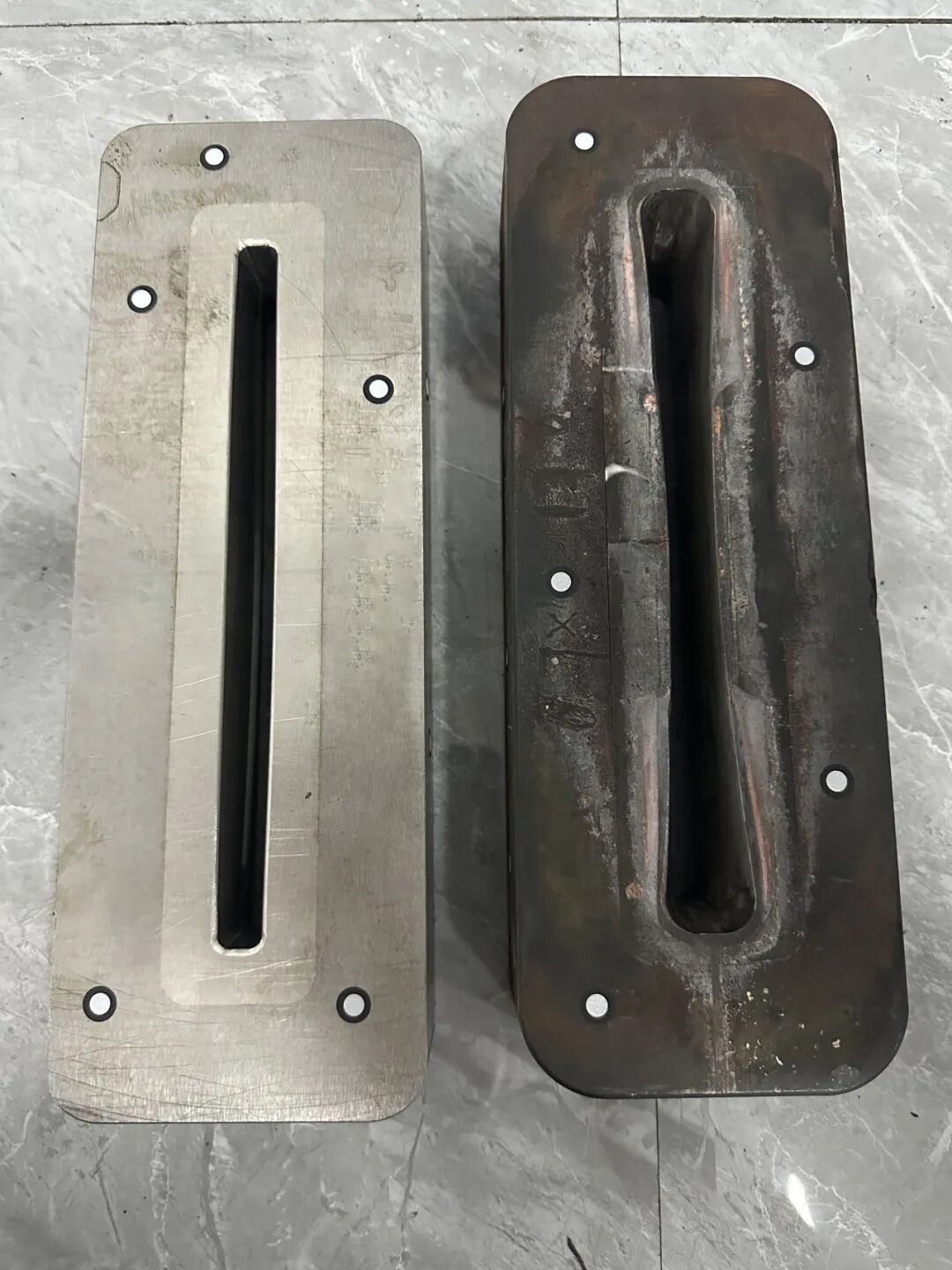
During prolonged high-temperature, high-pressure production of refrigerator heat sink extrusion molds, the notch angle in the cavity working zone gradually increases due to metal flow erosion. When the angle deviation becomes too large, the heat sink products will suffer dimensional out-of-tolerance, poor assembly, or even batch rejection.
The problem is that such mold cavities are deep, narrow, and complex; the probes of conventional gauges like calipers, plug gauges, and depth gauges simply cannot reach inside. Traditional inspection methods completely fail. Engineers can only rely on “experience judgment” or “trial mold feedback” to indirectly assess wear, often only discovering problems after products are rejected, and mold repair can only be done through repeated trial and error, which is costly and inefficient.
Solution
AlphaScan makes “blind spot” data clear at a glance
INSVISION AlphaScan AI metrology-grade handheld 3D scanner delivers industrial metrology accuracy up to 0.020 mm. With 26 cross blue laser lines and a deep-hole single-line scanning mode, it easily captures complete 3D point cloud data inside deep cavities and narrow gaps, even on highly reflective surfaces like mold steel.
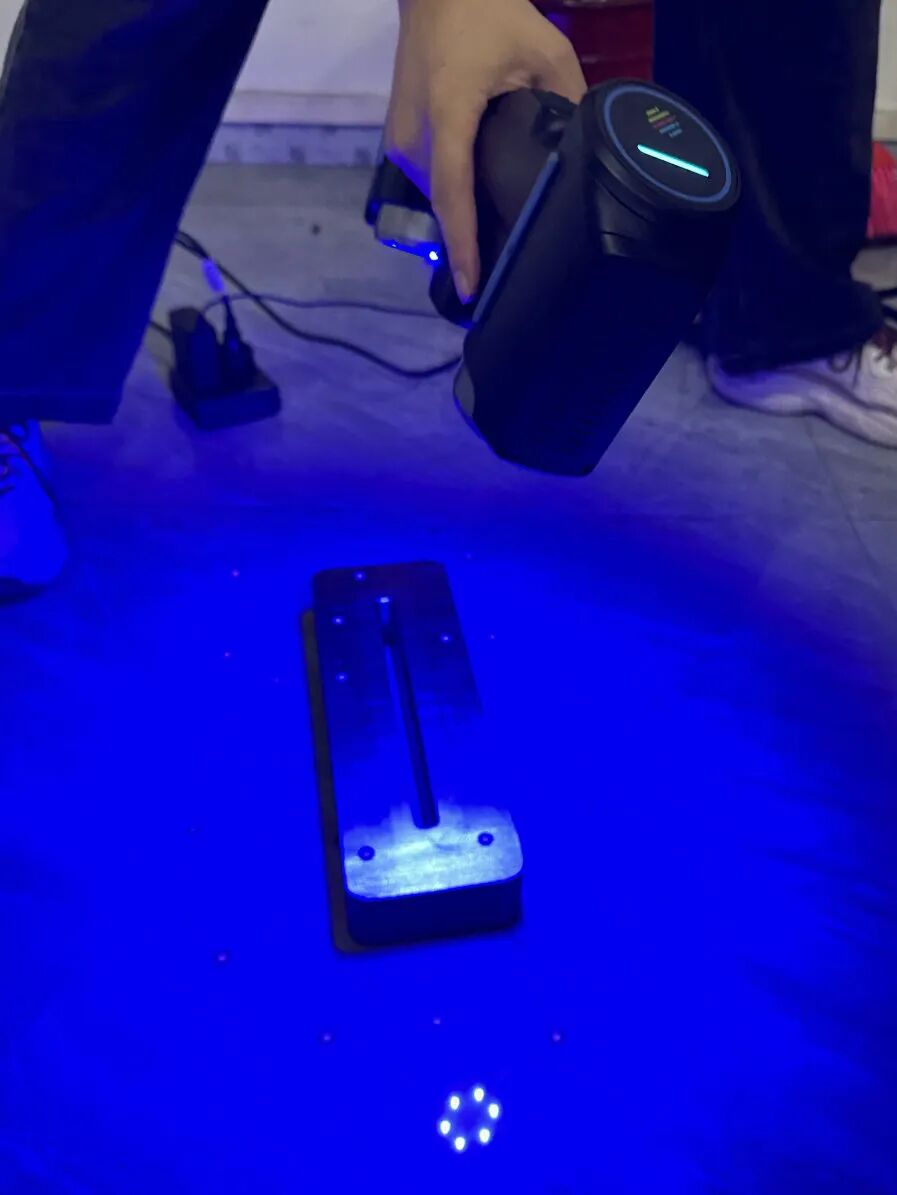
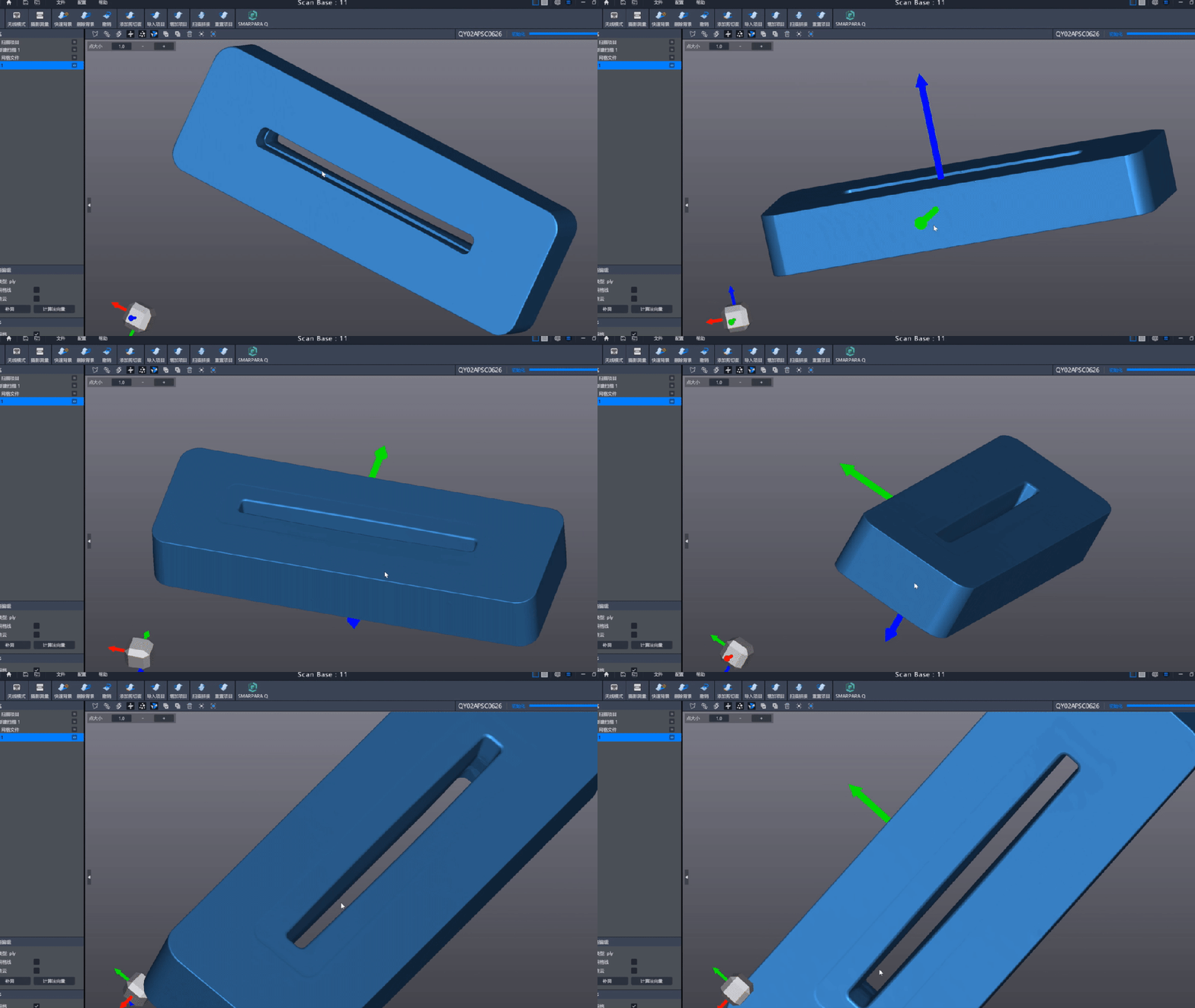
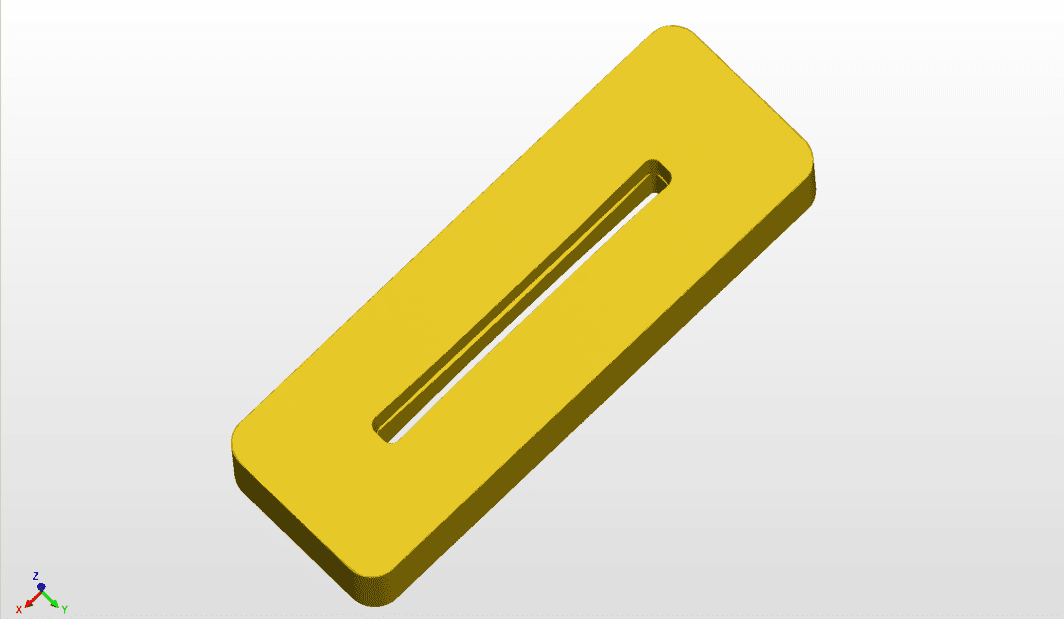
Align the scanned data with the original CAD model or historical reference model automatically. Based on the wear locations and deviation values indicated by the color map, perform targeted mold repair. After repair, scan again for re-inspection to confirm that accuracy returns to the tolerance zone, forming a digital closed loop of “inspection – repair – verification.” The entire inspection process is non-contact and non-destructive. Engineers can work directly beside the production line. A complete scan of a single mold takes only a few minutes, with no need for transportation, greatly improving on-site inspection efficiency.
Core Value
Quantification, Efficiency, Traceability
Precise quantification: Micron-level accuracy turns notch angle changes from “indescribable” to “measurable,” providing a solid basis for mold repair;
Efficiency leap: Full surface inspection completed in minutes, significantly reducing mold repair rework times and multiplying overall inspection efficiency;
Data traceability: Each scan data can be freely archived, building a digital mold file that provides solid data support for preventive maintenance and mold life assessment.
When internal wear that traditional gauges “cannot reach” becomes a quality bottleneck, AlphaScan makes every notch and every degree of angle change clearly identifiable and precisely controllable. Moving from experience-driven to data-driven, this is the evolution direction of precision mold inspection.
INSVISION AlphaScan 3D scanner empowers precise inspection in manufacturing. For technical specifications or on-site demonstrations, please contact us.
Originally published on the INSVISION WeChat official account. View original article