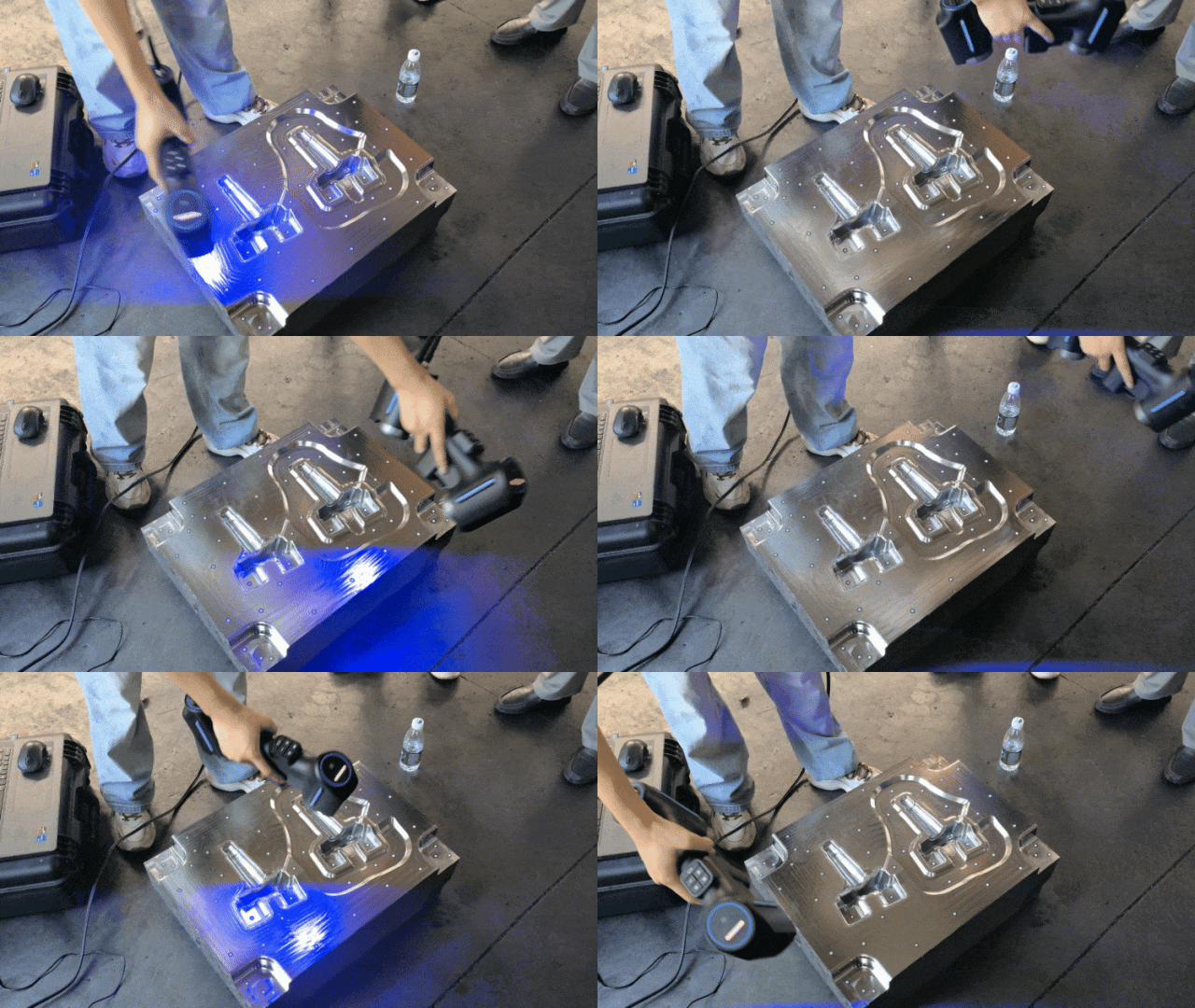
Traditional inspection methods often separate part and mold testing, resulting in isolated data that makes it difficult to trace issues back to their source. The AlphaScan 3D scanner breaks this limitation by offering an integrated inspection solution—from steering knuckles all the way through to molds. Immediately after mold machining is complete, AlphaScan performs a high-precision 3D scan, comparing the results against the original design model to accurately assess the mold’s machining accuracy. This ensures that every curved surface, hole location, and structural feature meets the exact design specifications. Additionally, AlphaScan’s deep-hole scanning mode excels at precisely inspecting intricate features like cooling channels and ejector pin holes within the mold—delivering measurement accuracy within an impressive 0.02mm tolerance. Only when the mold itself is perfectly machined can it lay the solid foundation for producing high-quality products downstream.

01 Mold machining: precise control at the first checkpoint
Mold quality is the first checkpoint in steering knuckle manufacturing.
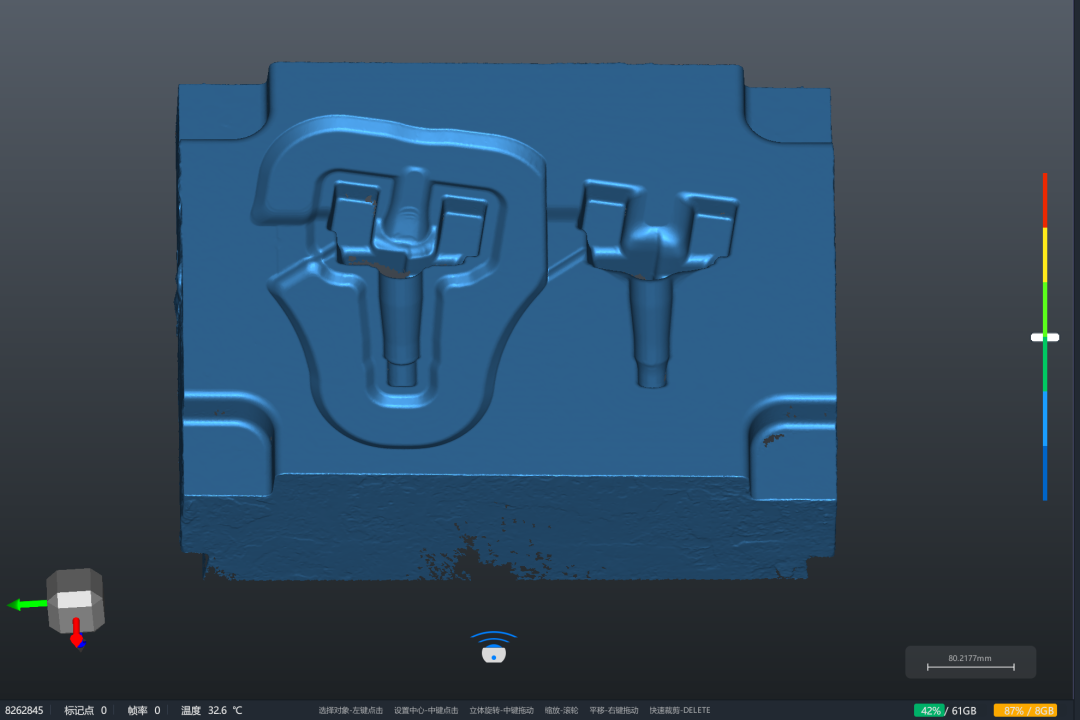
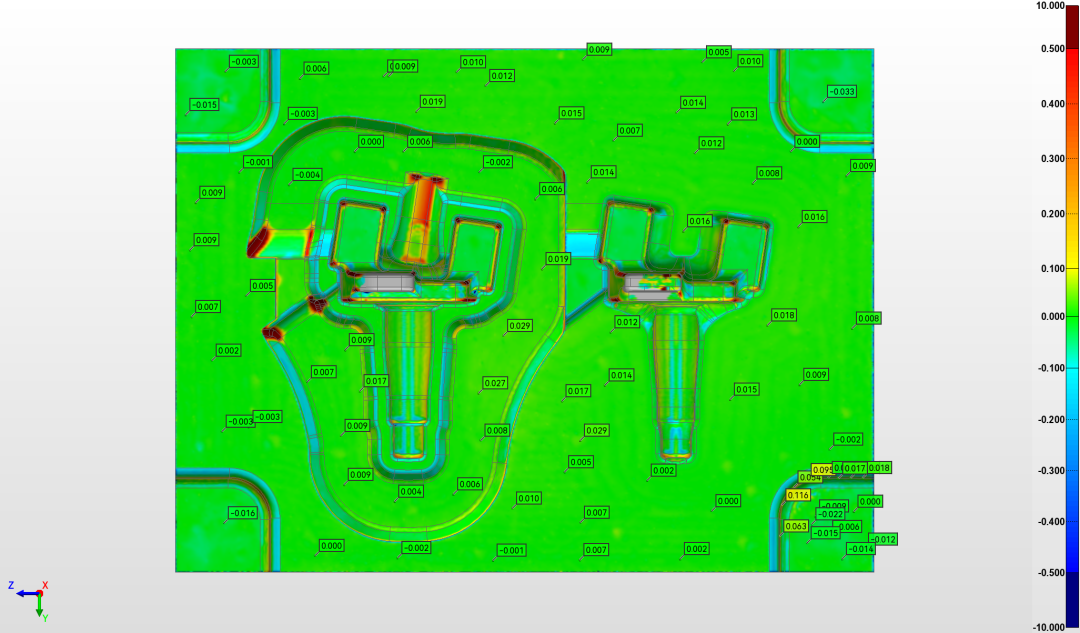
After mold machining is completed, AlphaScan performs a high-precision 3D scan and compares the measured data with the original CAD model. This helps verify whether each curved surface, hole position, and structural feature meets the design requirement.
The deep-hole scanning mode can inspect cooling channels, ejector pin holes, and other complex mold features with accuracy within 0.02 mm, creating a reliable foundation for downstream production.
02 Product inspection: quantifying casting deformation
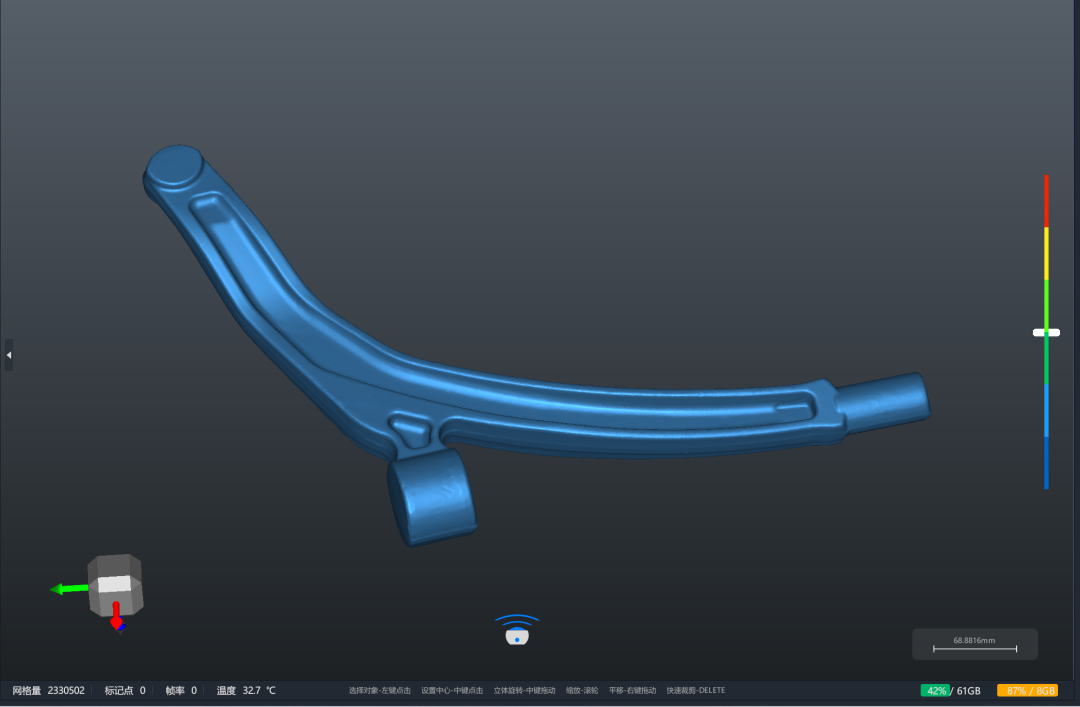
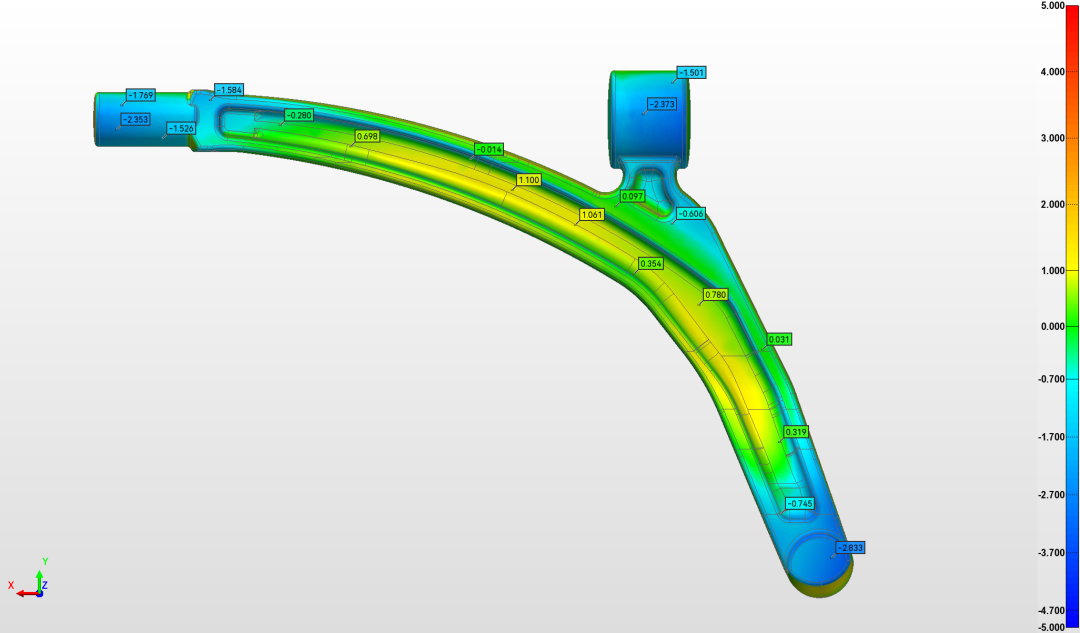
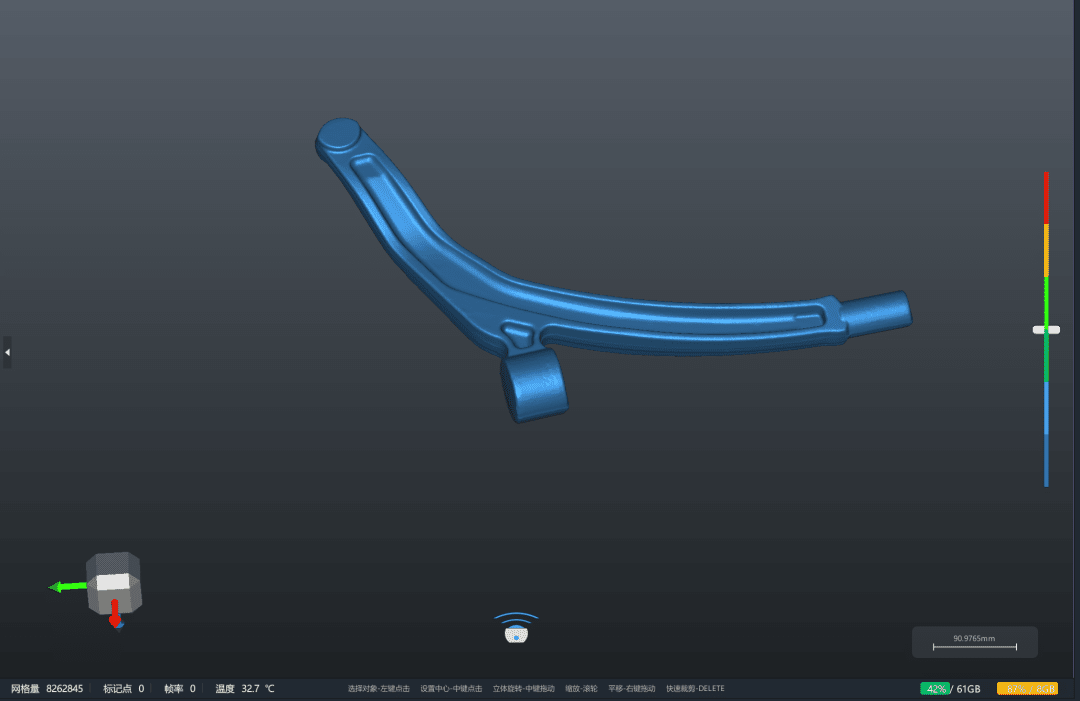
Once the mold is qualified, production moves to finished parts. As a casting, the steering knuckle can deform during cooling, and AlphaScan rapidly captures the actual shape of the part to quantify deformation amount and trend.
By comparing scanned part data with the design model, the team can judge pass or fail status while also understanding deformation patterns for process optimization.
03 Root-cause tracing: locating abnormal deviation
When inspection finds deviation, AlphaScan makes the data traceable. Comparing a nonconforming part with mold scan data helps identify whether the issue comes from mold wear, casting conditions, or cooling anomalies.
This precise diagnosis can reduce troubleshooting from days to hours, helping manufacturers shorten production interruptions and improve line efficiency.
04 Reverse engineering: accelerating new product introduction
For new product development, AlphaScan's reverse engineering capability provides accurate 3D data from sample steering knuckles, giving mold design teams a dependable reference.
In one manufacturing workflow, this approach helped shorten mold development from three months to six weeks, accelerating product launch and strengthening competitiveness.
05 Data closed loop: building full-process quality control
AlphaScan connects mold inspection and product inspection through one digital workflow. All measurement data can be stored, compared, and analyzed to form a complete quality database.
Long-term data accumulation helps teams predict mold life, optimize process parameters, and move quality control from reactive inspection to proactive prevention.
From mold first-article inspection to product full-size verification, from root-cause tracing to process improvement, AlphaScan creates a complete, efficient, and precise digital quality-control system.
Against the background of manufacturing transformation, this gives steering knuckle manufacturers stronger technical support for quality improvement, cost reduction, and high-quality growth.