

Wall relief sculptures combine layered figures, decorative textures, and broad curved surfaces. Photographs can record their appearance, but they do not preserve complete three-dimensional geometry. This case shows BetaScan capturing the sculpture on site and presenting the resulting model in 3D software.
The documentation challenge
Large reliefs contain dense carved details and continuous surface transitions that are difficult to describe with isolated measurements or photographs.
A reusable digital record also needs sufficient surface coverage for later viewing, comparison, and design reference.
On-site 3D data capture with BetaScan
The operator moves BetaScan across the marked relief surface while the connected software displays the captured data in real time.
The handheld workflow follows figures, ornaments, recessed areas, and broad curved regions so that the complex carved surface can be recorded as continuous 3D data.
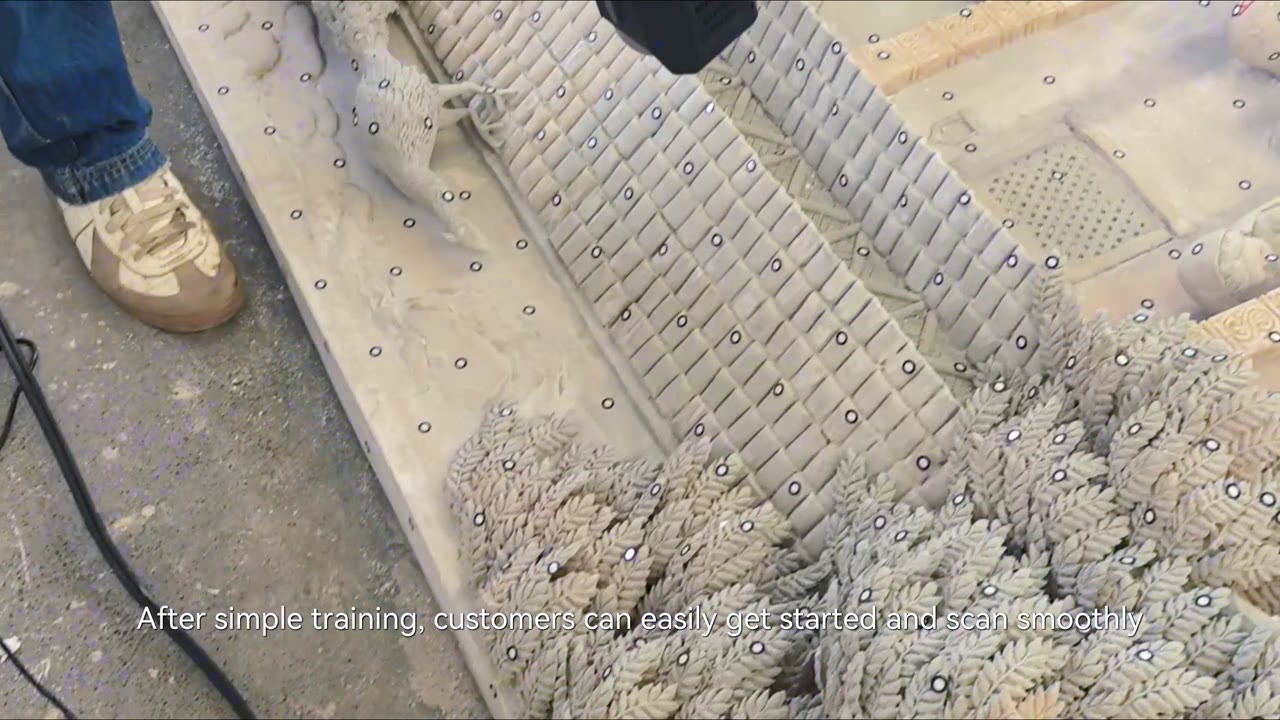
From physical sculpture to a reusable 3D record
After scanning, the captured model can be viewed, enlarged, rotated, and inspected from different angles in the software.
The digital model preserves the sculpture's spatial form and visible carved details, creating a practical basis for archiving, presentation, restoration planning, and derivative design.
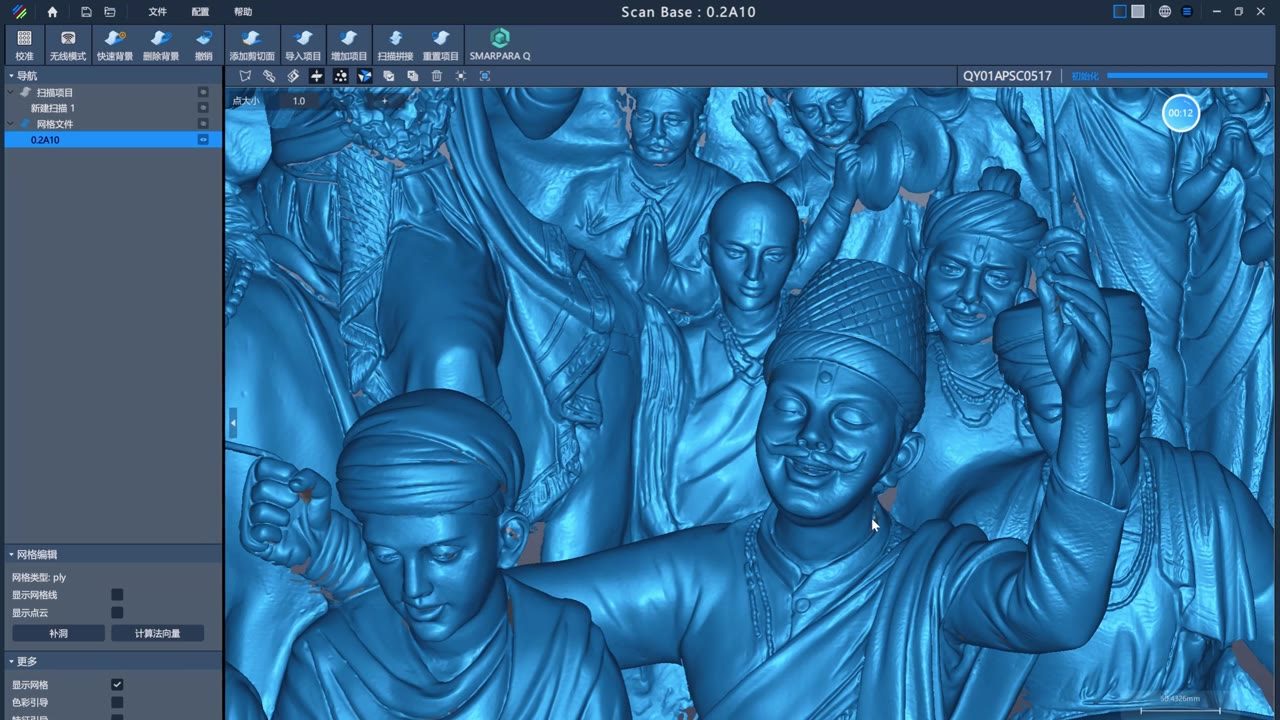
What this workflow delivers
- On-site scanning of a large wall relief
- Real-time 3D data capture in the connected software
- Detailed model review through zoom, pan, and rotation
- Reusable 3D documentation for archiving and subsequent work
By turning the physical wall relief into a reusable 3D asset, BetaScan connects on-site capture with long-term digital preservation and subsequent creative or conservation workflows.