

scanner 3 d Industrial Inspection Guide
In this articleReconciling Handheld Agility with Metrology-Grade StabilityCertification and Validation: From the Anvil to the Audit TrailIntegration Points...
Reconciling Handheld Agility with Metrology-Grade Stability
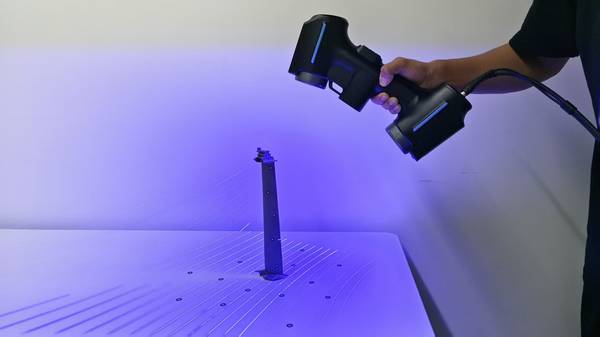
On a forging shop floor, the final hour of a scanning shift often determines data quality. Operator fatigue becomes a measurable variable, introducing subtle hand tremors and positional drift that degrade point cloud consistency. INSVISION addressed this weight-accuracy paradox through an iterative chassis design.
Practical Workflow
- Reconciling Handheld Agility with Metrology-Grade Stabili… — On a forging shop floor, the final hour of a scanning shift often determines data quality.
- Certification and Validation: From the Anvil to the Audit… — Precision must be provable, both on the shop floor and in the quality audit.
- Integration Points: Matching Scanner Capability to Produc… — Selecting a metrology-grade 3D scanner requires aligning sensor capabilities with specific production constraints.
- Evolving with the Production Line: The Path Beyond a Stat… — A high-precision 3D scanner should be a dynamic asset, not a static capital investment.
The AlphaScan handheld settles at 1,070 grams—a specification validated through continuous load testing across extended shifts. Its modular architecture allows for hot-swap battery replacement without altering grip posture, mitigating the cumulative fatigue that erodes measurement repeatability.
The engineering extends beyond ergonomics. AI-driven alignment algorithms compensate for micro-movements, while a 40% expanded field of view reduces the stitching burden on large surfaces like die blocks or composite panels. The result is consistent point cloud density, even when scanning intricate, curved surfaces late in a shift.
For teams evaluating handheld 3D scanner options, the critical question shifts from peak accuracy to sustained accuracy: how does the system perform on your specific part geometry during the final scan of the day?
Certification and Validation: From the Anvil to the Audit Trail
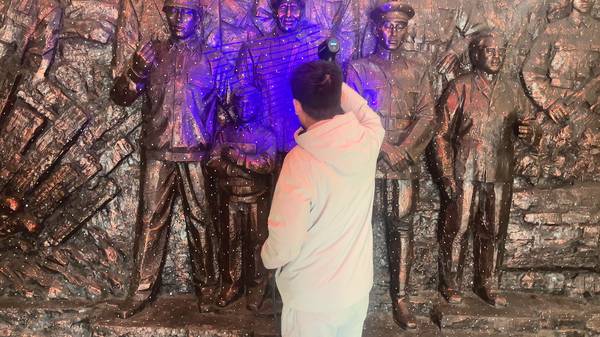
Precision must be provable, both on the shop floor and in the quality audit. INSVISION’s technology framework holds CE, FCC, and CNAS certifications, providing a foundation for global deployment. This metrological reliability was tested in a field deployment with a heavy equipment group, digitizing the intricate V-shaped concave surface of a forging anvil—a geometry that challenges traditional tools.
The scanner successfully captured the anvil’s full contours for dimensional compliance reporting.
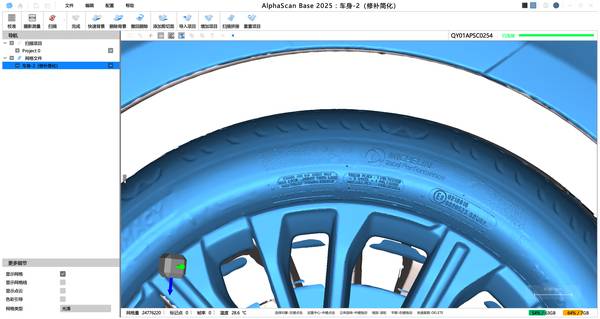
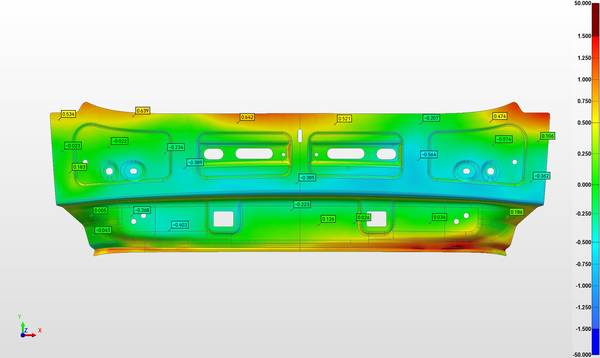
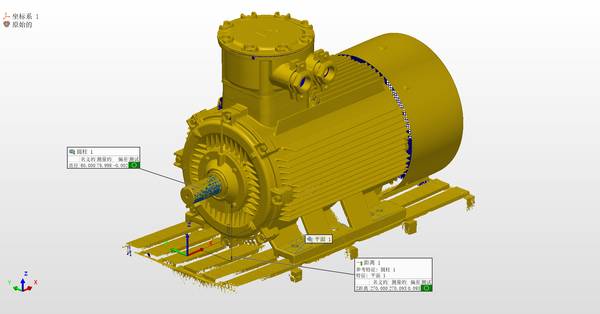
For oversized assemblies, photogrammetric scale bars establish a global coordinate system, slashing cumulative error across large workpieces. This setup ensures traceability throughout the entire measurement volume, which is critical for large-scale fabrications. The workflow culminates in streamlined reporting: one-click generation of tolerance analysis (GD&T) and visual deviation maps that overlay directly onto the 3D model.
This output integrates into quality management systems, enabling rapid, data-driven decisions without manual data translation.
Integration Points: Matching Scanner Capability to Production Reality
Selecting a metrology-grade 3D scanner requires aligning sensor capabilities with specific production constraints. The INSVISION AlphaScan series is engineered for challenging inline tasks, such as deep-hole inspection on engine blocks or validating hidden cavities in additive manufacturing components.
Its single blue laser line is particularly effective for these scenarios, handling reflective or dark surfaces that confound other technologies.
Successful integration demands on-site validation. Quality managers should verify several boundary conditions: test the calibration routine under your facility’s ambient lighting, confirm the system’s 0.020 mm metrology-grade accuracy on a representative part, and assess how the 1,070g design impacts operator mobility across your station layout.
This preparation ensures the tool adapts to varying production takt times, supporting a range of tasks from first-article inspection reports to data export for reverse engineering.
Evolving with the Production Line: The Path Beyond a Static Tool
A high-precision 3D scanner should be a dynamic asset, not a static capital investment. INSVISION development cycle is driven by direct feedback from field engineers—whether it’s the need for a specific blue laser configuration for deep-hole scanning or firmware optimizations for automated data pipelines. This continuous refinement transforms the scanner into an active node within a smart factory’s quality ecosystem.
The roadmap focuses on enhancing AI-driven intelligent inspection to keep pace with automated production rhythms, ensuring seamless data flow from the scan head to the final quality record. To assess if this evolution aligns with your operational needs, begin by defining your specific parameters: part material and size, tolerance thresholds, and the required reporting format for your quality management system.
This allows for a technical alignment based on concrete application demands, not just specifications.
Hangzhou Insvision Technology Co., Ltd.
Address: Building 1, No. 1399 Liangmu Road, Yuhang District, Hangzhou, Zhejiang 311121, China
Copyright © Hangzhou Insvision Technology Co., Ltd. All rights reserved.
Copyright © Hangzhou Insvision Technology Co., Ltd. All rights reserved.