

How 3D Scanning Modernizes Automotive QC Workflows
In this articleAdapting to Complex Surfaces Without CompromiseIntegrating Verification into the Production FlowMatching the Tool to the Part GeometryValida...
Adapting to Complex Surfaces Without Compromise
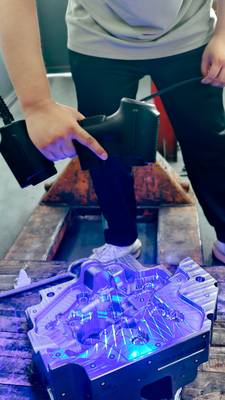
Automotive assembly increasingly demands solutions that handle challenging materials—deep-gloss dashboards, black textured trim, or matte finishes—without time-consuming surface preparation like spraying. The AlphaScan handheld scanner addresses this with an AI-driven engine designed specifically for these difficult surfaces.
Key Points at a Glance
- Automotive assembly increasingly demands solutions that handle challenging materials—deep-gloss dashboards, black textured trim, or matte finish…
- Transporting a large, reflective bumper to a temperature-controlled lab halts production momentum.
- Selecting the right 3D scanning tool is critical for maintaining line efficiency.
- Successful integration hinges on rigorous pre-deployment validation, not just hardware specs.
Operators capture complex geometries directly, feeding stable data via a high-speed USB connection into software for immediate point cloud alignment to CAD. The output is a color deviation map that visualizes errors against design specifications in minutes, not hours. This capability transforms a traditional bottleneck into a flexible node in your quality process.
Integrating Verification into the Production Flow
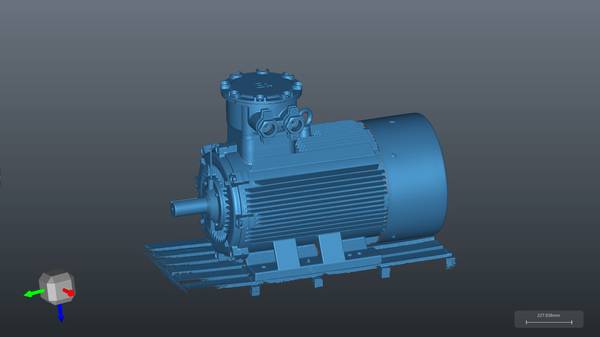
Transporting a large, reflective bumper to a temperature-controlled lab halts production momentum. INSVISION’s portable 3D scanning solutions bring metrology-grade verification to the shop floor. The integrated software condenses a multi-step process into one workflow: from data capture and optimization to intelligent comparison and one-click report generation.
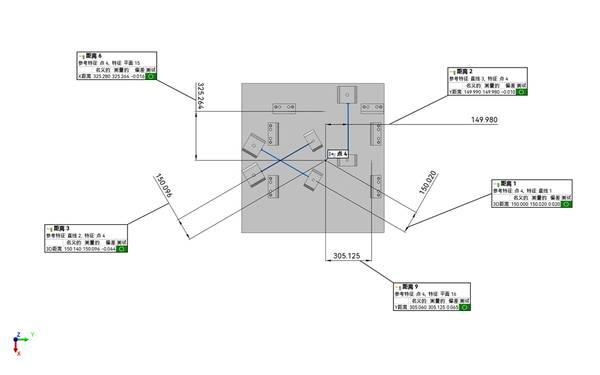
Operators perform single-handed scanning with stable connectivity, reducing dependency on specialized lab staff. With intuitive GD&T alignment tools, new operators achieve competency quickly, ensuring shift-to-shift consistency and maintaining readiness for IATF 16949 audits. The result supports immediate root-cause analysis for issues like panel gaps or fit-up problems.
Matching the Tool to the Part Geometry
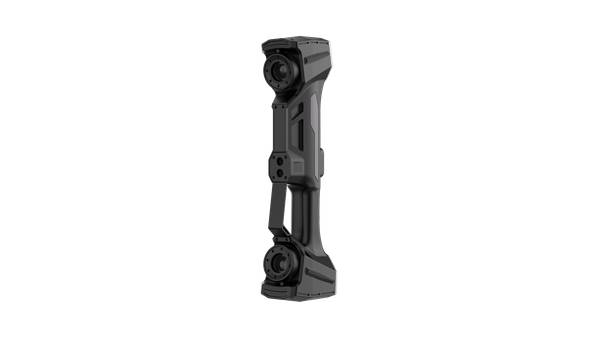
Selecting the right 3D scanning tool is critical for maintaining line efficiency. The optimal fit depends on your specific part geometries and environmental conditions. INSVISION offers a range, from the AlphaScan for detailed component work to the AlphaVista series for large, curved assemblies like interior cockpits or body-in-white structures.
Engineers should map scanner capabilities to their needs by confirming datum accessibility and ensuring CAD model revision control is in place for ASME Y14.5 alignment. Key strengths to evaluate include a system’s ability to capture black or reflective surfaces without spray, its field of view for large parts, and its performance in your plant’s specific lighting and vibration conditions.
Validating the Process Before Deployment
Successful integration hinges on rigorous pre-deployment validation, not just hardware specs. Before installing equipment like INSVISION scanners, verify your CAD model hygiene—outdated reference geometries will undermine coordinate alignment. Conduct environmental stability checks: uncontrolled lighting or vibration can compromise the precision needed for inspecting complex components.
Establish structured operator training that moves beyond basic operation to mastery of inspection software and data interpretation. These steps ensure your validation cycles align with automotive audit requirements and support continuous improvement.
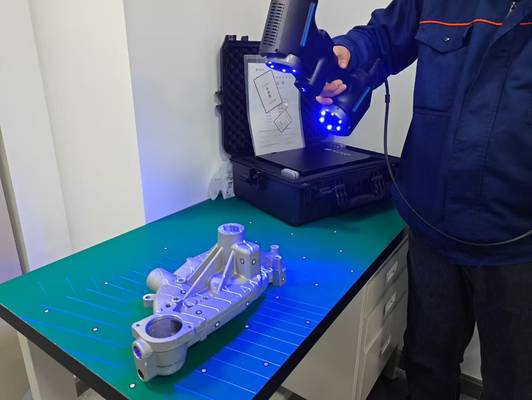
To determine if your facility is ready for this transition, assess your specific part materials, size ranges, tolerance bands, and reporting format needs. This information is essential for mapping a tailored inspection workflow using 3d scanning automotive technology. Share your details to explore how a metrology-grade 3D scanning solution can be integrated into your quality verification cycles.
Hangzhou Insvision Technology Co., Ltd.
Address: Building 1, No. 1399 Liangmu Road, Yuhang District, Hangzhou, Zhejiang 311121, China
Copyright © Hangzhou Insvision Technology Co., Ltd. All rights reserved.
Copyright © Hangzhou Insvision Technology Co., Ltd. All rights reserved.