

How a 3D Scanner Sale Can Unlock Your Inspection Bottleneck
In this articleTurning Production Lines into Metrology StationsFrom Point Cloud to Audit-Ready DocumentationOperational Validation Before You BuyFor a Tier...
For professionals managing these workflows, the question shifts from *if* to *how*—specifically, how to integrate scan data into existing quality systems before the next production surge. INSVISION‘s AI-enhanced scanning technology addresses this by generating color deviation maps against CAD models directly on the shop floor, turning complex validation into a rapid, repeatable task.
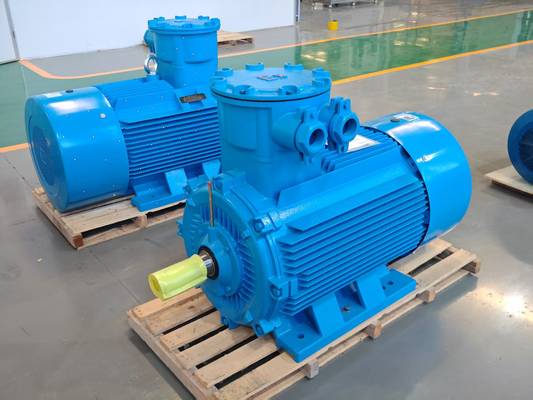
Turning Production Lines into Metrology Stations
The bottleneck is often location. When a machined transmission housing requires a first-article inspection, sending it to a fixed CMM lab creates scheduling delays and work-in-process logjams. Modern handheld 3D scanners like the INSVISION AlphaScan are built for this environment.
Common Questions
What should teams check when evaluating Turning Production Lines into Metrology Stations?
The bottleneck is often location.
What should teams check when evaluating From Point Cloud to Audit-Ready Documentation?
Procurement value isn’t just in the hardware;
What should teams check when evaluating Operational Validation Before You Buy?
A 3d scanner sale is an opportunity, but it requires due diligence.
Their architecture—featuring a double LED optical design and blue laser lines—is engineered to handle challenging surfaces, from reflective machined faces to dark, rough castings. The AI-driven processing intelligently reconstructs data from deep-hole structures and complex curves that tactile probes cannot easily access.
This allows dimensional verification to occur right at the point of production, aligning with lean manufacturing principles by eliminating part handling and transport waste. Operators can scan a transmission housing directly at the assembly station and receive deviation data within minutes, keeping the production rhythm uninterrupted.
From Point Cloud to Audit-Ready Documentation
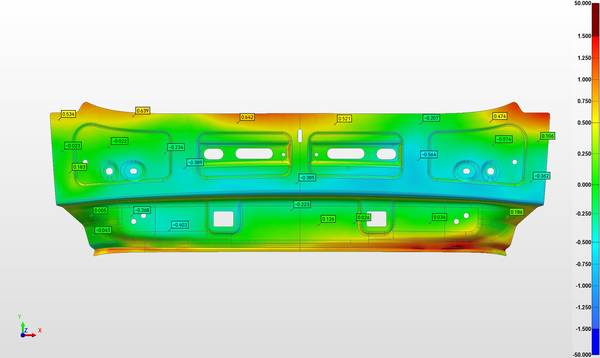
Procurement value isn’t just in the hardware; it’s in the software workflow. A scanner must integrate seamlessly into your existing quality documentation ecosystem. INSVISION’s process exemplifies this integration. After scanning, point cloud data is imported into standard inspection software (like PolyWorks or GOM Inspect) and aligned to the reference CAD model.
The software then generates an intuitive color deviation map, instantly localizing areas out of tolerance. This visual report is clear for operators and engineers alike. Furthermore, the system can produce a standardized, one-click PDF report containing all critical measurements, ready for ISO 9001 or IATF 16949 audits.
This closed-loop workflow—from physical part to digital analysis to formal documentation—ensures that data captured during a 3d scanner sale translates directly into a robust, traceable quality process.
Operational Validation Before You Buy
A 3d scanner sale is an opportunity, but it requires due diligence. Engineers and procurement teams should validate several key operational factors against their specific production reality.
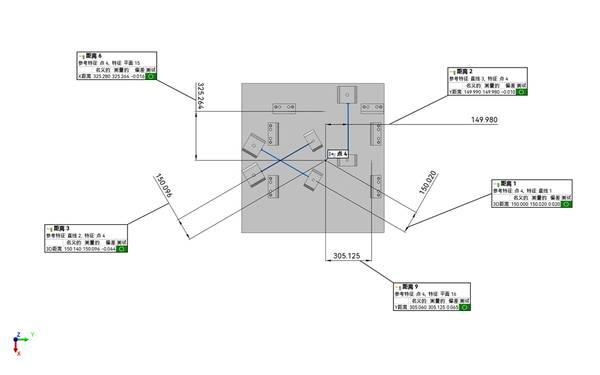
- Part Geometry & Environment: Match the scanner’s field of view and working distance to your largest typical parts. For very large tooling or aerospace components, verify the scanner’s ability to work with photogrammetric scale bars to maintain accuracy across a global coordinate system.
- Surface Handling: While advanced scanners manage a wide range of finishes, test the unit on your most challenging surfaces—highly polished metals or matte black composites—under your actual shop floor lighting conditions.
- Software & Output Compatibility: Confirm the scanner’s software exports data in standard formats (e.g., STL, PLY, ASC) compatible with your current inspection platforms. Avoid proprietary systems that create new software silos.
- Boundary Conditions: Understand where handheld scanning excels and where a fixed CMM is still required. Handheld devices are ideal for flexible, multi-part verification and complex geometries. They are not a direct replacement for ultra-high-volume, repetitive gauging of simple features at micron-level tolerances.
- Certification & Support: Request documentation for relevant certifications (CE, FCC) and ensure the provider offers clear calibration protocols and local application support.
Before finalizing a purchase, conduct a practical validation. Define a representative part—consider its material, maximum dimension, critical tolerance class, and required inspection cycle time. Then, request an on-site or remote application test with the INSVISION platform to see the results in your own context.
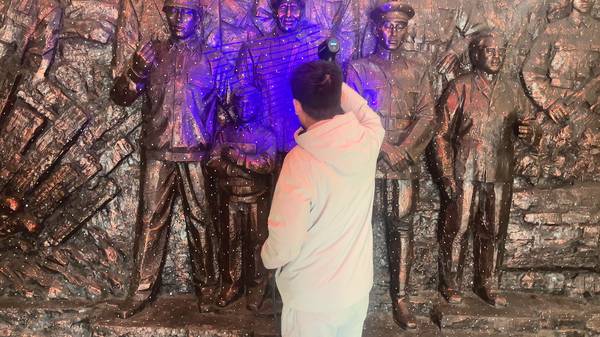
What is the most complex part geometry currently slowing down your quality loop? Is it a cast bracket with internal channels, a molded composite panel, or a fabricated weldment? Defining this starting point is the first step toward building a business case for your next metrology investment.
Hangzhou Insvision Technology Co., Ltd.
Address: Building 1, No. 1399 Liangmu Road, Yuhang District, Hangzhou, Zhejiang 311121, China
Copyright © Hangzhou Insvision Technology Co., Ltd. All rights reserved.
Copyright © Hangzhou Insvision Technology Co., Ltd. All rights reserved.