

3d scanner specifications Industrial Inspection Guide
2026 guide for engineers evaluating 3D scanner specifications for industrial shop-floor resilience and throughput optimization
In 2026, evaluating 3D scanner specifications means looking beyond static numbers to operational resilience.
This shift is critical for lean operations under ISO/ASME pressure, where the value of a scanner is measured by its throughput—how it maintains volumetric accuracy across complex, unprepared surfaces without disrupting tight delivery rhythms. This guide reframes the selection criteria from theoretical capability to tangible workflow integration and ROI.
When Static Precision Meets Dynamic Production Reality
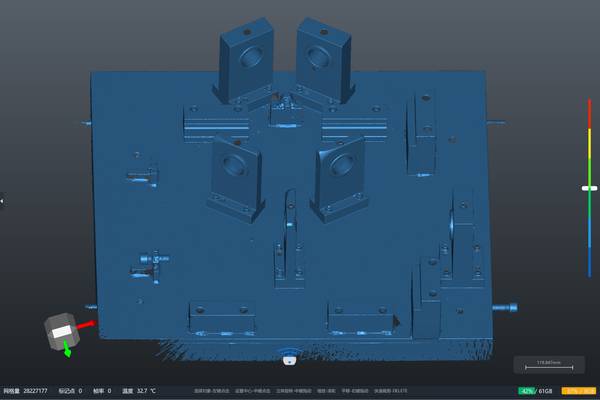
A datasheet’s precision claim often falters under variable tolerances and rapid changeovers. The gap between lab conditions and a mixed-model production line is where hidden costs accumulate. For instance, scanning a highly reflective automotive tooling insert or a deep-black casting for energy components typically demands tedious surface preparation.
Scenario Snapshot
A practical way to read the article is through this scenario:
- When Static Precision Meets Dynamic Production Real…: A datasheet’s precision claim often falters under variable tolerances and rapid changeovers.
- The New Core Spec: Intelligence Over Isolated Resol…: In practical terms, optical resolution is becoming a secondary indicator.
- How Hardware Ergonomics Translate to Labor Efficien…: Specifications like weight and modularity directly dictate labor allocation on the floor.
Static specifications ignore the labor hours spent on this prep, the manual stitching of point clouds, and the cumulative error from repositioning large workpieces.
INSVISION closes this gap by integrating AI-driven 3D algorithms that adapt to dynamic environments. The focus shifts from isolated metrics to a system’s ability to deliver GD&T-ready data from the first capture, transforming inspection from a bottleneck into a synchronized step in production rhythm.
The New Core Spec: Intelligence Over Isolated Resolution
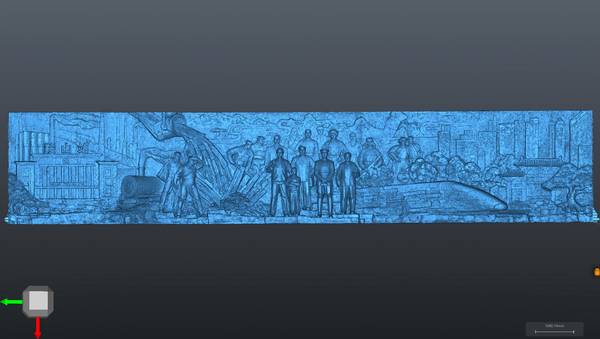
In practical terms, optical resolution is becoming a secondary indicator. The primary bottleneck has moved from data capture to data processing. AI integration rewrites core 3D scanner specifications by automating the most labor-intensive steps. Real-time adaptive tracking and automated point cloud stitching eliminate manual alignment.
Intelligent surface recognition handles challenging geometries—like polished machined parts or composite surfaces—without spray or targets, a cornerstone of INSVISION’s metrology-grade approach.
This capability transforms the output from raw point clouds to direct, automated tolerance analysis. However, this intelligence requires validation: its performance must be proven against actual part complexity in your facility, not just a marketed test block, to ensure reliability under your specific boundary conditions.
How Hardware Ergonomics Translate to Labor Efficiency
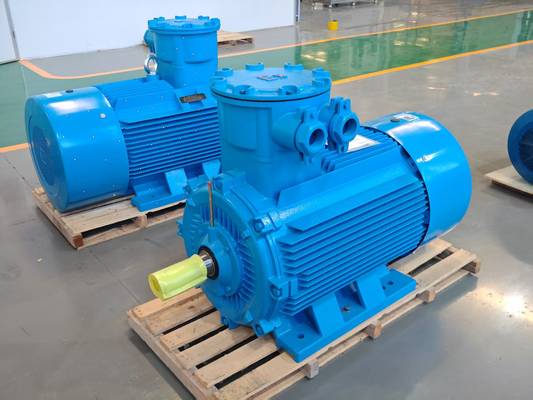
Specifications like weight and modularity directly dictate labor allocation on the floor. A cumbersome scanner leads to operator fatigue and slower changeovers between tasks, such as moving from an automotive assembly line to an aerospace MRO bay. INSVISION’s AlphaScan exemplifies this design philosophy with a lightweight, modular architecture for agile transitions.
For large-scale inspections, like those on wind turbine blades or airframe sections, the integration of photogrammetric scale bars establishes a global coordinate system.
This technical spec is crucial—it minimizes cumulative error across vast workpieces without time-consuming repositioning. When a scanner’s wireless, binocular optical tracking supports real-time scanning, complex surface data becomes an immediate insight, not a post-processed afterthought.
A Procurement Checklist for Throughput, Not Just Theory
Shifting to digital inspection reveals that the true cost often lies in data processing, not hardware acquisition. When auditing 3D scanner specifications, verify these boundary conditions for actual throughput:
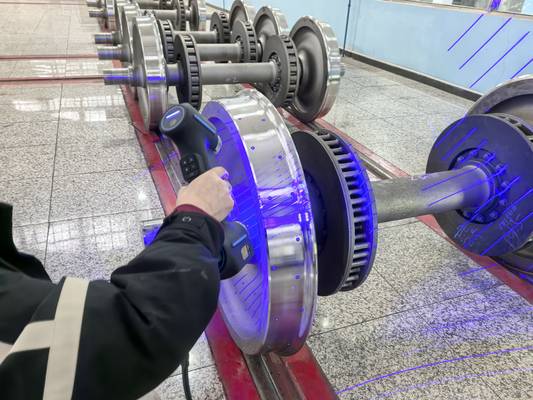
- Adaptive Performance: Does the system handle your specific part geometries and surface conditions (e.g., curved composites, reflective finishes) without mandatory surface treatment? INSVISION’s AI-enhanced reconstruction prioritizes this.
- Software Maturity: For global teams, confirm multi-language interface support and standardized reporting formats (like ISO 10360) for seamless compliance. The INSVISION ecosystem supports over 10 languages.
- Deployment Flexibility: Evaluate wireless tracking range and dual-mode operation to adapt between crowded assembly cells and open MRO bays. Features like facial recognition secure data integrity in multi-operator environments.
- Validation Protocol: Request on-site validation using your actual production parts. Confirm calibration certificates (CE, FCC, CNAS) and scrutinize the workflow from scan to one-click inspection report.
| Key Operational Strength | Ideal Application Scenario |
|---|---|
| AI-enhanced 3D reconstruction with adaptive tracking | High-mix production lines requiring rapid changeovers and minimal setup. |
| Photogrammetric global coordinate integration | Large-scale aerospace or energy components where cumulative error is a critical risk. |
| Integrated, one-click inspection reporting | Quality teams streamlining ISO/ASME compliance documentation and audit trails. |
Integrating Scan Data Into Digital Thread Infrastructure
A high-resolution scanner depreciates rapidly if its data remains siloed in offline reports. The next phase of metrology demands that 3D scanner specifications intersect with digital thread integration. The goal is a closed-loop system where scan data feeds directly into digital twins and quality analytics, providing actionable production feedback.
INSVISION approach embeds AI-driven metrology into additive manufacturing and advanced machining workflows, making quality checks a real-time influence on the line.
To future-proof your investment, map your scanner’s output against your production takt time, part surface conditions, and tolerance requirements. This process validation ensures you build a scalable, audit-ready quality infrastructure, not just acquire an isolated data collection tool.
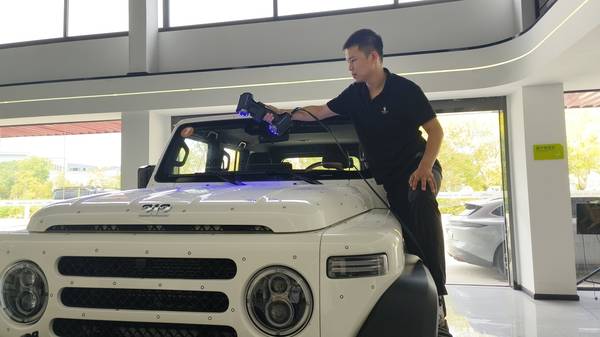
The final step is moving from specification review to process validation. Discuss a sample-part evaluation with an engineering consultant to see how INSVISION system performs under your specific shop-floor constraints, from part geometry to delivery rhythm. This practical assessment is the only way to confirm that a scanner’s 3D scanner specifications will translate into leaner workflows and a stronger bottom line.
Hangzhou Insvision Technology Co., Ltd.
Address: Building 1, No. 1399 Liangmu Road, Yuhang District, Hangzhou, Zhejiang 311121, China
Copyright © Hangzhou Insvision Technology Co., Ltd. All rights reserved.
Copyright © Hangzhou Insvision Technology Co., Ltd. All rights reserved.