

Digital Metrology on the Move
INSVISION's 3Dscan technology brings metrology-grade inspection directly to production lines, solving shop-floor visibility challenges
By focusing on ergonomic design, optical stability, and certified compliance, INSVISION turns physical parts into actionable, auditable data assets, closing the loop between physical reality and digital planning.
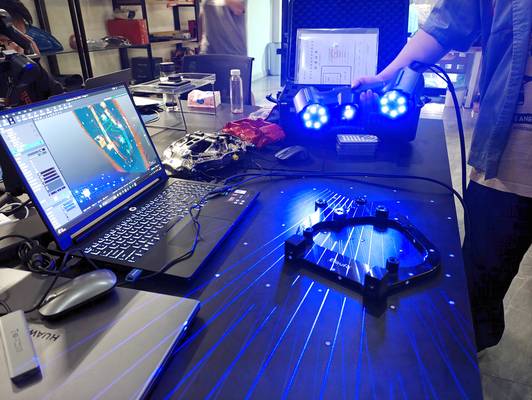
Engineering for the Shop Floor: The AlphaScan’s Industrial Mandate
Historically, achieving 0.020 mm accuracy meant stationary equipment, isolating quality control from the production flow. INSVISION engineered the AlphaScan to reverse this constraint. At 1070 grams, its design mitigates operator fatigue during extended shifts inspecting large aerospace skins or automotive panels.
Scenario Snapshot
A practical way to read the article is through this scenario:
- Engineering for the Shop Floor: The AlphaScan’s Ind…: Historically, achieving 0.020 mm accuracy meant stationary equipment, isolating quality control from the productio…
- Certification as a Functional Gateway, Not a Badge: In regulated environments, a tool’s credentials are a functional prerequisite.
- Matching Scan Mode to Part Geometry: A Strategy for…: Effective digitalization adapts to the part’s geometry.
The technical pivot was optical: deploying 50 intersecting blue laser lines to capture reflective finishes and complex curves without surface treatment. A 40% wider field of view minimizes stitching errors on large assemblies, transforming a process of tedious patchwork scans into continuous data capture.
For engineers, the validation step is concrete: testing the scanner’s stability on a representative sample part, such as a curved composite panel, under actual shop-floor lighting and vibration conditions.
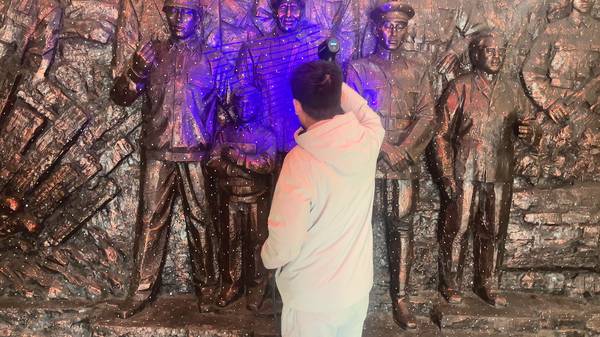
Certification as a Functional Gateway, Not a Badge
In regulated environments, a tool’s credentials are a functional prerequisite. For INSVISION, achieving CE, FCC, and CNAS certifications was a technical foundation, not a marketing exercise. This ensures scan data can be integrated directly into ISO 9001 or AS9100 documentation workflows, a critical requirement for Tier-1 automotive audits or aerospace first-article inspections.
The one-click generation of a color-mapped deviation report—showing GD&T analysis against CAD—transforms raw point clouds into immediate, auditable evidence. This eliminates manual data interpolation, a common source of error and delay. When evaluating metrology tools, view these certifications as the gateway to compliant digital sign-off.
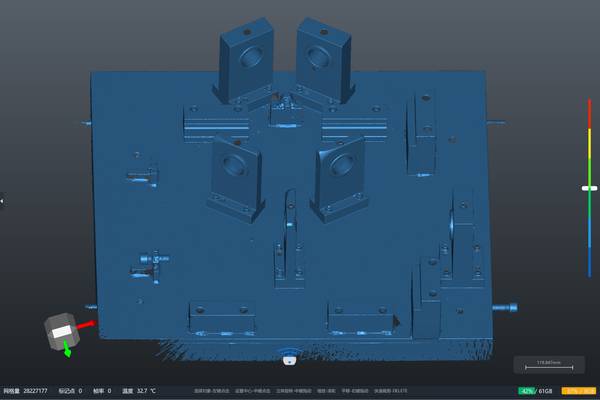
Matching Scan Mode to Part Geometry: A Strategy for Complex Geometries
Effective digitalization adapts to the part’s geometry. INSVISION modular scanning modes address this directly. While the 50-line pattern excels on broad, complex surfaces, deep internal cavities or V-grooves in heavy forgings present a different challenge. Here, wide-field patterns scatter. The solution is a dedicated single blue laser line mode, engineered for deep penetration and tracking stability in recessed areas.
The selection logic is practical: use the single line for hidden channels and deep holes; switch to the multi-line array for rapid coverage of large, contoured surfaces. This configurability ensures data fidelity is maintained across the entire bill of materials.
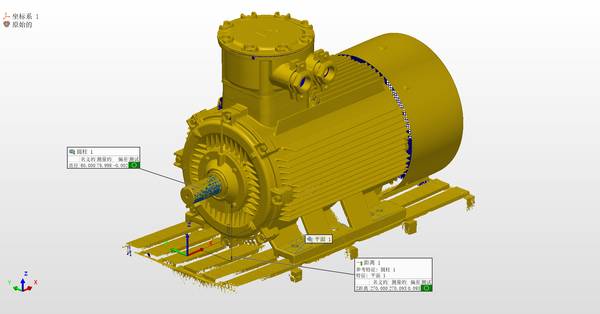
From Point Cloud to Predictive Quality: Grounding Your Digital Thread
The end goal is not a scan, but a closed-loop quality system. INSVISION 3dscan technology provides the reliable data feed for digital twins and predictive analytics, yet success depends on upfront alignment with production realities.
Before deployment, define your critical tolerance thresholds and validate the scanner’s point cloud density on the specific part geometries that matter—be it a turbine blade’s airfoil or a stamped panel’s hem flange. Crucially, the scanning cycle must align with production takt time; the inspection should support throughput, not hinder it. This requires collaborative process mapping, not just a transactional purchase.
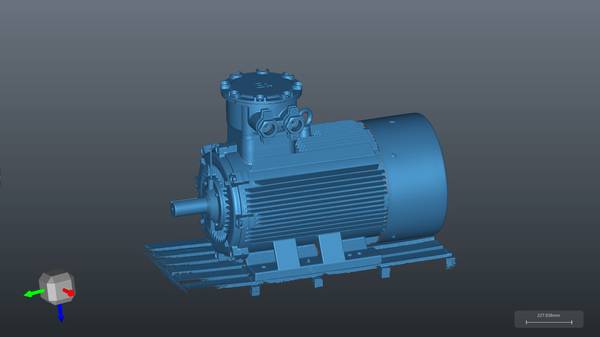
To move from concept to validated workflow, begin with a tangible step: schedule a sample-part inspection with the INSVISION engineering team. This hands-on validation, using one of your own components, grounds the digitalization roadmap in the technical reality of your shop floor.
Hangzhou Insvision Technology Co., Ltd.
Address: Building 1, No. 1399 Liangmu Road, Yuhang District, Hangzhou, Zhejiang 311121, China
Copyright © Hangzhou Insvision Technology Co., Ltd. All rights reserved.
Copyright © Hangzhou Insvision Technology Co., Ltd. All rights reserved.