

3D Scan Targets for Stable Industrial Inspection
Learn how 3D scan targets, AI photogrammetry, and AlphaScan workflows improve alignment stability for aerospace, automotive, energy, and complex-part inspection.
The Alignment Imperative: Why Reference Points Fail on Complex Parts
The industry trade-off has been speed versus stability. On surfaces like polished molds or carbon-fiber composites, conventional adhesive targets or spray fail, leading to coordinate drift that invalidates reverse engineering and first-article inspection data. INSVISION’s approach starts with ensuring measurement integrity through robust reference capture.
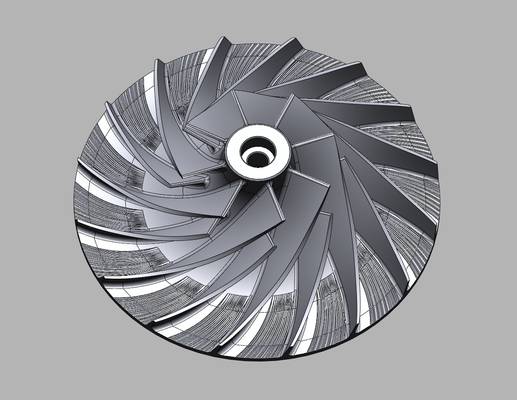
Practical Workflow
- The Alignment Imperative: Why Reference Points Fail on Co… — The industry trade-off has been speed versus stability.
- Precision by Design: Optical Engineering Meets Adaptive AI — The INSVISION AlphaScan handheld series is built on a fully in-house optical engine, calibrated for metrology-grade fidelity.
- Validation in Action: Aerospace, Automotive, and Energy W… — Consider a forged titanium aerospace bracket with complex internal webbing.
- How to Evaluate Scanning Workflow Stability for Your Appl… — A common misconception is that more 3d scan targets guarantee better accuracy.
Our systems use AI-driven photogrammetry to lock scale bars and 3d scan targets into a stable global coordinate system, even on deep-black or highly reflective surfaces. This eliminates manual guesswork in aligning scan data from multiple angles, providing a trusted foundation for dimensional analysis and GD&T reporting.
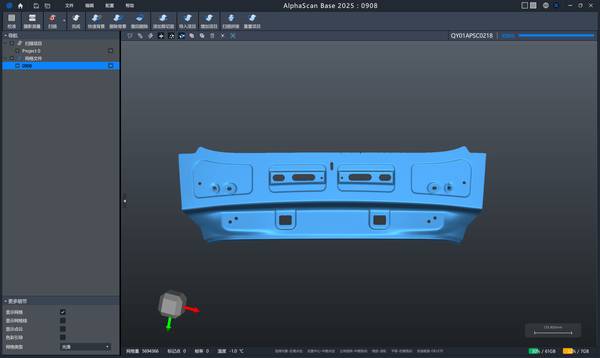
Precision by Design: Optical Engineering Meets Adaptive AI
The INSVISION AlphaScan handheld series is built on a fully in-house optical engine, calibrated for metrology-grade fidelity. Its modular laser configuration is purpose-driven: cross-line lasers rapidly capture large surface areas, a dedicated single-line laser probes deep holes and recesses, and fine-detail lines resolve intricate features. This hardware precision is augmented by AI-powered 3D reconstruction algorithms.
The system dynamically adjusts to surface conditions, maintaining accuracy of 0.010mm without requiring surface preparation. For large-scale projects, such as mapping an aerospace wing assembly, the scanner synchronizes with SMARPARA Q software and photogrammetry scale bars to maintain a unified coordinate frame across the entire workpiece, bridging portable metrology with fixed CMM-level confidence.
Validation in Action: Aerospace, Automotive, and Energy Workflows
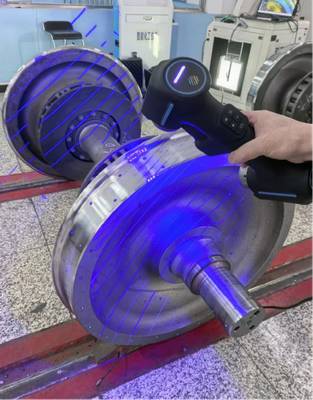
Consider a forged titanium aerospace bracket with complex internal webbing. Manual measurement might demand hours of disassembly and fixture setup. With INSVISION, engineers capture a complete high-density point cloud in minutes, directly on the shop floor. The system’s standalone expedition mode allows for digitizing extra-large structures, like a ship hull keel or wind turbine base, without fixed floor anchors.
The resulting data enables immediate comparative analysis against CAD models, with visual deviation heatmaps and automated inspection reports. This workflow is certified for deployment under CE, FCC, and CNAS standards, supporting global quality protocols.
How to Evaluate Scanning Workflow Stability for Your Application
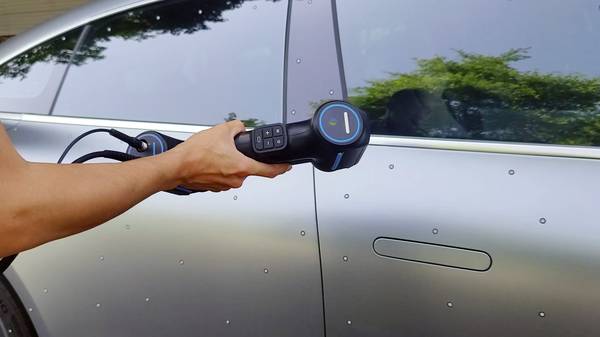
A common misconception is that more 3d scan targets guarantee better accuracy. In practice, poor placement strategy introduces cumulative error. Quality engineers must first match the alignment method to the specific part geometry and factory environment. For deep cylindrical bores or glossy surfaces, verify the scanner’s ability to capture data without disruptive preparation.
INSVISION AI reconstruction actively compensates for these challenges, ensuring stable data from challenging 3d scan targets. Before deployment, validate your scale bar placement strategy for global registration and confirm data export compatibility with your existing quality software (e.g., PolyWorks, GOM Inspect).
Key Strengths of the INSVISION AlphaScan Approach
- Handheld mobility paired with specialized laser modes for deep holes and fine details.
- AI-enhanced 3D reconstruction maintains accuracy on reflective, dark, or complex surfaces.
- Seamless integration with photogrammetry scale bars for large-volume, metrology-grade alignment.
- SMARPARA Q software facilitates direct data transfer for comparative analysis and report generation.
Sustaining Innovation: An In-House Culture for Industry 4.0 Demands
Maintaining technological leadership requires more than iterative hardware updates. INSVISION sustains an in-house innovation culture focused on continuous algorithm refinement and cross-functional validation. Our R&D process ensures that AI-driven reconstruction delivers reliable data from challenging 3d scan targets, supporting end-to-end digitalization.
We prioritize open architecture, allowing our systems to integrate smoothly into broader quality ecosystems and lean production rhythms.
Next Steps for Your Inspection Workflow
If you are modernizing your quality control process, the evaluation begins with your specific application. Share your part material, size range, critical tolerance bands, and production line takt time with our engineering team. We can help map an optimal scanning and reporting workflow to meet your validation requirements.
Hangzhou Insvision Technology Co., Ltd.
Address: Building 1, No. 1399 Liangmu Road, Yuhang District, Hangzhou, Zhejiang 311121, China
Copyright © Hangzhou Insvision Technology Co., Ltd. All rights reserved.
Copyright © Hangzhou Insvision Technology Co., Ltd. All rights reserved.