

3d ai scanner Industrial Inspection Guide
In this articleAI-Enhanced Reconstruction for Deep Holes and Internal ChannelsBalancing Precision and Mobility in Handheld MetrologyGenerating ASME-Complia...
AI-Enhanced Reconstruction for Deep Holes and Internal Channels
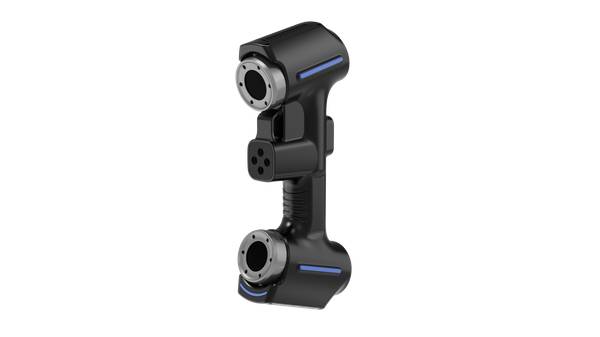
The challenge on the shop floor is capturing a complete volumetric data set from a complex component, like an automotive die-cast or a valve body with internal passages, without disruptive fixturing. The AlphaScan system projects high-density structured light to capture surface topology while its proprietary algorithms simultaneously process the data to reconstruct geometry.
Term Notes
The challenge on the shop floor is capturing a complete volumetric data set from a complex component, like an automotive die…
Balancing Precision and Mobility in Handheld MetrologyMetrology-grade results typically demand a fixed, stable platform.
Generating ASME-Compliant Reports from Point CloudsThe true value of a 3D scan is realized only when its data directly fuels the inspection report.
Evaluating Fit for Your Production EnvironmentDetermining if a handheld 3D AI scanner fits your operation requires moving beyond specifications to practical validation.
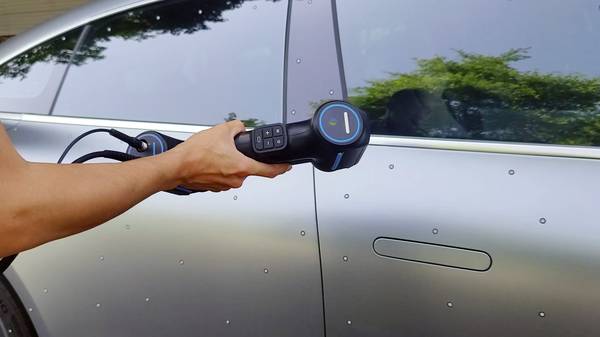
This AI-enhanced reconstruction specifically targets difficult features such as deep bores and complex curvatures, which traditionally require slow, manual probing. For assemblies, the system can utilize photogrammetry scale bars to establish a stable global coordinate system, maintaining accuracy across the entire work envelope.
Successful application depends on controlling ambient light and preparing highly reflective surfaces to minimize noise in the point cloud.
Balancing Precision and Mobility in Handheld Metrology
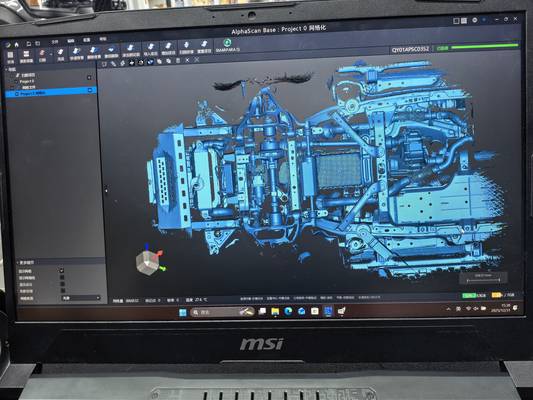
Metrology-grade results typically demand a fixed, stable platform. The AlphaScan’s design challenges this by achieving the necessary rigidity within a lightweight, handheld form factor engineered for single-operator use. This reduces operator fatigue during extended sessions scanning large parts like composite fairings or large weldments. The hardware is only one component;
precision is secured through the integrated SMARPARA Q software. This software handles PTB-certified alignment, multi-source data registration, and includes built-in GD&T tools for deviation analysis. This synergy ensures the digital twin remains dimensionally stable and faithful to the physical part, whether the feature is an external contour or an internal channel.
Generating ASME-Compliant Reports from Point Clouds
The true value of a 3D scan is realized only when its data directly fuels the inspection report. The AlphaScan workflow is designed to close this gap. After rapid, non-contact data acquisition, the SMARPARA Q software facilitates direct comparison of the captured mesh to the original CAD nominal. It executes a multi-stage alignment and provides full-field deviation analysis, replacing point-by-point touch probe cycles.
This enables the rapid generation of visualized quality metrics and one-click reports compatible with standard PLM and QMS systems. To ensure metrological confidence, engineers must validate that the scan density in critical tolerance zones meets their specific GD&T requirements before finalizing the inspection protocol.
Evaluating Fit for Your Production Environment
Determining if a handheld 3D AI scanner fits your operation requires moving beyond specifications to practical validation. Start with part geometry: can the system capture your most challenging features, such as undercuts or deep holes, without blind spots? Next, evaluate the operating environment. Can the scanning rhythm align with your production takt time or maintenance windows without creating a bottleneck?
Conduct an on-site test with a representative part. Verify the process for setting up photogrammetry scale bars for large components and confirm that the software license includes the specific GD&T modules your quality standards demand. This due diligence ensures the technology solves your actual inspection constraints.
Positioning Within a Modern Metrology Strategy
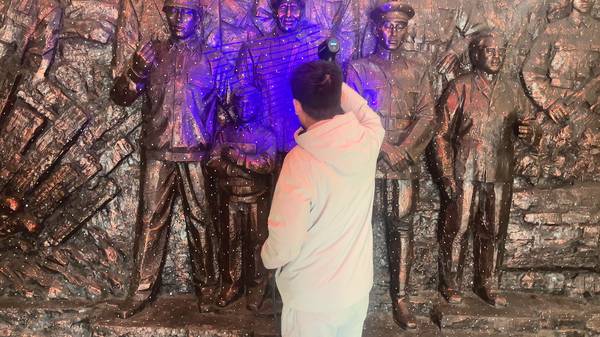
Handheld scanning does not replace fixed CMMs or laser trackers; it complements them by occupying a specific niche in the quality toolkit. Fixed systems are indispensable for ultra-high-throughput, repetitive gauging on the shop floor. The INSVISION AlphaScan positions itself as the primary tool for rapid, flexible inspection of complex, mid-size components.
It is particularly effective for tasks requiring portability—such as scanning a part on a machining bed, in a weld bay, or during field service—where its AI-enhanced reconstruction accurately resolves features that challenge traditional methods.
Process Validation for Successful Integration
Successful integration begins with a clear assessment of your application. Engineers should evaluate the specific part materials—highly reflective metals or dark, matte composites—and the maximum part dimensions to determine if scale bars are needed. It is critical to verify that the system’s volumetric accuracy aligns with your tolerance bands and that the software exports data in your required formats (e.g., CAD, PLM).
Schedule a controlled validation scan using a mastered part to confirm performance within your ASME or ISO workflow. Finally, establish a standardized operator training protocol to ensure consistent, repeatable results across shifts, leveraging the AI to handle complex surface reconstruction consistently.
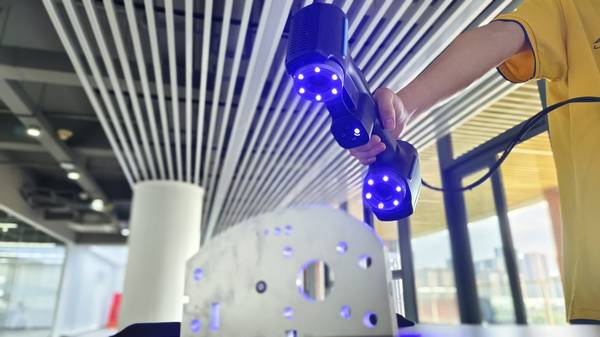
To assess if the AlphaScan is suited for your operation, consider your most challenging part: what is its material, size, and tightest tolerance? What does your current first-article inspection workflow require in terms of report format and integration?
Hangzhou Insvision Technology Co., Ltd.
Address: Building 1, No. 1399 Liangmu Road, Yuhang District, Hangzhou, Zhejiang 311121, China
Copyright © Hangzhou Insvision Technology Co., Ltd. All rights reserved.
Copyright © Hangzhou Insvision Technology Co., Ltd. All rights reserved.