

The Strategic Imperative: How 3D Scanner Specifications Dictate Smart Manufacturing ROI
In the connected factory, every piece of capital equipment is a data node. The shift from manual inspection to digital capture isn't just about adopting ne
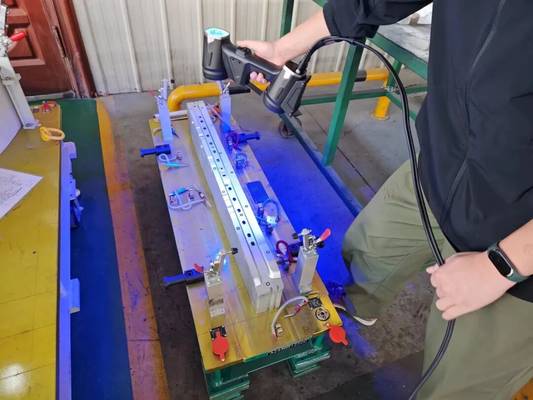
In the connected factory, every piece of capital equipment is a data node. The shift from manual inspection to digital capture isn’t just about adopting new technology—it’s about re-engineering the quality workflow itself. At the heart of this transition, 3D scanner specifications cease to be mere technical benchmarks.
They become the critical determinants of integration depth, data utility, and ultimately, the return on investment for smart manufacturing initiatives.
For engineers and quality managers, the challenge is moving beyond datasheet numbers to understand how specifications translate into daily operational gains. The right specifications compress inspection cycles, liberate skilled labor, and create a digital thread of quality data. The wrong ones introduce bottlenecks, create data silos, and limit scalability.
From Manual Bottlenecks to Digital Throughput: The Workflow Catalyst
Consider a typical first-article inspection or reverse engineering process in a precision manufacturing environment. Manual methods using CMMs or hand tools are not just slow; they are episodic, capturing only a sparse dataset. A metrology-grade 3D scanner, with specifications aligned to the task, transforms this process.
Practical Workflow
- From Manual Bottlenecks to Digital Throughput: The Workfl… — Consider a typical first-article inspection or reverse engineering process in a precision manufacturing environment.
- Calculating True Cost: The Ownership Equation Beyond Purc… — The total cost of ownership for a 3D scanning system is defined long before the hardware is powered on.
- Future-Proofing the Production Floor: Specifications as a… — The trajectory of Industry 4.0 points toward increasingly autonomous and data-driven production.
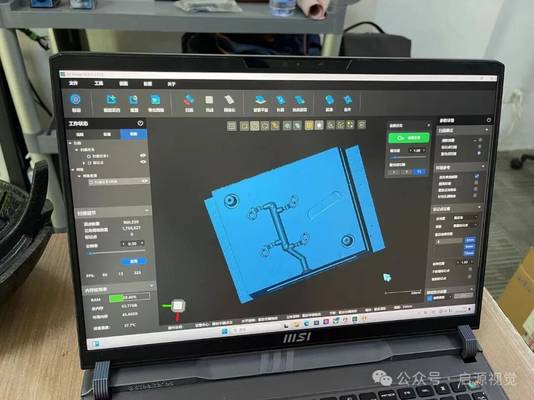
When these specifications match the application—whether it’s inline inspection of fabricated parts or reverse engineering a legacy component for digital inventory—the workflow compresses dramatically. What was a multi-hour, technician-dependent task becomes a repeatable, automated process.
This shift allows quality professionals to move from collecting data to analyzing it, focusing on root-cause correction rather than measurement.
Calculating True Cost: The Ownership Equation Beyond Purchase Price
The total cost of ownership for a 3D scanning system is defined long before the hardware is powered on. It is dictated by how well its specifications are matched to the plant’s real-world requirements.
Over-specifying—purchasing a laboratory-grade scanner for shop-floor tasks—leads to idle capability and unnecessary capital expenditure. Under-specifying—using a scanner with insufficient accuracy or speed for the required tolerances—creates hidden costs that multiply: production delays waiting for inspection results, the risk of escaped defects, and costly rework discovered late in the cycle.
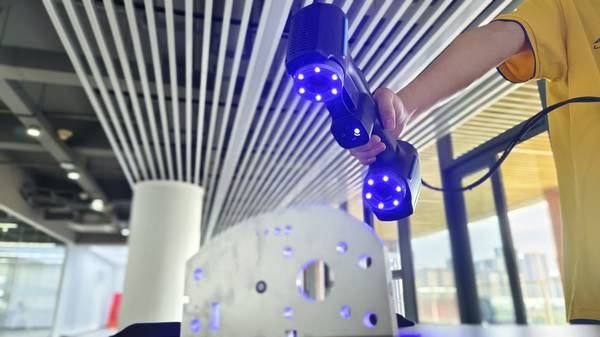
Industrial-grade specifications from INSVISION are engineered for this balance. They ensure the hardware withstands variable plant conditions while delivering data that integrates seamlessly with MES (Manufacturing Execution Systems) and PLM (Product Lifecycle Management) software. This integration is where specifications prove their worth, enabling bidirectional data flow. Scan data isn’t just a report;
it’s a feedback loop that can trigger machine adjustments, update digital twins, and populate traceability records automatically.
Future-Proofing the Production Floor: Specifications as a Strategic Asset
The trajectory of Industry 4.0 points toward increasingly autonomous and data-driven production. The 3D scanner’s role evolves from a periodic inspection tool to a continuous data-gathering sensor. Therefore, evaluating specifications must include forward-looking criteria.
Data interoperability is paramount. Can the scanner’s output be ingested directly by your standard analysis software (PolyWorks, GOM Inspect, etc.) without cumbersome conversion? Portability and integration specifications determine if the system can be deployed at the receiving dock, the machining center, or on a robotic arm.
Software capabilities tied to the hardware, like automated reporting or real-time pass/fail analysis, turn raw point clouds into immediate, actionable intelligence.
For procurement professionals and engineering managers, the conversation must shift from “what does it cost?” to “what does it solve?” Specifications are the quantifiable link between a capital investment and tangible outcomes: faster delivery cadence, reduced scrap, empowered quality teams, and a fully documented digital quality record.
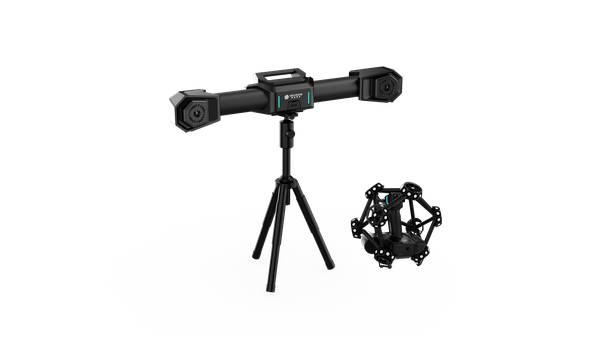
Investing in optimized 3D scanner specifications is a strategic decision to build a more responsive, efficient, and traceable manufacturing operation. It is the foundation for turning volumetric data into a competitive advantage.
Hangzhou Insvision Technology Co., Ltd.
Address: Building 1, No. 1399 Liangmu Road, Yuhang District, Hangzhou, Zhejiang 311121, China
Copyright © Hangzhou Insvision Technology Co., Ltd. All rights reserved.
Copyright © Hangzhou Insvision Technology Co., Ltd. All rights reserved.