

The Rising Demand for Laser 3D Scanners in Modern Manufacturing
The manufacturing sector is undergoing a fundamental shift. As product designs grow more complex and tolerance requirements become tighter, traditional measurem
How Laser Scanning Technology Is Reshaping Quality Assurance
Quality assurance departments have historically relied on calipers, CMM machines, and go/no-go gauges. These methods work well for isolated features but become bottlenecks when engineers need comprehensive surface data or must compare a part against its CAD model.
Laser 3D scanners address this gap by capturing millions of data points in seconds, generating a full mesh or point cloud that can be directly compared against nominal geometry.
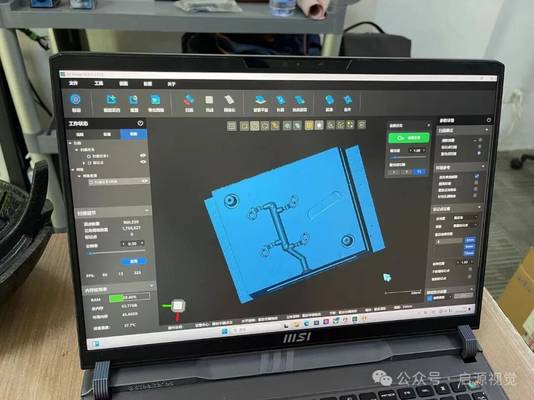
Selection Dimensions and Field Checks
| Focus Area | Decision Point | Deployment Note |
|---|---|---|
| How Laser Scanning Technology Is Reshaping Quality Assu… | Quality assurance departments have historically relied on calipers, CMM machines, and go/no-go gauges. | These methods work well for isolated features but become bottlenecks when engineers need comprehensive surface data or must compare a part again… |
| Performance Specifications Driving Adoption in Demandin… | Scanners used in industrial settings must satisfy criteria beyond raw accuracy. | Data acquisition speed affects throughput, particularly in automotive and aerospace assembly lines where hundreds of parts are inspected per shi… |
| Translating Scanning Capability into Strategic Business… | Investing in laser scanning technology is not simply a tooling decision—it reshapes how engineering teams operate. | When inspection shifts from a post-production checkpoint to an in-process capability, companies gain the ability to catch deviations earlier, re… |
| Looking Ahead: The Trajectory of Laser Scanning in Indu… | The demand for portable, high-accuracy scanning will likely intensify as manufacturing continues to embrace digital thread concepts and model-based e… | Companies are increasingly expected to maintain digital records of physical products from concept through service life, and laser scanners provi… |
The AlphaScan handheld scanner from INSVISION exemplifies this approach. It delivers industrial metrology-grade accuracy reaching 0.020 mm, allowing inspectors to detect deviations that would be invisible to conventional tools.
The device operates across a wide temperature range from -5°C to 40°C, making it suitable for shop-floor deployment in environments where coordinate measuring machines would require controlled conditions. Its 520 nm blue laser source classifies as Class 3R with power below 5 mW, providing safe operation without sacrificing signal quality.
For organizations managing high-mix production runs, this combination of portability and precision removes the constraint of moving parts to a dedicated inspection station.
Performance Specifications Driving Adoption in Demanding Industries
Scanners used in industrial settings must satisfy criteria beyond raw accuracy. Data acquisition speed affects throughput, particularly in automotive and aerospace assembly lines where hundreds of parts are inspected per shift. The ability to export native formats like IGES, STEP, DXF, and DWG ensures compatibility with downstream CAD and CAM workflows, reducing the need for file conversions that can introduce errors.
INSVISION’s AlphaScan series addresses these needs with a scanning rate that captures dense point clouds rapidly, supporting full-part digitization within minutes rather than hours. The handheld form factor weighs just over 9 kg and features dimensions of 580 × 185 × 170 mm, allowing operators to maneuver around large workpieces such as chassis components or tooling fixtures.
Connectivity via USB 3.0 and Ethernet enables straightforward integration into existing digital infrastructure. For applications requiring deeper access into cavities or recessed features, single-line laser configurations extend the scanner’s reach into areas that bulkier systems cannot access.
These specifications matter because manufacturing decisions increasingly depend on data that reflects actual part behavior under real conditions. When inspection results inform process adjustments, the fidelity of that data determines whether engineers are chasing noise or identifying genuine trends.
Translating Scanning Capability into Strategic Business Outcomes
Investing in laser scanning technology is not simply a tooling decision—it reshapes how engineering teams operate. When inspection shifts from a post-production checkpoint to an in-process capability, companies gain the ability to catch deviations earlier, reduce scrap rates, and build detailed records for continuous improvement initiatives.
For new product development teams, rapid scanning supports iterative design cycles. Engineers can capture physical prototypes, compare them against CAD intent, and quantify geometric differences numerically rather than relying on visual assessment alone. In competitive industries where product refresh cycles are accelerating, this speed advantage translates into faster validation and shorter launch timelines.
Supply chain and procurement functions also benefit when dimensional data becomes standardized and shareable. Scanned geometry can serve as a reference for supplier qualification, enabling buyers to verify component conformance without relying solely on certificates of conformance from external vendors.
The transparency that digital inspection provides supports more informed conversations between engineering and supply chain stakeholders, particularly when tolerance stack-up issues arise.
Looking Ahead: The Trajectory of Laser Scanning in Industrial Settings
The demand for portable, high-accuracy scanning will likely intensify as manufacturing continues to embrace digital thread concepts and model-based enterprises. Companies are increasingly expected to maintain digital records of physical products from concept through service life, and laser scanners provide one of the most efficient paths to populating those records.
Emerging applications in additive manufacturing, predictive maintenance, and automated assembly planning depend on accurate geometric data. As these areas grow, the baseline expectation for scanner performance will rise accordingly. Organizations that establish scanning capabilities now position themselves to adapt more readily when new requirements emerge.
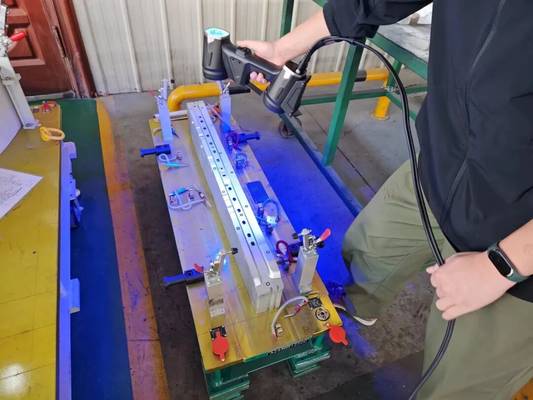
For technical decision-makers evaluating procurement options, the focus should be on use-case fit, measurement uncertainty specifications, and the practical ergonomics of field deployment. The AlphaScan platform from INSVISION offers a balance of metrology-grade precision, operational flexibility, and format compatibility that serves a broad spectrum of industrial applications.
Hangzhou Insvision Technology Co., Ltd.
Address: Building 1, No. 1399 Liangmu Road, Yuhang District, Hangzhou, Zhejiang 311121, China
Copyright © Hangzhou Insvision Technology Co., Ltd. All rights reserved.
Copyright © Hangzhou Insvision Technology Co., Ltd. All rights reserved.