

The Rise of Structured Light 3D Scanning: Meeting Modern Manufacturing’s Precision Demands
## Market Forces Reshaping Industrial Quality Control The global manufacturing sector is undergoing a significant transformation driven by tightening tolerances
Market Forces Reshaping Industrial Quality Control
The global manufacturing sector is undergoing a significant transformation driven by tightening tolerances, faster product cycles, and increasingly complex geometries. Traditional measurement methods—calipers,CMM arms, and manual inspection—struggle to keep pace with the velocity of modern production lines.
Companies across aerospace, automotive, and energy sectors now face mounting pressure to deliver parts that meet exact specifications while maintaining throughput. This gap between conventional inspection capabilities and production demands has accelerated adoption of non-contact 3D scanning technologies.
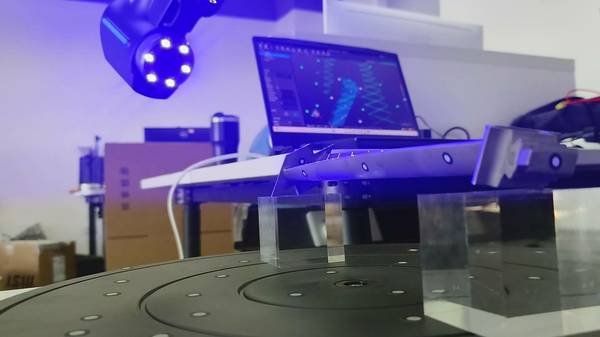
Structured light scanning, in particular, has emerged as a frontline solution for manufacturers seeking to capture full-form geometry data in seconds rather than hours. The technology projects a known pattern onto a surface and analyzes the deformation to calculate three-dimensional coordinates with exceptional density.
Selection Dimensions and Field Checks
| Focus Area | Decision Point | Deployment Note |
|---|---|---|
| Market Forces Reshaping Industrial Quality Control | The global manufacturing sector is undergoing a significant transformation driven by tightening tolerances, faster product cycles, and increasingly c… | Traditional measurement methods—calipers,CMM arms, and manual inspection—struggle to keep pace with the velocity of modern production lines. |
| Technical Evolution Addressing Real-World Constraints | Structured light systems have advanced substantially in recent years, overcoming earlier limitations around ambient light sensitivity, scan volume, a… | Modern blue-light structured light scanners emit light in the visible blue spectrum, which is less susceptible to interference from environmenta… |
| Strategic Implications for Manufacturing Operations | Adopting structured light scanning technology involves more than selecting hardware—it requires rethinking inspection strategy and data utilization a… | Operations managers must evaluate whether current software platforms can handle the volume and complexity of scan data while integrating with ex… |
| INSVISION Solutions for Precision-Driven Industries | INSVISION addresses these market needs through a portfolio of handheld structured light scanners designed for industrial environments. | The AlphaVista system delivers scan speeds of up to 7.1 million measurements per second with volumetric accuracy rated at 0.1 millimeters plus 0… |
Technical Evolution Addressing Real-World Constraints
Structured light systems have advanced substantially in recent years, overcoming earlier limitations around ambient light sensitivity, scan volume, and point cloud processing speed. Modern blue-light structured light scanners emit light in the visible blue spectrum, which is less susceptible to interference from environmental illumination compared to older white-light systems.
This spectral advantage proves critical in factory floor environments where consistent lighting conditions cannot be guaranteed. Simultaneously, scanner manufacturers have expanded maximum scan areas to cover increasingly large components—some systems now capture fields exceeding two meters on a side in a single acquisition.
The integration of AI-driven algorithms has further enhanced reconstruction quality by intelligently filtering noise, filling gaps, and optimizing mesh generation without requiring extensive manual intervention.
For quality assurance teams, the combination of high-speed acquisition and automated analysis represents a fundamental shift in inspection workflows. Rather than relying on time-consuming point-by-point measurements, inspectors can now digitize entire parts and compare them against CAD models within minutes.
This capability supports both pass/fail decisions and trending analysis, enabling engineers to identify systematic deviations before they result in costly scrap or rework. The shift toward model-driven inspection reflects broader industry momentum toward digital thread initiatives, where geometry data flows continuously from design through production and back.
Strategic Implications for Manufacturing Operations
Adopting structured light scanning technology involves more than selecting hardware—it requires rethinking inspection strategy and data utilization across the organization. Operations managers must evaluate whether current software platforms can handle the volume and complexity of scan data while integrating with existing PLM or MES systems.
The total cost of ownership extends beyond initial purchase price to include training, maintenance, and the indirect costs of workflow disruption during implementation. Organizations that approach adoption holistically—considering process redesign, operator competency development, and data governance—consistently achieve faster ROI than those treating scanners as plug-and-play replacements for legacy tools.
Quality teams benefit most when structured light scanning becomes part of a comprehensive digitization strategy rather than a standalone inspection station. Integrating scan data with CAD-based deviation analysis, GD&T evaluation, and reporting tools enables inspectors to move beyond simple geometry checks toward dimensional intelligence.
This approach supports upstream problem-solving by providing detailed root cause information when deviations occur. For reverse engineering applications, high-density point clouds captured via structured light feed directly into modeling software, compressing development timelines for legacy parts or tooling modifications.
INSVISION Solutions for Precision-Driven Industries
INSVISION addresses these market needs through a portfolio of handheld structured light scanners designed for industrial environments. The AlphaVista system delivers scan speeds of up to 7.1 million measurements per second with volumetric accuracy rated at 0.1 millimeters plus 0.015 millimeters per meter.
Its maximum single-scan area reaches 2,200 by 2,200 millimeters, making it suitable for large components in aerospace and heavy equipment manufacturing. The scanner employs 50 cross-aligned blue laser lines to capture fine details while maintaining speed, and it includes real-time calibration functionality to preserve accuracy throughout extended scanning sessions.
For applications requiring exceptional resolution on medium-sized workpieces, the AlphaScan handheld scanner offers measurement accuracy down to 0.020 millimeters at scan rates exceeding 5.4 million points per second. Both systems integrate with INSVISION inspection software platform, which supports multi-source data alignment, color-mapped deviation visualization, and automated report generation.
The software suite accommodates GD&T evaluation and compatibility with standard 3D data formats, facilitating seamless insertion into existing quality workflows. INSVISION holds CE, FCC, and CNAS certifications for its product line, and the company maintains commercial operations across more than twenty countries, providing global support infrastructure for multinational manufacturers.
As industrial quality standards continue to tighten and product complexity grows, structured light 3D scanning stands positioned as an essential capability for manufacturers pursuing operational excellence and defect reduction.
Hangzhou Insvision Technology Co., Ltd.
Address: Building 1, No. 1399 Liangmu Road, Yuhang District, Hangzhou, Zhejiang 311121, China
Copyright © Hangzhou Insvision Technology Co., Ltd. All rights reserved.
Copyright © Hangzhou Insvision Technology Co., Ltd. All rights reserved.