

The Operational Blueprint: How Handheld 3D Scanning Builds Cost Efficiency
In modern manufacturing, the pressure to maintain stringent quality standards without compromising production cadence is a constant challenge.
In modern manufacturing the pressure to maintain stringent
In modern manufacturing, the pressure to maintain stringent quality standards without compromising production cadence is a constant challenge. Traditional inspection methods—manual gauging, fixed CMMs, templated fixtures—often create significant bottlenecks. These processes not only consume valuable skilled labor hours but also introduce a critical delay between production and verification.
Term Notes
In modern manufacturing, the pressure to maintain stringent quality standards without compromising production cadence is a c…
This immediacy eliminates transport and queue times col…This immediacy eliminates transport and queue times, collapsing the feedback loop between production and quality control .
Perhaps the most significant driver of long termPerhaps the most significant driver of long-term cost efficiency is data utility.
For organizations evaluating the long term return onFor organizations evaluating the long-term return on investment, the value of handheld 3D scanning is its role as a cross-fu…
This lag allows defects to propagate, leading to costly rework, scrap, and potential line stoppages. For operations managers, these are not isolated incidents but systemic costs that accumulate silently across every shift and production run.
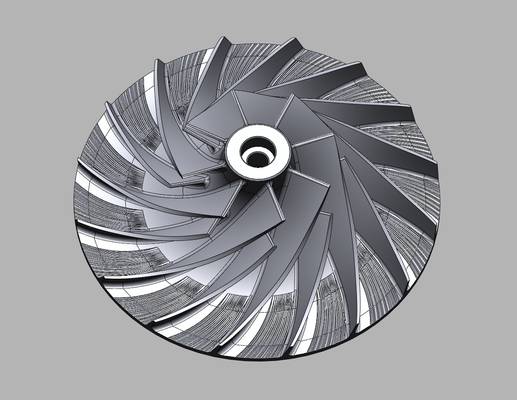
This immediacy eliminates transport and queue times collapsing
This immediacy eliminates transport and queue times, collapsing the feedback loop between production and quality control. Technicians can verify components in minutes, not hours. The INSVISION AlphaScan, with a weight of approximately 1070g and designed for ergonomic use over a full shift, delivers this capability without sacrificing the 0.020mm metrology-grade accuracy required for industrial validation.
The result is a direct reduction in labor hours dedicated to logistics and waiting, freeing personnel for higher-value tasks.
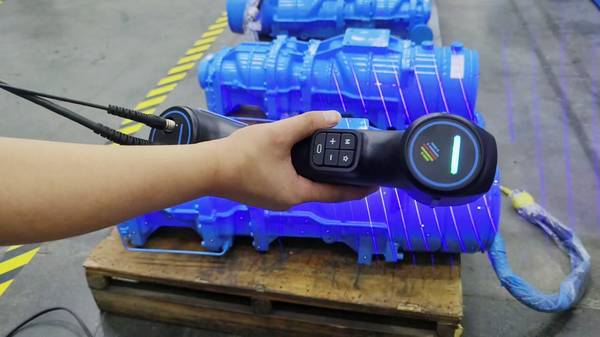
The economic impact extends far beyond simple speed. Consider the inspection of large, complex components such as weldments, castings, or structural fabrications. Traditional methods require extensive fixture design and setup. The portability and wide-area scanning of a device like the AlphaScan remove this burden.
Its blue laser line configuration can capture deep cavities and internal features inaccessible to contact probes, enabling comprehensive inspection without dedicated, costly fixtures. This flexibility allows quality checks to keep pace with production flow, particularly in sectors like heavy equipment, aerospace, and energy where part size and complexity are prohibitive for static systems.
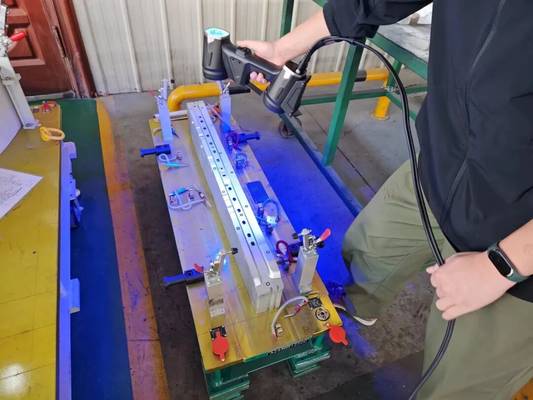
Perhaps the most significant driver of long term
Perhaps the most significant driver of long-term cost efficiency is data utility. Every scan creates a comprehensive digital record—a detailed point cloud and mesh. This asset supports critical operational pillars:
- Quality Traceability & Root Cause Analysis: Each part’s digital twin can be archived indefinitely. When a deviation is detected, engineers can perform immediate CAD-to-scan comparison, generating color deviation maps for clear visualization. More importantly, they can audit historical scan data to pinpoint exactly when a process began to drift, transforming inspection from a pass/fail gate into a continuous feedback loop for process improvement.
- Reduction in Documentation Overhead: Digital records automatically replace paper-based inspection logs and manual data entry, significantly reducing administrative labor and the risk of transcription errors. This supports compliance with ISO and ASME standards effortlessly.
- Asset Versatility & Capital Efficiency: The same scan data used for First Article Inspection (FAIR) or in-process checks can feed directly into reverse engineering, tolerance analysis (GD&T), and tooling wear monitoring. This consolidates multiple measurement needs onto a single, portable platform, reducing capital expenditure on specialized, single-purpose equipment and increasing operational agility.
For organizations evaluating the long term return on
For organizations evaluating the long-term return on investment, the value of handheld 3D scanning is its role as a cross-functional enabler. It bridges the gap between design, production, and maintenance. The ability to quickly digitize as-built conditions supports faster redesigns, validates assembly fits, and creates accurate records for maintenance and repair operations.
This versatility amortizes the technology’s cost across multiple departments and use cases.
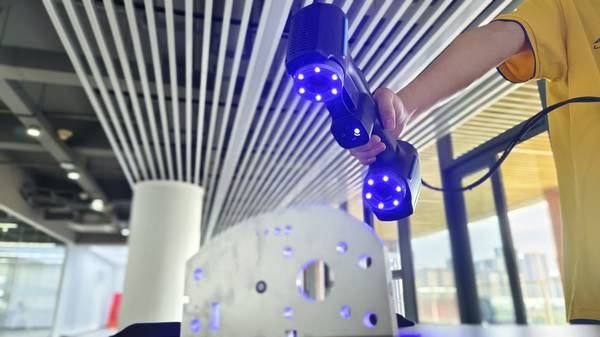
INSVISION’s AlphaScan series embodies this practical integration of
INSVISION AlphaScan series embodies this practical integration of high-precision metrology into daily operations. By prioritizing seamless workflow integration alongside precision and portability, handheld scanners provide a clear pathway to measurable cost efficiency.
They address the hidden costs of delayed inspection, preventable rework, and underutilized data, enabling manufacturers to protect quality margins while maintaining the velocity demanded by competitive global markets. The investment is not merely in a scanner, but in a more responsive, data-driven, and efficient production lifecycle.
Hangzhou Insvision Technology Co., Ltd.
Address: Building 1, No. 1399 Liangmu Road, Yuhang District, Hangzhou, Zhejiang 311121, China
Copyright © Hangzhou Insvision Technology Co., Ltd. All rights reserved.
Copyright © Hangzhou Insvision Technology Co., Ltd. All rights reserved.