

From Physical to Digital: How 3D Scanning of Objects is Reshaping Industrial Workflows
The drive for faster innovation and uncompromising quality in industrial manufacturing is relentless.
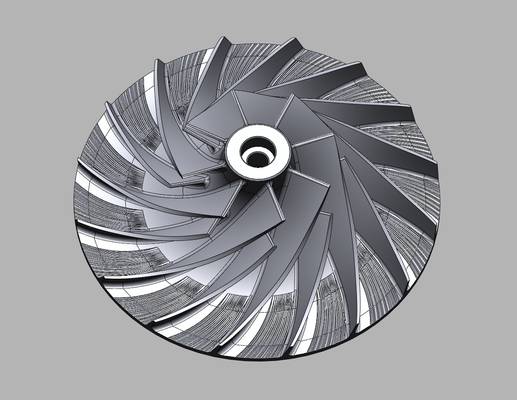
The drive for faster innovation and uncompromising quality in industrial manufacturing is relentless. Traditional metrology, reliant on manual gauges and coordinate measuring machines (CMM) with limited data points, often creates bottlenecks in design, quality control, and production support. This is where the digital capture of physical objects becomes a strategic advantage.
High-precision 3D scanning of objects bridges the gap between the physical and digital worlds, creating accurate, actionable data that streamlines core industrial processes.
For engineers and quality managers in sectors like aerospace, automotive, and energy, this technology is more than a tool—it’s a foundational element of digital transformation. INSVISION provides AI-driven 3D scanning and smart inspection solutions that integrate directly into these demanding workflows, certified for global deployment and built to deliver reliable, metrology-grade data.
Modernizing Automotive Components with Digital Twins
A common challenge in automotive manufacturing is the need to improve or adapt legacy components for which original CAD data is lost or never existed. This can stall redesign projects for performance upgrades, material changes, or supply chain adjustments.
Key Points at a Glance
- A common challenge in automotive manufacturing is the need to improve or adapt legacy components for which original CAD data is lost or never ex…
- First-article inspection (FAI) and in-process quality verification are critical, yet traditional methods can be slow and provide incomplete data.
- Beyond design and QA, manufacturing operations frequently need to recreate tooling, document legacy equipment, or produce spare parts for machin…
INSVISION’s AlphaScan handheld 3D scanner addresses this by capturing the complete surface geometry of an existing physical part. Engineers obtain a high-fidelity digital twin—a detailed point cloud or mesh that preserves every critical contour and functional feature. This digital asset becomes the definitive reference for reverse engineering.
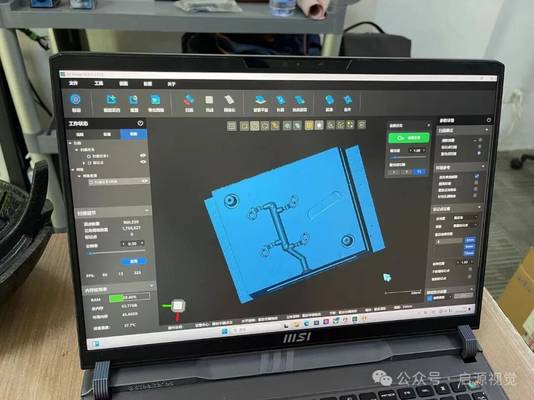
With an accurate scan as the baseline, design teams can modify the component within CAD software. They can incorporate new specifications—such as lightweighting features or compatibility with modern assemblies—while ensuring the updated design maintains fit and function with the existing vehicle architecture.
This process liberates manufacturers from dependency on obsolete documentation, allowing continuous improvement of mature product lines without costly tooling guesswork.
Ensuring Conformance with Metrology-Grade Inspection
First-article inspection (FAI) and in-process quality verification are critical, yet traditional methods can be slow and provide incomplete data. The requirement is for a comprehensive, objective comparison of a manufactured part against its design intent.
INSVISION’s AlphaVista system delivers automated, high-speed inspection for this purpose. With a volumetric accuracy of 0.1mm ± 0.015mm/m and the capability to capture millions of measurements per second, it generates a complete dimensional dataset of large workpieces, with scan areas up to 2200mm x 2200mm. This eliminates the need for complex fixturing or disassembly.
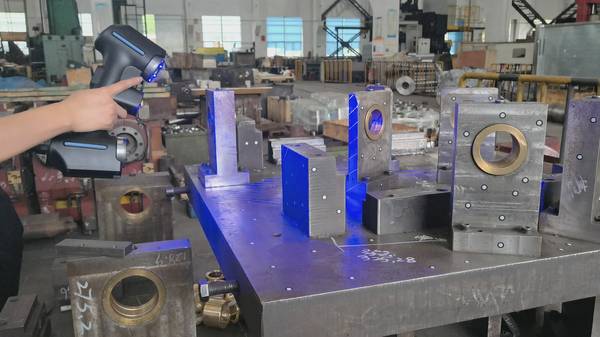
The workflow is straightforward: scan the production part, and the software aligns the data to the nominal CAD model. It then produces a color-coded deviation map, visually highlighting areas out of Geometric Dimensioning and Tolerancing (GD&T) specifications across the entire surface. This immediate visual feedback allows quality teams to pinpoint issues quickly, understand variation patterns, and make informed decisions.
The result is a digitized, auditable inspection report that integrates directly into quality management systems, providing undeniable evidence of conformance for internal and customer review.
Reconstructing Legacy Assets through Reverse Engineering
Beyond design and QA, manufacturing operations frequently need to recreate tooling, document legacy equipment, or produce spare parts for machinery where blueprints are unavailable. Reverse engineering from a physical sample is the only viable path.
INSVISION’s integrated scanning and detection platforms support a complete digital reconstruction workflow. After capturing the object’s geometry, the software assists in generating a watertight, editable CAD model. This model is suitable for new manufacturing documentation, finite element analysis (FEA), or direct use in computer-aided manufacturing (CAM) systems.
AI-enhanced algorithms within INSVISION solutions intelligently process scan data, accurately interpreting complex geometries, blends, and organic shapes. This reduces the manual cleanup typically required and increases model fidelity. The final output ensures seamless integration with downstream engineering and production software, effectively future-proofing physical assets by bringing them into the digital ecosystem.
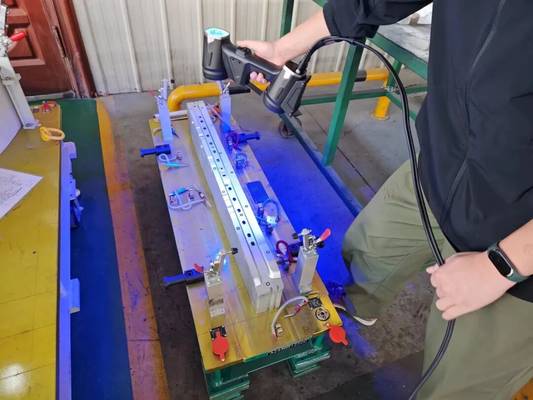
For organizations aiming to digitize their physical inventory, monitor asset wear, or enable agile production changes, 3D scanning of objects provides the essential data foundation. INSVISION’s certified technologies turn this capability into a reliable, integrated part of the modern industrial workflow, delivering the precision and efficiency required in competitive global markets.
Hangzhou Insvision Technology Co., Ltd.
Address: Building 1, No. 1399 Liangmu Road, Yuhang District, Hangzhou, Zhejiang 311121, China
Copyright © Hangzhou Insvision Technology Co., Ltd. All rights reserved.
Copyright © Hangzhou Insvision Technology Co., Ltd. All rights reserved.