

Precision Without Compromise 3D Vision Inspection Transforms Quality Control
Discover how 3D vision inspection turns quality control into a strategic asset. Reduce scrap, accelerate FAI, and achieve data-driven manufacturing compliance.
Identifying the Cost Drivers in Traditional Inspection
Conventional workflows create significant, often hidden, operational drag. Fixturing and programming a CMM for a complex aerospace component can consume a full shift before a single measurement is taken. For lean batch operations producing 20-50 units, dedicating a high-value CMM cell for an entire run is economically impractical.
Term Notes
Conventional workflows create significant, often hidden, operational drag.
The Operational Efficiency Pathways of 3D VisionAdvanced 3d vision inspection introduces a different paradigm, targeting specific cost centers.
A Framework for Quantifying the Operational ImpactLeaders can evaluate potential value by auditing their current state against this framework:
Where INSVISION Delivers Tangible Operational GainsINSVISION’s technology stack is engineered to translate technical capability into operational results.
Portable arms offer flexibility but can introduce repeatability challenges across full-volume scans, risking data consistency.
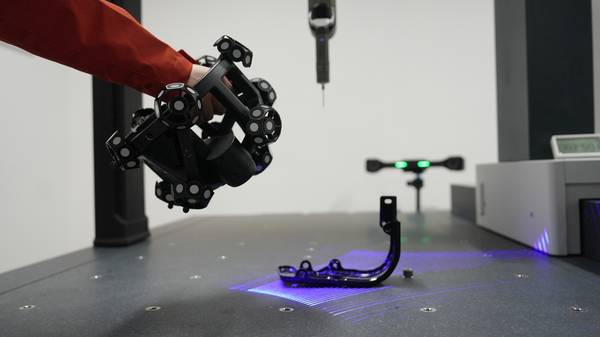
The deeper cost lies in the feedback loop. When a contact probe identifies a non-conformance on a turbine blade interface held to ±0.05mm, the discovery comes late in the process. Determining root cause—tool wear, fixture drift, thermal effects—requires guesswork and manual investigation, extending downtime.
For medical device manufacturers, this delay complicates FDA 21 CFR Part 820 compliance, where documented, traceable dimensional evidence is non-negotiable. The result is a cycle where engineers spend more time aligning machines and investigating failures than on proactive quality assurance.
The Operational Efficiency Pathways of 3D Vision
Advanced 3d vision inspection introduces a different paradigm, targeting specific cost centers.
- Measurement Cycle Time → Rapid, Fixture-Free Digitization
The core shift is from tactile point-by-point measurement to instantaneous surface capture. A component can be digitized into a dense point cloud in minutes, without dedicated fixturing or complex programming. This compresses first-article inspection (FAI) from hours to minutes, accelerating new product introduction and allowing quality gates to keep pace with production tempo.
- Rework and Scrap → Comprehensive Deviation Analysis
By generating a full 3D deviation map—not just a few sampled points—the technology reveals the complete form of a part. This allows engineers to distinguish between a systemic trend (like tool deflection) and a localized anomaly immediately. Catching a drift in tool wear early, before it produces scrap, transforms quality control from a detection to a prevention function.
- Labor Deployment → Reducing Dependency on Specialized Skill
Streamlined workflows and intuitive software reduce the need for highly specialized metrology programming expertise for routine inspections. Skilled technicians can focus on analyzing data and solving process issues rather than operating machinery. This optimizes labor allocation and mitigates risk associated with specialized personnel.
- Delivery Rhythm → Integrating Inspection into the Production Flow
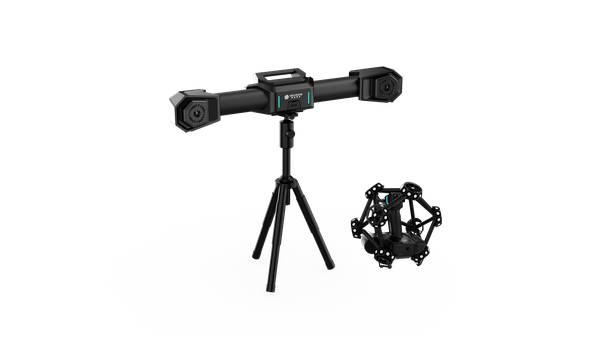
The speed and portability of systems like INSVISION’s enable inspection to move from a centralized lab to the shop floor or assembly station. In-process verification becomes feasible, preventing a batch of components from progressing with the same error. This synchronization of inspection and production is fundamental to lean manufacturing and responsive order fulfillment.
A Framework for Quantifying the Operational Impact
Leaders can evaluate potential value by auditing their current state against this framework:
| Cost Category | Current-State Audit Question | Potential Improvement via 3D Vision |
|---|---|---|
| Time-to-Data | How many hours elapse from part-ready to final inspection report for an FAI? | Drastic reduction in setup and scan time, enabling faster job release and feedback. |
| Rework Allocation | What percentage of quality labor hours is spent on root-cause analysis versus measurement? | Shifts effort from detection/investigation to proactive analysis and prevention. |
| Asset Utilization | Is our high-precision CMM occupied with routine checks that block complex work? | Offloads high-volume/routine verification, freeing premium assets for critical tasks. |
| Compliance Overhead | How man-hours are spent compiling manual data for AS9100 or ISO 13485 audits? | Automates generation of digital, tamper-evident inspection records and full-field reports. |
| Knowledge Retention | Is inspection data locked in static PDFs, or is it a searchable digital thread for process improvement? | Creates a living 3D archive of parts for trend analysis and continuous improvement. |
Where INSVISION Delivers Tangible Operational Gains
INSVISION’s technology stack is engineered to translate technical capability into operational results. Its focus on metrology-grade precision ensures data is trustworthy for making consequential decisions on high-value components. The workflow design emphasizes rapid deployment and minimal training overhead, aiming for a swift transition from installation to generating actionable process intelligence.
For businesses, this means the system’s value is realized not in a lab, but through its impact on daily throughput, quality containment, and audit readiness.
A Phased Implementation Roadmap for Immediate Impact
A strategic rollout mitigates risk and demonstrates quick wins.
- First-Article and Incoming Inspection Pilot: Begin with the bottleneck of FAIs and raw material/forging validation. This demonstrates speed and comprehensive reporting, directly accelerating new product introductions and validating supplier quality.
- Critical In-Process Control Point: Identify one high-value, high-risk machining or assembly station. Deploy 3d vision inspection for periodic process verification to catch drift before it creates scrap. This showcases preventive quality and builds shop-floor confidence.
- Digital Twin for Tooling and Wear Analysis: Use the system to digitally archive critical tooling or fixtures. Periodic re-scans provide quantifiable wear data, enabling predictive maintenance and replacing subjective visual checks with data-driven replacement schedules.
Conclusion
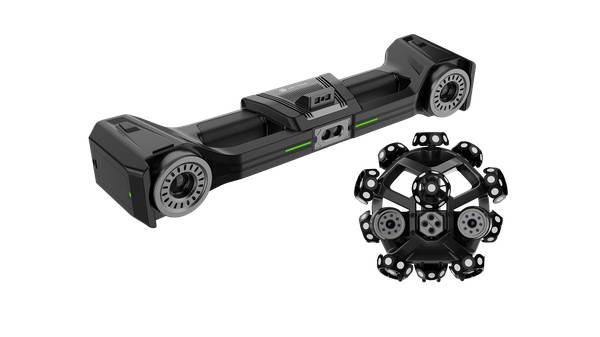
For manufacturing competitiveness hinging on agility and predictability, quality inspection cannot remain a slow, opaque cost center. Modern 3d vision inspection represents an operational upgrade that compresses time-to-decision, embeds prevention into the process, and creates a digital backbone for continuous improvement.
The investment is justified not merely in hardware, but in the recovered capacity, avoided waste, and strengthened customer trust it delivers. For leaders scrutinizing every link in their value chain, it represents a decisive step toward data-driven, efficient manufacturing.
Hangzhou Insvision Technology Co., Ltd.
Address: Building 1, No. 1399 Liangmu Road, Yuhang District, Hangzhou, Zhejiang 311121, China
Copyright © Hangzhou Insvision Technology Co., Ltd. All rights reserved.
Copyright © Hangzhou Insvision Technology Co., Ltd. All rights reserved.