

Procurement Guide to 3D Line Laser Scanners for Operational ROI
Evaluate 3D scanner line laser systems for operational ROI. This procurement guide covers certified accuracy, total cost of ownership, and shop-floor durability.
The Hidden Cost of Conventional Measurement
Traditional measurement methods—manual CMMs, touch probes, and hand tools—create invisible drag on production velocity compared to a 3D scanner line laser. They are inherently sequential, requiring dedicated fixture time and skilled operator intervention.
Practical Workflow
- The Hidden Cost of Conventional Measurement — Traditional measurement methods—manual CMMs, touch probes, and hand tools—create invisible drag on production velocity compared t…
- Key Evaluation Criteria for Operational Impact — A 3D scanner line laser’s advertised resolution is meaningless if it cannot capture the specific geometries or surface finishes o…
- Where INSVISION Delivers Tangible Operational Gains — INSVISION designs its 3D scanner line laser systems with these core operational requirements as foundational priorities.
- A Practical Implementation Roadmap — For a manageable and impactful introduction, avoid a plant-wide rollout.
This bottleneck manifests during first-article inspection (FAI), where a delay in releasing a part can stall an entire production line, or in-process checks, where sampling rates are limited by throughput. The result is a trade-off: speed for accuracy, or comprehensive data for on-time delivery.
Furthermore, the subjective nature of many manual methods complicates root cause analysis and creates data silos, hindering continuous improvement efforts.
Key Evaluation Criteria for Operational Impact
- Align Specifications with Actual Use-Case Demands
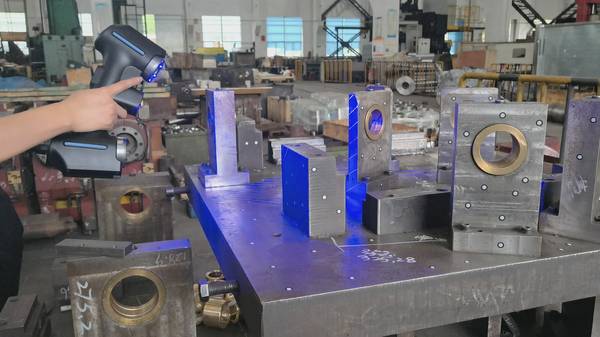
A 3D scanner line laser’s advertised resolution is meaningless if it cannot capture the specific geometries or surface finishes of your components. Begin by mapping the scanner’s capabilities to your highest-impact applications. Is the primary need rapid FAI on complex contoured parts, or high-volume in-line inspection of weldments?
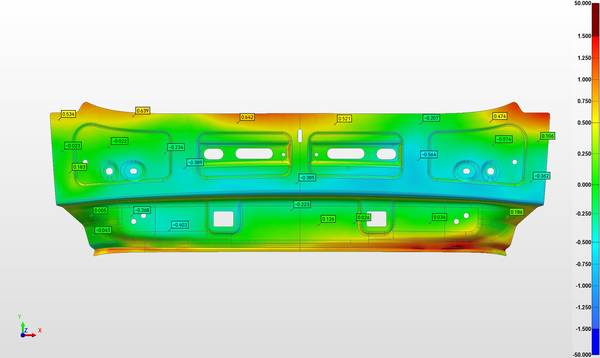
For FAI, prioritize a system that generates dense, metrology-grade point clouds for comprehensive GD&T analysis and deviation mapping. For in-line use, the critical metrics become cycle time, environmental robustness, and seamless integration with automation.
- Prioritize Third-Party Certified Accuracy Over Marketing Claims
Any manufacturer can publish a theoretical accuracy specification under ideal lab conditions. For production floors, validated performance is paramount. Insist on documentation of third-party certification (e.g., traceable to ISO 10360 or similar standards) that verifies volumetric accuracy across the entire working volume.
This certification is your insurance against measurement drift and the foundation for trustworthy digital twins and customer quality reports, ensuring your 3D scanner line laser performs reliably under audit.
- Model the Total Cost of Ownership, Not Just Capital Expenditure
A scanner with a lower initial price but a recurring annual software subscription and requiring a highly paid specialist to operate presents a radically different three-year cost profile than a higher-priced system with perpetual licenses and intuitive software for existing technicians.
- Software & Updates: Are licenses perpetual or subscription-based? Are critical updates included?
- Training & Expertise: Does the system require specialized metrology programming skills, or can current quality staff become proficient quickly?
- Integration & Output: Will the native data output (e.g., point cloud, mesh, CAD comparison report) plug directly into your existing PLM, QMS, or MES digital thread, or does it require costly translation or middleware?
- Validate Shop-Floor Usability and Environmental Hardening
A 3D scanner line laser is a production tool, not a lab instrument. Evaluate its real-world resilience. A unit rated for a stable 20°C will fail in an unconditioned welding bay or near a forging press. Assess its tolerance to ambient light, vibration, and airborne particulates common to your facility.
Equally important is workflow usability: can an operator, wearing gloves, reliably start a scan and see clear pass/fail indicators without navigating complex menus? Downtime for recalibration or a steep learning curve erodes any theoretical efficiency gain.
- Confirm Data Compatibility with Your 3D Scanner Line Laser Workflow
The value of a scan is unlocked by the data it produces. A scanner that outputs proprietary, locked data formats creates a new silo. Verify that the system exports industry-standard, interoperable formats (like ASCII point clouds, STL, or CAD-native deviation reports) that can be consumed directly by your design, manufacturing, and quality software.
This compatibility turns inspection from a gatekeeping function into a feedback loop for engineering and process optimization.
Where INSVISION Delivers Tangible Operational Gains
INSVISION designs its 3D scanner line laser systems with these core operational requirements as foundational priorities. Systems like the AlphaScan series are engineered for metrology-grade accuracy in non-laboratory environments, featuring robust housings and thermal compensation for shop-floor stability.
The focus on intuitive software workflows aims to reduce dependency on highly specialized operators, allowing existing quality technicians to generate actionable deviation maps and reports.
Furthermore, INSVISION prioritizes open data output, ensuring that scan data integrates cleanly into the broader digital manufacturing ecosystem, transforming measurement from an isolated cost center into a connected source of process intelligence.
A Practical Implementation Roadmap
For a manageable and impactful introduction, avoid a plant-wide rollout. Instead, target a focused pilot:
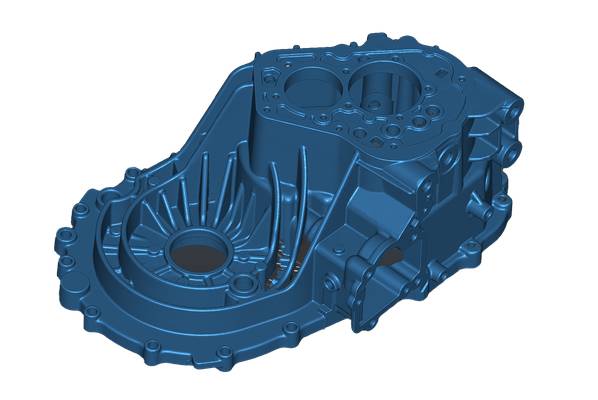
- First-Article Inspection for High-Value Components: Apply the scanner to the FAI process for your most complex, high-cost parts. Measure the reduction in inspection time versus traditional methods and the clarity provided by full-field deviation reports for engineering sign-off.
- Tooling and Fixture Qualification: Use the scanner to digitally validate and document the wear and condition of critical molds, dies, and assembly fixtures. This creates a preventive maintenance baseline and reduces downtime from tooling-related defects.
- Structured Supplier Quality Audits: Deploy the scanner for receiving inspection on key sourced components. The objective digital record (a 3D deviation map) provides unambiguous evidence for quality conversations, improving accountability and reducing disputes.
Strategic Assessment
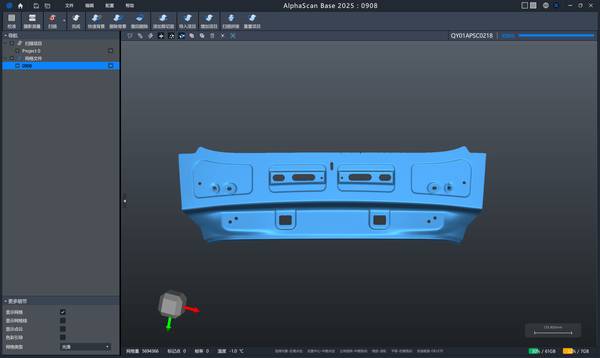
Selecting a 3D scanner line laser is ultimately a strategic decision about manufacturing velocity and quality capital.
By looking beyond the spec sheet to evaluate certified accuracy, total lifecycle cost, shop-floor durability, and digital workflow integration, procurement and operations leaders can secure a tool that not only measures parts but also accelerates production, reduces hidden costs, and builds a foundation for data-driven manufacturing.
The right scanner pays for itself not by existing, but by seamlessly enabling faster, more reliable, and traceable production cycles.
Hangzhou Insvision Technology Co., Ltd.
Address: Building 1, No. 1399 Liangmu Road, Yuhang District, Hangzhou, Zhejiang 311121, China
Copyright © Hangzhou Insvision Technology Co., Ltd. All rights reserved.
Copyright © Hangzhou Insvision Technology Co., Ltd. All rights reserved.