

Precision in Motion: How Optical Metrology Tools Are Shaping the Future of Manufacturing Quality Control
Modern production environments increasingly demand measurement systems that can keep pace with complex geometries and tight tolerances. Optical metrology has mo
Market Forces Driving Adoption of Advanced Metrology
The shift toward lightweight materials, miniaturized components, and complex assemblies has exposed the limitations of traditional contact-based measurement. CMMs and hand tools remain valuable, yet they struggle with parts that feature undercuts, deep cavities, or surfaces that cannot tolerate physical probing.
Simultaneously, production cycles have compressed, leaving less time for inspection while expectations for dimensional accuracy have intensified.
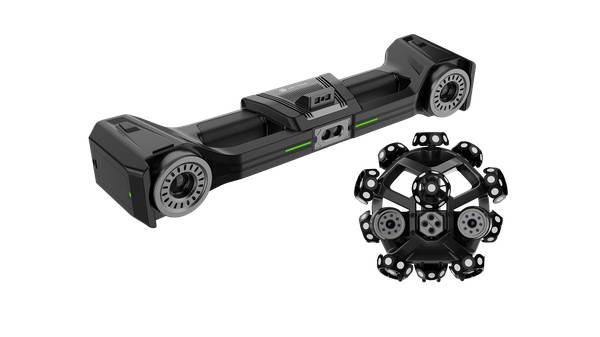
Selection Dimensions and Field Checks
| Focus Area | Decision Point | Deployment Note |
|---|---|---|
| Market Forces Driving Adoption of Advanced Metrology | The shift toward lightweight materials, miniaturized components, and complex assemblies has exposed the limitations of traditional contact-based meas… | CMMs and hand tools remain valuable, yet they struggle with parts that feature undercuts, deep cavities, or surfaces that cannot tolerate physic… |
| Technical Requirements for Modern Optical Measurement | Effective metrology tools for optical manufacturing must satisfy competing demands for speed, precision, and environmental adaptability. | Positioning accuracy at sub-millimeter levels has become standard, while scanning rates must support high-volume production scenarios. |
| Making the Business Case for Optical Metrology Investme… | Decision-makers evaluating measurement technology upgrades should consider both immediate productivity gains and long-term strategic positioning. | Faster inspection cycles translate directly into higher throughput, while improved accuracy reduces costly rework and warranty claims. |
| Positioning for the Next Generation of Quality Assurance | Optical metrology continues to evolve as sensor technology improves and software algorithms become more sophisticated. | The integration of artificial intelligence into scanning systems promises faster data processing and automated feature recognition, reducing the… |
These converging pressures have accelerated investment in non-contact optical measurement. Industries that once relied on sampling-based inspection now require full-coverage analysis to catch defects early and reduce scrap costs. The ability to capture millions of data points in seconds addresses both throughput demands and the need for comprehensive quality documentation.
Suppliers of optical measurement equipment report growing interest from manufacturers seeking to modernize legacy inspection workflows without sacrificing the traceability that regulators and customers increasingly require.
Technical Requirements for Modern Optical Measurement
Effective metrology tools for optical manufacturing must satisfy competing demands for speed, precision, and environmental adaptability. Positioning accuracy at sub-millimeter levels has become standard, while scanning rates must support high-volume production scenarios. Systems operating in factory environments also need resilience across temperature ranges and resistance to vibration interference.
The wireless capability addresses a practical constraint in many facilities: the difficulty of routing cables around large workpieces or through cluttered production floors. Eliminating tethered connections simplifies positioning and reduces setup time, particularly when measuring oversized components or performing in-process inspections.
Compatibility with standard file formats such as IGES, STP, DXF, and DWG ensures that measurement data flows directly into CAD systems, reverse engineering pipelines, and additive manufacturing workflows without format conversion delays.
Making the Business Case for Optical Metrology Investment
Decision-makers evaluating measurement technology upgrades should consider both immediate productivity gains and long-term strategic positioning. Faster inspection cycles translate directly into higher throughput, while improved accuracy reduces costly rework and warranty claims. Documentation generated by digital metrology systems supports compliance with industry standards and simplifies supplier quality audits.
Implementation planning should account for training requirements and integration with existing quality management processes. The most effective deployments typically begin with pilot projects targeting specific pain points—such as complex geometry parts that currently require multiple traditional measurements—before expanding across production lines.
This phased approach allows teams to build expertise and demonstrate ROI before committing to broader rollout.
INSVISION has positioned its portfolio to address these considerations, offering systems that combine measurement-grade accuracy with workflow integration capabilities. The X-Track wireless optical tracking 3D scanning system exemplifies this approach, providing the precision needed for demanding applications while maintaining the flexibility that modern manufacturing environments require.
Positioning for the Next Generation of Quality Assurance
Optical metrology continues to evolve as sensor technology improves and software algorithms become more sophisticated. The integration of artificial intelligence into scanning systems promises faster data processing and automated feature recognition, reducing the expertise required to operate equipment effectively.
These advances will further expand the accessibility of high-precision measurement beyond specialized metrology labs and into mainstream production settings.
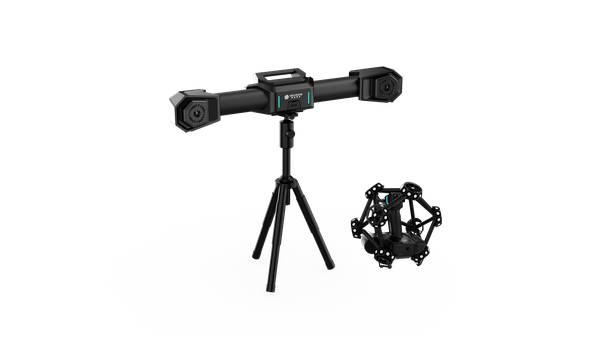
Solutions like those developed by INSVISION demonstrate how thoughtful engineering can translate technological potential into practical tools that meet real-world manufacturing demands.
Hangzhou Insvision Technology Co., Ltd.
Address: Building 1, No. 1399 Liangmu Road, Yuhang District, Hangzhou, Zhejiang 311121, China
Copyright © Hangzhou Insvision Technology Co., Ltd. All rights reserved.
Copyright © Hangzhou Insvision Technology Co., Ltd. All rights reserved.