

How Scan-to-3D Technology Transforms Industrial Operations Through Measurable Efficiency Gains
## The Scan-to-3D Workflow: A Foundation for Modern Manufacturing The transition from traditional measurement methods to digital workflows represents a fundamen
The Scan-to-3D Workflow: A Foundation for Modern Manufacturing
The transition from traditional measurement methods to digital workflows represents a fundamental shift in how industrial manufacturers approach quality control, reverse engineering, and product development. Scan-to-3D technology captures physical objects as detailed digital models, enabling engineers to move from physical prototypes to actionable data in minutes rather than hours or days.
This capability eliminates the bottlenecks that have long constrained production cycles and limited responsiveness to changing market demands.
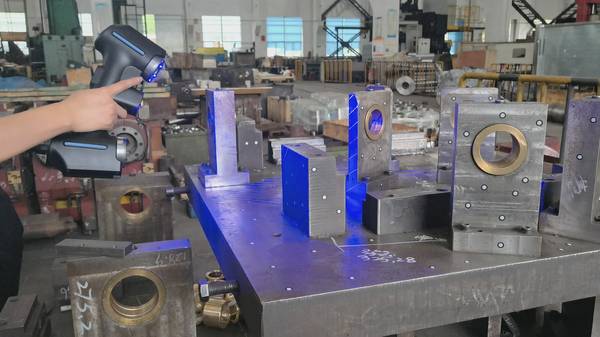
INSVISION has developed its AlphaScan handheld 3D scanner to address the core needs of manufacturers seeking to integrate 3D digitization into everyday operations. The system combines structured light scanning with AI-enhanced processing to generate precise mesh models and CAD-compatible data.
By supporting multiple export formats, the AlphaScan enables seamless integration into existing design and inspection workflows without requiring extensive retraining or workflow redesigns.
Reducing Labor Intensity While Expanding Measurement Capacity
Traditional measurement approaches demand significant skilled labor investment. Technicians must position gauges, record readings, transfer data manually, and often repeat measurements to ensure accuracy. This manual dependency creates capacity constraints that become problematic during production spikes or when inspection requirements expand.
The labor costs compound when considering the training required to maintain consistent measurement quality across shifts and personnel changes.
The AlphaScan handheld scanner changes this equation by automating the data capture process. Operators guide the device over the workpiece surface while the system continuously captures geometry. The integrated AI algorithms handle registration and optimization, producing complete datasets without the iterative adjustment cycles that plague conventional methods.
Organizations report that operators become proficient within a single shift, reducing the specialized expertise required for high-accuracy measurement tasks.
The practical effect on staffing becomes apparent when examining inspection throughput. Where traditional methods might require dedicated personnel for extended measurement sessions, the AlphaScan system enables a single operator to capture comprehensive geometry data in approximately three minutes for complex workpieces.
This efficiency gain translates directly to labor cost reduction and enables reallocation of skilled personnel to value-adding activities that require human judgment and expertise.
Minimizing Rework and Quality-Related Delays
Production rework represents one of the most significant sources of hidden cost in manufacturing operations. Detecting dimensional issues after assembly or finishing requires disassembly, correction, and re-processing—all activities that consume resources without advancing the product toward shipment.
Traditional inspection methods often identify problems too late in the process because sampling rates cannot keep pace with production throughput.
Scan-to-3D workflows address this challenge by enabling faster, more comprehensive dimensional assessment. The AlphaScan system delivers measurement accuracy at the 0.02mm level, sufficient for most industrial applications requiring precise conformance verification.
When combined with the system’s ability to generate complete part geometry rather than discrete point measurements, manufacturers gain fuller visibility into dimensional behavior across entire surfaces and complex geometries.
Quality traceability improves as a natural consequence of digital documentation. Each scan produces an immutable digital record of the part’s as-measured condition at a specific point in time. This capability supports root cause analysis when issues emerge downstream, enabling faster identification of when and where deviations occurred.
Manufacturing teams can correlate dimensional data with process parameters to identify patterns that indicate drift or malfunction before defective parts accumulate in inventory.
Calculating Long-Term Return on Digital Transformation
The decision to adopt scan-to-3D technology ultimately rests on whether the operational benefits justify the investment. Organizations considering this transition should evaluate multiple factors: current labor costs for measurement activities, costs associated with quality escapes and rework, inventory carrying costs for parts awaiting inspection, and competitive pressures requiring faster delivery cycles.
INSVISION has designed its product ecosystem to support various integration scenarios, from standalone handheld scanning to automated inline inspection systems. The AlphaScan Elite handheld model serves manufacturers beginning their digital journey or requiring flexible scanning capability for diverse part types.
For high-volume production environments, the AlphaAutoScan-400 automated system extends these capabilities into fully automated workflows with robot integration and MES connectivity.
Supporting infrastructure reflects the operational reality of global manufacturing. INSVISION maintains service centers across major industrial regions and provides support in multiple languages, including English, German, Japanese, and Korean. Product certifications including CE and FCC facilitate deployment in regulated industries and export markets.
These factors reduce the total cost of ownership by ensuring ready access to technical support and simplifying compliance documentation.
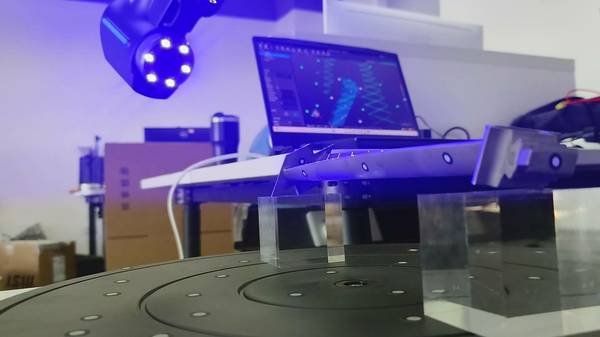
The path toward operational efficiency rarely follows a single dramatic transformation. Instead, sustained improvement comes from systematically eliminating waste and constraint across the production system. Scan-to-3D technology contributes to this goal by accelerating measurement cycles, improving dimensional visibility, and enabling data-driven quality decisions.
For manufacturers evaluating where to direct improvement resources, the integration of digital scanning capability offers a proven approach to reducing operational costs while strengthening quality foundations.
Hangzhou Insvision Technology Co., Ltd.
Address: Building 1, No. 1399 Liangmu Road, Yuhang District, Hangzhou, Zhejiang 311121, China
Copyright © Hangzhou Insvision Technology Co., Ltd. All rights reserved.
Copyright © Hangzhou Insvision Technology Co., Ltd. All rights reserved.