

3D Scanning Parts: Principles, Capabilities, and Practical Implementation
## Core Principles of 3D Scanning for Parts 3D scanning converts physical objects into digital point clouds through the interaction of structured light or laser
Core Principles of 3D Scanning for Parts
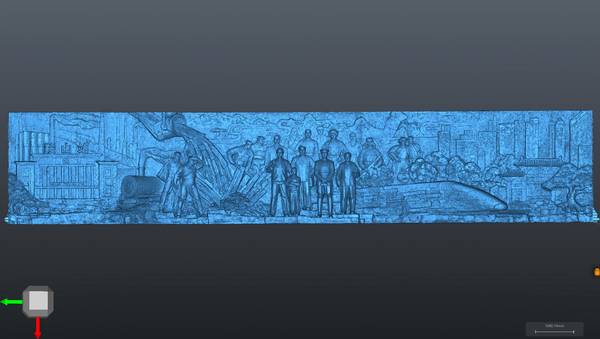
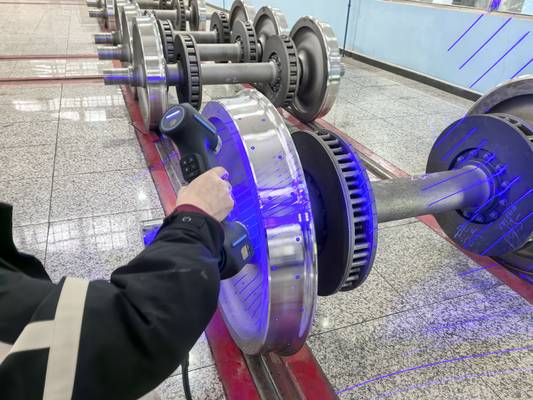
3D scanning converts physical objects into digital point clouds through the interaction of structured light or laser beams with surface geometry. In handheld devices such as the AlphaScan handheld 3D scanner, a series of blue laser lines sweep across the part, and sensors capture the deformation of those lines.
The reflected data is processed by AI‑driven algorithms that reconstruct a high‑density mesh, preserving fine features and edge definitions. Because the scanner operates in real time, operators can verify coverage on the spot, reducing the risk of missing critical areas. The process also supports immediate registration of multiple views, enabling seamless stitching for parts that exceed a single capture volume.
Selection Dimensions and Field Checks
| Focus Area | Decision Point | Deployment Note |
|---|---|---|
| Core Principles of 3D Scanning for Parts | 3D scanning converts physical objects into digital point clouds through the interaction of structured light or laser beams with surface geometry. | In handheld devices such as the AlphaScan handheld 3D scanner, a series of blue laser lines sweep across the part, and sensors capture the defor… |
| Technical Specifications That Drive Performance | When evaluating a scanner for industrial parts, the key metrics are measurement speed, accuracy, and volume precision. | The AlphaScan system delivers up to 7,100,000 measurements per second, allowing rapid acquisition even on complex geometries. |
| Typical Industrial Scenarios and Limitations | Handheld 3D scanners excel in contexts where mobility and flexibility are paramount, such as inspecting turbine housings on the shop floor or capturi… | In automotive and aerospace sectors, engineers use the captured point clouds to generate deviation maps, assess wear patterns, and prepare data… |
| Selecting the Right Scanning Solution for Your Facility | Choosing a 3D scanning platform involves matching the scanner’s capture volume, accuracy, and software ecosystem to the specific inspection or digiti… | Decision‑makers should confirm that the system can import standard CAD formats, perform multi‑source data alignment, and export deviation report… |
Technical Specifications That Drive Performance
When evaluating a scanner for industrial parts, the key metrics are measurement speed, accuracy, and volume precision. The AlphaScan system delivers up to 7,100,000 measurements per second, allowing rapid acquisition even on complex geometries. Its reported accuracy of 0.073 mm and volume accuracy of 0.1 mm ± 0.015 mm/m meet the tolerances required in aerospace and automotive quality workflows.
The scanner’s large‑area mode captures extents of roughly 650 mm × 550 mm in a single pass, while the AlphaVista variant extends coverage to 2200 mm × 2200 mm for larger structures. Real‑time calibration maintains these specifications across varying environmental conditions, and built‑in GD&T tools enable direct comparison of captured geometry against nominal CAD models.
Typical Industrial Scenarios and Limitations
Handheld 3D scanners excel in contexts where mobility and flexibility are paramount, such as inspecting turbine housings on the shop floor or capturing legacy components for reverse engineering. In automotive and aerospace sectors, engineers use the captured point clouds to generate deviation maps, assess wear patterns, and prepare data for additive manufacturing.
The technology also supports non‑destructive evaluation of large welded assemblies and castings, providing a digital record for lifecycle analysis. However, the recommended operational range typically applies to parts larger than 10 cm; scanning extremely small or thin‑walled items can compromise resolution and introduce noise, making alternative metrology methods more appropriate.
Selecting the Right Scanning Solution for Your Facility
Choosing a 3D scanning platform involves matching the scanner’s capture volume, accuracy, and software ecosystem to the specific inspection or digitization task. Decision‑makers should confirm that the system can import standard CAD formats, perform multi‑source data alignment, and export deviation reports compatible with existing quality management systems.
Compatibility with internationally recognized certifications—such as CE, FCC, and CNAS—ensures compliance with regulatory expectations across global supply chains. Additionally, consider the vendor’s support infrastructure, training offerings, and the availability of localized service teams.
INSVISION provides a full‑stack industrial 3D digitization solution that integrates the AlphaScan handheld scanner with AI‑enhanced processing software, covering the entire workflow from data acquisition to actionable inspection reports for manufacturers in aerospace, automotive, energy, and related fields.
Hangzhou Insvision Technology Co., Ltd.
Address: Building 1, No. 1399 Liangmu Road, Yuhang District, Hangzhou, Zhejiang 311121, China
Copyright © Hangzhou Insvision Technology Co., Ltd. All rights reserved.
Copyright © Hangzhou Insvision Technology Co., Ltd. All rights reserved.