

How 3D Scanning Transforms Automotive Quality Assurance and Cuts Operational Costs
The automotive industry faces relentless pressure to deliver higher quality at lower cost, with narrower margins for error at every stage of production. Traditi
Faster Inspection Cycles Without Sacrificing Accuracy
Conventional inspection workflows typically require dedicated operators, lengthy setup procedures, and controlled environmental conditions. Parts must be fixtured precisely, and each measurement point demands individual attention. For automotive manufacturers producing thousands of components daily, this translates into substantial labor allocation and potential bottlenecks in the quality control pipeline.
Selection Dimensions and Field Checks
| Focus Area | Decision Point | Deployment Note |
|---|---|---|
| Faster Inspection Cycles Without Sacrificing Accuracy | Conventional inspection workflows typically require dedicated operators, lengthy setup procedures, and controlled environmental conditions. | Parts must be fixtured precisely, and each measurement point demands individual attention. |
| Seamless Integration into Existing Quality Workflows | One of the persistent barriers to adopting new inspection technology is the perceived complexity of integration. | Manufacturers worry about workflow disruption, operator training requirements, and compatibility with existing CAD-driven processes. |
| Cost Efficiency Through Reduced Rework and Faster Time-… | Rework represents one of the most significant hidden costs in automotive manufacturing. | A component that passes initial machining but fails final inspection must be reworked, scrapped, or re-ordered—each option carrying labor, mater… |
| Building a Foundation for Continuous Improvement | Beyond immediate inspection needs, the data generated by 3D scanning creates opportunities for long-term operational intelligence. | Each scan produces a detailed digital record of part geometry, deviations, and trends over production runs. |
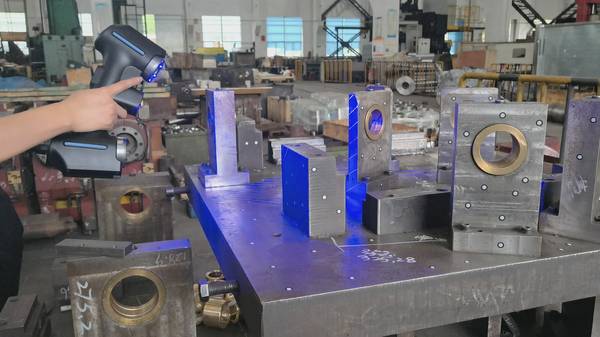
The AlphaScan series changes this equation. By capturing full geometry in a single scan—thousands of data points within seconds—inspectors can evaluate complex surfaces and hard-to-reach geometries that would otherwise require multiple setups with traditional tools.
The system delivers scanning accuracy up to 0.073 mm, with volume accuracy of 0.1 mm ± 0.015 mm/m, meeting the tolerances demanded by original equipment manufacturers and their Tier 1 suppliers alike. This level of precision means fewer missed defects and, critically, fewer downstream complaints that trigger costly rework or warranty claims.
When inspection time per part drops from minutes to seconds, the ripple effects extend across the entire production cadence. Quality teams can sample more parts per shift, increasing statistical confidence without expanding headcount. Faster feedback loops enable operators to address emerging issues before they propagate through subsequent assembly stages, reducing scrap rates and the associated material waste.
Seamless Integration into Existing Quality Workflows
One of the persistent barriers to adopting new inspection technology is the perceived complexity of integration. Manufacturers worry about workflow disruption, operator training requirements, and compatibility with existing CAD-driven processes.
INSVISION has designed the AlphaScan ecosystem with these concerns in mind. The scanners export data in formats compatible with mainstream 3D inspection and CAD software, supporting full reverse engineering pipelines.
When combined with INSVISION’s proprietary 3D inspection software, the workflow follows a logical four-step progression: data acquisition, coordinate alignment with reference CAD models, deviation analysis generating color-coded maps, and automated report generation.
This systematic approach means that quality engineers can establish standardized inspection routines across production lines, creating consistency regardless of which operator performs the scan. The AI-enhanced algorithms embedded in the software accelerate the analysis phase, quickly identifying features that deviate beyond specified tolerances.
Because the system supports GD&T analysis directly, inspectors can evaluate form, orientation, and location tolerances without switching between disparate software environments.
Cost Efficiency Through Reduced Rework and Faster Time-to-Market
Rework represents one of the most significant hidden costs in automotive manufacturing. A component that passes initial machining but fails final inspection must be reworked, scrapped, or re-ordered—each option carrying labor, material, and schedule implications. When defects are discovered late in the assembly process or, worse, after vehicles reach customers, the financial impact multiplies.
By deploying 3D scanning earlier in the production sequence, manufacturers can catch deviations at the source. The large-area scanning capability of the AlphaScan series—with scan fields reaching 650 mm × 550 mm for the AlphaScan and up to 2200 mm × 2200 mm for the AlphaVista variant—accommodates everything from individual brackets and housings to larger subassemblies and body panels.
This flexibility allows quality teams to design inspection protocols that match the risk profile of each component, concentrating high-resolution scanning on critical safety parts while using faster methods for less demanding applications.
The connection between inspection speed and time-to-market deserves particular attention. In automotive development cycles, launch delays carry substantial penalties—engineering resources remain tied up, marketing calendars shift, and competitive positioning suffers. 3D scanning accelerates the validation phase for new parts and design iterations by eliminating the wait times associated with traditional measurement methods.
Engineers receive dimensional data faster, enabling quicker design decisions and reducing the total development timeline.
Building a Foundation for Continuous Improvement
Beyond immediate inspection needs, the data generated by 3D scanning creates opportunities for long-term operational intelligence. Each scan produces a detailed digital record of part geometry, deviations, and trends over production runs. Quality managers can analyze this information to identify systematic issues—tool wear patterns, machining drift, or supplier variability—before they result in widespread defects.
INSVISION’s platform supports multi-source data alignment and comprehensive deviation analysis, enabling manufacturers to correlate scan data with other production metrics. This holistic view supports lean manufacturing initiatives and provides documentation for regulatory compliance and customer quality audits.
For automotive manufacturers evaluating their quality infrastructure, the economic case for advanced 3D scanning extends well beyond the purchase price. Labor efficiency improves as inspection cycles compress. Scrap and rework costs decline when defects are caught earlier. Design validation accelerates, supporting faster introductions of new models and variants.
Together, these factors contribute to a measurable return on investment that compounds over time.
The AlphaScan handheld 3D scanner represents INSVISION commitment to making industrial-grade precision accessible to automotive manufacturers of all sizes, combining proven accuracy with the operational flexibility that modern production environments demand.
Hangzhou Insvision Technology Co., Ltd.
Address: Building 1, No. 1399 Liangmu Road, Yuhang District, Hangzhou, Zhejiang 311121, China
Copyright © Hangzhou Insvision Technology Co., Ltd. All rights reserved.
Copyright © Hangzhou Insvision Technology Co., Ltd. All rights reserved.