

How 3D Scanning Machines Are Transforming Industrial Quality Control
The manufacturing sector has witnessed a fundamental shift in how companies approach dimensional verification and product development. Traditional measurement t
The Engineering Principles Behind Optical 3D Scanning
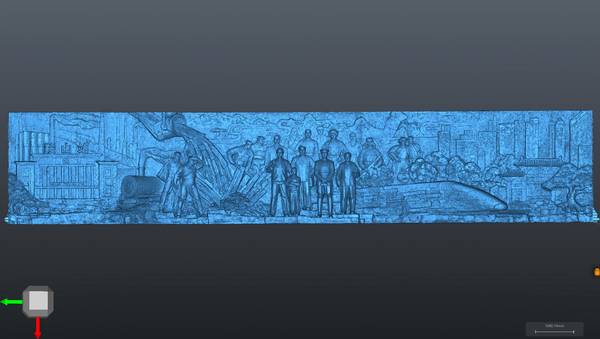
Modern industrial 3D scanning machines operate primarily through structured light technology, projecting patterns onto an object’s surface while cameras capture the deformation of those patterns. The system then calculates depth information by analyzing how the projected lines or grids bend around the object’s geometry.
This triangulation-based approach allows for rapid acquisition of millions of data points, creating dense point clouds that represent the physical shape with remarkable fidelity.
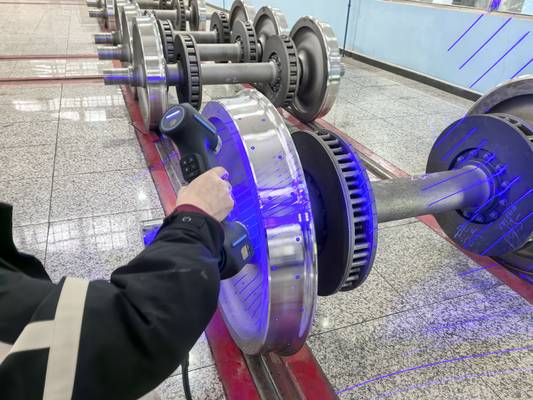
The AlphaScan handheld scanner from INSVISION exemplifies this approach, utilizing blue laser technology that offers advantages over older red laser systems. Blue light penetrates surface reflections more effectively, which proves particularly valuable when scanning metallic or polished components commonly found in industrial settings.
The scanner projects multiple laser lines across the target surface, with the system processing up to 7,100,000 measurements per second to build complete 3D representations. This speed means operators can capture complex parts in seconds rather than minutes, dramatically reducing inspection cycle times while maintaining the detail necessary for thorough analysis.
Understanding Technical Specifications That Matter
When evaluating a 3D scanning machine for industrial applications, certain specifications deserve careful attention because they directly impact real-world performance. Volumetric accuracy describes how precisely the scanner measures distances throughout its entire measurement volume, not just at a single point.
INSVISION’s AlphaScan achieves volumetric accuracy of 0.1mm plus 0.015mm per meter, a specification that indicates reliable performance across larger workpieces where cumulative errors become significant.
Resolution determines the level of detail the scanner can capture, often expressed as the smallest feature that can be reliably distinguished. Higher resolution becomes essential when examining intricate components with fine details, thin walls, or small geometric features.
Scanning area coverage represents another practical consideration, as larger scan fields reduce the number of individual captures needed to complete a full part, while smaller fields offer greater detail capture in targeted zones.
The integration between scanning hardware and analysis software completes the measurement loop. The AlphaScan system connects with dedicated inspection software that supports CAD-driven task creation, enabling comparison between scanned geometry and nominal CAD models.
This capability allows automated deviation analysis with color-coded visualization, helping engineers quickly identify areas that fall outside acceptable tolerances. The software environment must also accommodate standard data formats and provide tools for geometric dimensioning and tolerancing verification to serve complete quality control workflows.
Where Industrial 3D Scanners Deliver Measurable Value
Automotive and aerospace manufacturers have adopted 3D scanning technology for both quality assurance and reverse engineering applications. The ability to digitize existing components enables rapid prototyping, tooling verification, and inspection against design specifications without destructive testing.
INSVISION’s scanning solutions serve sectors including industrial manufacturing, aerospace, automotive, and energy production, with their products achieving commercial deployment across more than twenty countries.
Large-scale inspections present particular challenges that specialized equipment addresses. When examining substantial workpieces such as aerospace structures or large mold components, scanners capable of capturing extensive areas in single operations improve efficiency and reduce registration errors that can accumulate when stitching multiple smaller scans together.
The practical upper limits of scan area depend on both the specific hardware configuration and the complexity of the workpiece geometry.
Small-scale precision scanning serves equally important functions in applications involving castings, machined parts, and intricate assemblies. Here, the emphasis falls on capturing fine surface details and achieving measurement precision that supports tight tolerance requirements.
The distinction between scanning small objects and scanning small features matters considerably, as complete physical objects below certain size thresholds may fall outside the optimal operating range for industrial-grade scanners.
Practical Considerations for Technology Selection
Implementing a 3D scanning workflow requires attention to factors beyond pure measurement capability. Operator training influences how effectively the technology gets deployed, as skilled technicians understand proper scanning technique, lighting conditions, and target preparation that maximize data quality.
Environmental factors such as ambient lighting, surface reflectivity, and vibration also affect achievable results, meaning production floor deployments may require different equipment configurations than controlled laboratory environments.
Software workflow integration determines how seamlessly scanned data becomes actionable information. Organizations benefit from solutions that connect directly with existing CAD platforms, inspection databases, and manufacturing execution systems.
The ability to generate standardized inspection reports that communicate findings clearly to engineering and management stakeholders adds practical value beyond raw measurement capability.
Purchasing decisions should balance immediate application requirements against future capability needs. Modular systems that accommodate evolving measurement demands provide flexibility as organizational requirements grow.
INSVISION offers multiple scanner configurations including the AlphaScan Elite and AlphaVista series, each designed for different operational scenarios ranging from handheld flexibility to stationary high-throughput configurations.
Adopting 3D scanning technology represents a strategic investment in manufacturing capability that extends beyond individual inspection tasks. When properly selected and integrated, these systems enable faster product development cycles, more comprehensive quality verification, and documentation practices that support continuous improvement initiatives across industrial operations.
Hangzhou Insvision Technology Co., Ltd.
Address: Building 1, No. 1399 Liangmu Road, Yuhang District, Hangzhou, Zhejiang 311121, China
Copyright © Hangzhou Insvision Technology Co., Ltd. All rights reserved.
Copyright © Hangzhou Insvision Technology Co., Ltd. All rights reserved.