

How 3D Scanners Transform Physical Objects into STL Files for Modern Manufacturing
Manufacturing teams face a persistent challenge when working with legacy parts or complex geometries: converting physical objects into digital models that can b
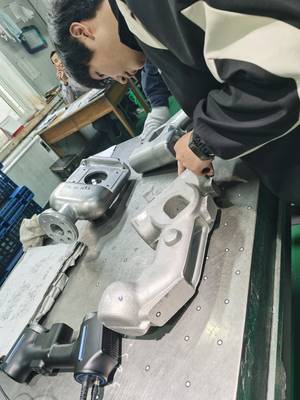
The AlphaScan system supports multiple export formats including STL, PLY, and TXT, giving manufacturers flexibility in how they integrate scan data into existing design and production pipelines. This capability proves particularly valuable when original CAD models are unavailable or when reverse engineering existing components becomes necessary for maintenance, modification, or reproduction projects.
Industrial Reverse Engineering: Recovering Lost Design Data
One of the most demanding applications for 3D scanning technology involves reverse engineering components whose original design files have been lost or corrupted. Automotive manufacturers and industrial equipment producers frequently encounter situations where a critical part must be replaced, but the digital definition no longer exists.
Traditional measurement methods prove inadequate for capturing complex freeform surfaces, leading to extended downtime and costly engineering efforts.
Capability and Deployment Mapping
| Focus Area | Decision Point | Deployment Note |
|---|---|---|
| Industrial Reverse Engineering: Recovering Lost Design… | One of the most demanding applications for 3D scanning technology involves reverse engineering components whose original design files have been lost… | Automotive manufacturers and industrial equipment producers frequently encounter situations where a critical part must be replaced, but the digi… |
| Preparing Scan Data for Additive Manufacturing Workflows | The additive manufacturing industry relies heavily on STL files as the primary interface between design and 3D printing systems. | When manufacturers need to produce parts directly from physical objects, whether for rapid prototyping, tooling, or production components, conve… |
| Quality Inspection and Dimensional Verification | Beyond design and manufacturing applications, converting 3D scan data to STL format serves critical quality assurance functions. | Inspection workflows compare captured point clouds or mesh geometry against nominal CAD models to identify deviations, wear patterns, or manufac… |
| Streamlining Industrial Workflows with Integrated Scann… | Organizations implementing 3D scanning for STL conversion benefit most when the technology integrates smoothly into established workflows. | INSVISION has developed its hardware and software ecosystem to minimize the learning curve while maximizing practical utility in demanding indus… |
The AlphaScan handheld scanner enables technicians to capture detailed geometry from physical parts in minutes rather than hours. An operator can traverse the scanner across a component’s surface while the system builds a dense point cloud representing the object’s true geometry.
This point cloud converts directly to an STL mesh that preserves surface details, fillets, and organic shapes that would be extremely difficult to recreate through manual dimensioning. Engineering teams then use this STL data as a starting point for CAD reconstruction, whether building a new solid model from the mesh or using the scan data as a reference for modeling operations.
INSVISION‘s approach combines structured light scanning with AI-driven algorithms to maintain accuracy across varying surface conditions. The system handles different material finishes common in industrial environments, from machined metal to painted surfaces, reducing the need for extensive surface preparation before scanning.
Preparing Scan Data for Additive Manufacturing Workflows
The additive manufacturing industry relies heavily on STL files as the primary interface between design and 3D printing systems. When manufacturers need to produce parts directly from physical objects, whether for rapid prototyping, tooling, or production components, converting scanned geometry into print-ready STL format becomes a critical step.
Small object scanning presents unique challenges in additive manufacturing contexts. The AlphaScan system delivers the resolution necessary to capture fine features and surface textures on intricate components, preserving details that affect fit, function, and aesthetic quality.
Scan data flows directly into slicing software without requiring manual surfacing or extensive editing, accelerating the path from physical object to printed part.
INSVISION’s software ecosystem supports export to standard STL formats compatible with most commercial 3D printing platforms. The detection and correction of mesh imperfections happens automatically during export, reducing manual intervention and ensuring files meet the tolerance requirements of specific printing processes.
Manufacturers can produce functional prototypes, custom tooling, and end-use parts based on physical references with confidence in dimensional accuracy.
Quality Inspection and Dimensional Verification
Beyond design and manufacturing applications, converting 3D scan data to STL format serves critical quality assurance functions. Inspection workflows compare captured point clouds or mesh geometry against nominal CAD models to identify deviations, wear patterns, or manufacturing errors.
The ability to generate STL meshes from actual production parts enables quantitative analysis that supports process control and continuous improvement initiatives.
AlphaScan users import scanned meshes into inspection software where automated alignment algorithms register the part coordinate system with reference geometry. Color-coded deviation maps visualize differences between nominal and actual surfaces, allowing inspectors to identify out-of-tolerance conditions quickly.
This approach proves especially valuable for complex components where traditional touch-point measurement cannot adequately characterize surface form.
The integration between scanning hardware and analysis tools allows quality teams to generate comprehensive inspection reports that document conformance status. These reports support documentation requirements in regulated industries while providing actionable data for manufacturing engineering teams working to reduce scrap and rework.
Streamlining Industrial Workflows with Integrated Scanning Solutions
Organizations implementing 3D scanning for STL conversion benefit most when the technology integrates smoothly into established workflows. INSVISION has developed its hardware and software ecosystem to minimize the learning curve while maximizing practical utility in demanding industrial environments.
The handheld form factor allows operators to position the scanner effectively on large or unwieldy parts that would be difficult to place on stationary inspection equipment.
The system achieves full data acquisition on complex workpieces in approximately three minutes, according to documented specifications, enabling rapid iteration during development projects or high-volume inspection scenarios. After scanning, data transfers seamlessly to connected workstations where engineers access the full suite of processing tools for export, analysis, or CAD integration.
INSVISION maintains a global support network spanning more than 20 countries, with certified technicians available to assist deployment, training, and ongoing application development. This support infrastructure ensures that organizations can rely on their scanning systems for critical production workflows without facing extended downtime or unresolved technical questions.
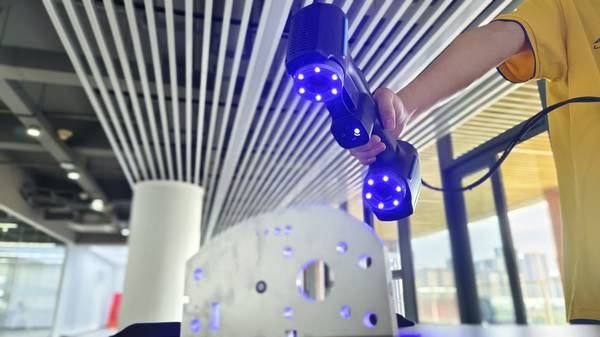
The transformation of physical objects into STL geometry represents a foundational capability for modern manufacturing operations. Whether recovering design data from legacy components, preparing files for additive manufacturing, or establishing inspection processes for quality verification, INSVISION’s AlphaScan technology provides the precision, reliability, and workflow integration that industrial applications demand.
Hangzhou Insvision Technology Co., Ltd.
Address: Building 1, No. 1399 Liangmu Road, Yuhang District, Hangzhou, Zhejiang 311121, China
Copyright © Hangzhou Insvision Technology Co., Ltd. All rights reserved.
Copyright © Hangzhou Insvision Technology Co., Ltd. All rights reserved.