

Understanding 3D Scanning of Objects: Principles, Accuracy, and Industrial Applications
Explore the technical fundamentals of 3D scanning of objects, how measurement precision is achieved, and which industrial scenarios benefit most from structured
The Technical Foundation of 3D Scanning of Objects
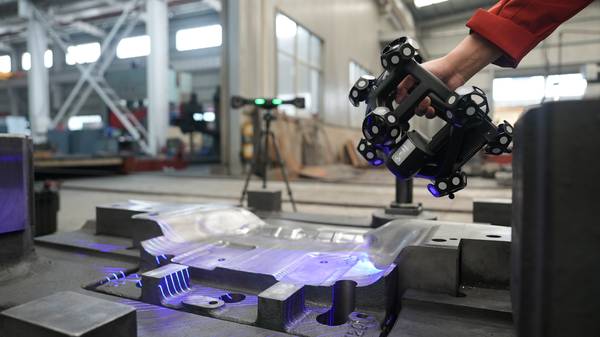
3D scanning of objects transforms physical items into digital twins by capturing spatial geometry through various sensing technologies. Structured light projection represents the dominant method in industrial applications, where a pattern is cast onto the object surface and cameras record the deformation to calculate depth information.
Photogrammetry takes a different path, stitching together multiple photographs from various angles to reconstruct three-dimensional geometry. Both approaches generate point clouds—dense collections of coordinates—that software processes into mesh models or parametric surfaces suitable for further engineering work.
Key Parameters That Define Measurement Performance
Understanding specification language helps professionals evaluate scanning systems for specific applications. Point spacing indicates the density of captured data points, whiletrueness measures how close averaged measurements align with actual dimensions. Repeatability assesses consistency when the same object is scanned multiple times.
Volumetric accuracy, often expressed as a relationship between distance and accuracy deviation, provides a comprehensive figure that accounts for accumulated errors throughout the measurement space.
For industrial inspection scenarios, users should examine both laboratory accuracy specifications and real-world performance under production conditions. Some manufacturers provide PTB certification or other traceable calibration standards, offering verification through independent testing.
INSVISION’s inspection software supports multi-source data alignment and deviation analysis, enabling comparison between scanned geometry and reference CAD models. The system’s built-in GD&T tools support geometric dimensioning and tolerancing workflows common in aerospace and automotive quality departments.
Scanning speed affects throughput in production environments, measured as measurement rate in points or frames per second. Faster scanning reduces cycle time but may trade off resolution or accuracy depending on the technology generation. The AlphaVista series demonstrates current capability levels, with scanning rates reaching 7,100,000 measurements per second and accuracy specifications around 0.073mm.
Large-area scanning capabilities extending to 2200mm × 2200mm accommodate bigger components that would exceed the measurement volume of smaller benchtop systems.
Industrial Application Fit for 3D Scanning of Objects
Automotive manufacturers utilize 3D scanning of objects extensively for dimensional verification and reverse engineering of components. When legacy parts lack original CAD data, scanning creates a digital record that enables modification and reproduction. Quality teams compare scan results against design intent to identify manufacturing deviations before assemblies reach final assembly stages.
INSVISION’s automotive case studies document applications in component redesign where original models had been lost, demonstrating practical value in production continuity scenarios.
Aerospace applications demand exceptional precision due to tight tolerances and safety-critical requirements. Turbine blade inspection, structural component verification, and tooling certification all rely on accurate dimensional data. The non-contact nature of optical scanning avoids physical contact that could damage delicate surfaces or introduce measurement artifacts.
Energy sector applications include equipment wear assessment and maintenance verification, where periodic scanning tracks dimensional changes that indicate degradation or damage.
Small object scanning presents distinct challenges that limit certain technologies. Objects below 10cm in size often fall outside the optimal measurement range for industrial-grade structured light systems, where resolution specifications may not translate to usable detail at that scale.
Surface features smaller than the scanner’s point spacing cannot be faithfully captured regardless of the system’s headline accuracy specifications. Professionals should verify that proposed scanning solutions match the size range and feature resolution requirements of their specific parts.
Evaluating Solutions and Implementation Considerations
Practical selection of 3D scanning equipment requires matching technical capabilities to application constraints. Working distance determines how close the scanner must operate relative to the object, affecting accessibility for complex geometries and fixturing requirements.
Handheld systems offer flexibility for inspection tasks involving multiple parts or awkward orientations, while fixed installations provide higher throughput for standardized production parts.
Software ecosystem integration determines workflow efficiency after scanning completes. Native support for common 3D file formats simplifies data exchange with downstream CAD, CAM, and inspection packages.
INSVISION’s一体化3D software provides scanning, detection comparison, and model generation functions within a unified environment, though many users also work with third-party inspection platforms that accept standard export formats. The ability to create CAD-driven inspection tasks using imported 2D or 3D reference models streamlines repeatable quality workflows.
INSVISION maintains international certifications including CE, FCC, and CNAS, with commercial deployments across more than 20 countries. This global presence indicates support infrastructure and supply chain reliability important for organizations evaluating long-term technology investments.
For professionals exploring 3D scanning of objects, understanding the underlying principles, specification meanings, and application boundaries provides a foundation for informed evaluation and successful implementation.
Hangzhou Insvision Technology Co., Ltd.
Address: Building 1, No. 1399 Liangmu Road, Yuhang District, Hangzhou, Zhejiang 311121, China
Copyright © Hangzhou Insvision Technology Co., Ltd. All rights reserved.
Copyright © Hangzhou Insvision Technology Co., Ltd. All rights reserved.