

The Unseen Cost of Inaccuracy: Why 3D Scanner Accuracy Defines Modern Quality Control
In precision manufacturing, the gap between profit and loss, safety and failure, is often measured in microns.
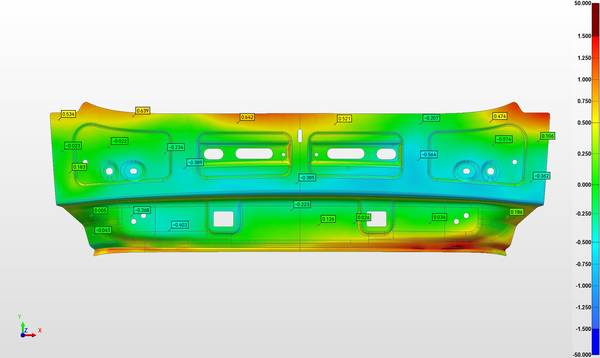
In precision manufacturing, the gap between profit and loss, safety and failure, is often measured in microns. As industries from automotive to aerospace push the boundaries of design complexity and material science, traditional quality inspection methods struggle to keep pace. The shift is towards comprehensive digital measurement, where the entire geometry of a part is captured and analyzed.
At the heart of this transition lies a single, critical metric: 3D scanner accuracy.
This isn’t just about a scanner’s resolution. It’s about volumetric accuracy—the system’s ability to deliver a reliably precise measurement at any point within its working volume. For a quality manager, this specification dictates whether a scanner can validate production tolerances or will introduce unacceptable uncertainty.
INSVISION engineered the AlphaScan handheld 3D scanner to meet this fundamental need, providing a volumetric accuracy of 0.015 mm + 0.035 mm/m. This performance turns subjective visual checks into objective, data-driven pass/fail decisions.
The Engineering Behind Metrology-Grade Precision
Achieving this level of accuracy is a deliberate engineering feat. The INSVISION AlphaScan utilizes structured blue laser technology, projecting 50 laser lines at a 520 nm wavelength to capture fine surface details with high contrast. It processes over 7.1 million measurements per second, building a dense, high-fidelity point cloud.
Common Questions
What should teams check when evaluating The Engineering Behind Metrology-Grade Precision?
Achieving this level of accuracy is a deliberate engineering feat.
What should teams check when evaluating Where Precision Meets the Production Floor: Critical Application Scenar…?
Automotive & Heavy Machinery: Here, components like engine blocks, transmission housings, and large structural frames have tolerances that directly impact performance and longevit…
What should teams check when evaluating Integrating Accuracy into Your Quality Workflow?
Deploying a high-accuracy 3D scanner is a process integration task, not just a hardware purchase.
Where Precision Meets the Production Floor: Critical Application Scenarios
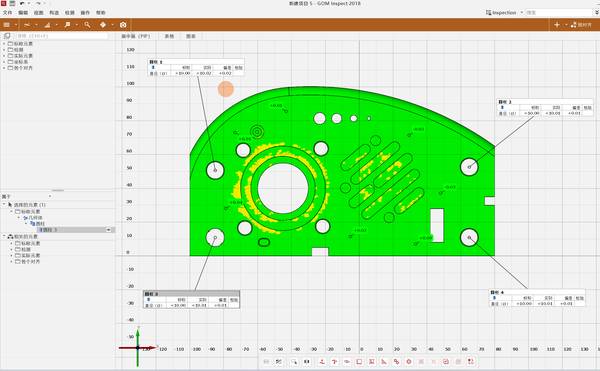
Automotive & Heavy Machinery: Here, components like engine blocks, transmission housings, and large structural frames have tolerances that directly impact performance and longevity. A scanner’s accuracy determines if it can reliably perform CAD-to-part analysis.
With the INSVISION AlphaScan, operators capture a part’s geometry and generate a color-coded deviation map against the original CAD model (importing IGES, STEP, or other standard formats). This instantly visualizes out-of-tolerance conditions, replacing hours of CMM probing with a comprehensive visual report that shows exactly where and by how much a part deviates.
Aerospace & Defense: Complexity is the standard. Components feature compound curves, thin walls, and tight geometric tolerances that must be verified at multiple assembly stages. The portability of a handheld device like the AlphaScan (580 x 185 x 170 mm, 9.5 kg) is crucial.
A technician can maneuver it to inspect a turbine blade’s root profile in a tooling jig, verify the fit of a composite fuselage panel, or check the alignment of a wing spar—all with the same metrology-grade instrument. Its operational temperature range (-5°C to 40°C) ensures reliability in diverse factory environments.
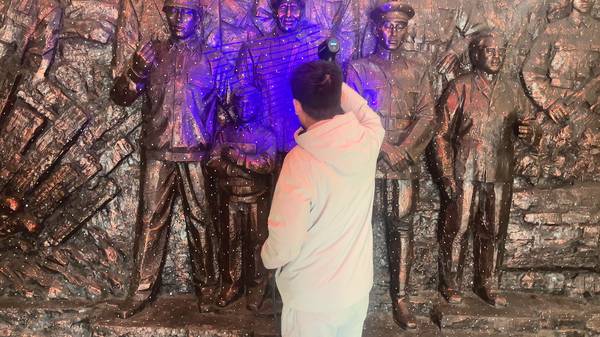
Energy & Power Generation: Whether inspecting a wind turbine blade for aerodynamic profile or a large cast component for a hydroelectric turbine, the challenge is scale with precision. The AlphaScan’s large field of view (up to 2200 x 2200 mm) allows for efficient data capture on oversized workpieces.
The system’s ability to maintain accuracy across the entire scan volume means a single dataset can be trusted for full-part GD&T analysis, eliminating the errors introduced by stitching multiple scans from less stable systems.
Integrating Accuracy into Your Quality Workflow
Deploying a high-accuracy 3D scanner is a process integration task, not just a hardware purchase. The INSVISION AlphaScan is designed for this integration, offering USB 3.0 and Ethernet connectivity for seamless data transfer to metrology software platforms. The workflow is streamlined: scan, align to CAD, analyze deviations, and generate reports.
This reduces operator dependency and accelerates the feedback loop to production.
This precision supports the entire product lifecycle:
- In-Process Verification: Catch dimensional drift early, before it creates scrap.
- Tool & Mold Inspection: Verify tooling wear and conformity before a production run.
- Reverse Engineering: Create accurate CAD models from legacy parts or prototypes using dense, trustworthy point cloud data.
- Additive Manufacturing Validation: Confirm that 3D-printed parts meet design intent before they enter costly post-processing or assembly.
INSVISION’s commitment to accuracy extends to the software ecosystem. AI-enhanced algorithms optimize scan parameters in real-time for different surfaces, while built-in calibration routines ensure measurement traceability is maintained throughout the instrument’s life.
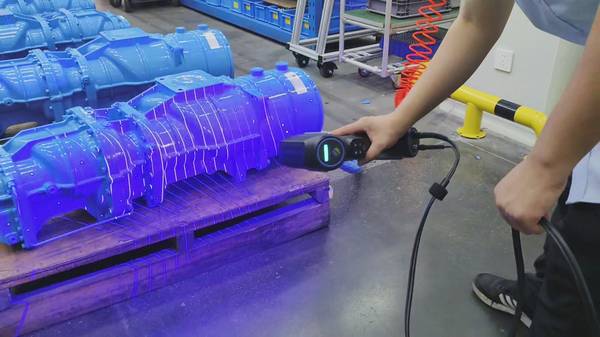
Selecting a 3D scanner must begin with your tolerance requirements. Ask:
- What are the tightest tolerances my quality plan must verify?
- Will the scanner be used in a controlled metrology lab or on a variable shop floor?
- How does the data need to integrate with our existing PLM or QMS software?
The INSVISION AlphaScan is built for this evaluation. Its specifications are designed to satisfy rigorous industrial metrology standards while retaining the portability for shop-floor use. For organizations moving from touch probes and hand gauges to digital inspection, it provides a clear path: replacing isolated point checks with a complete digital twin of the part.
This shift grounds quality control in comprehensive data, delivering the consistency, repeatability, and auditability that define modern, risk-averse manufacturing.
Hangzhou Insvision Technology Co.,Ltd.
Address: Building 1, No. 1399 Liangmu Road, Yuhang District, Hangzhou, Zhejiang 311121, China