

The Operational Blueprint: How INSVISION Streamlines Automotive Sheet Metal 3D Inspection
Prior to INSVISION 's establishment, automotive quality control was often a bottleneck.
Founding Mission: Addressing Systemic Inefficiencies in Automotive Metrology
Prior to INSVISION‘s establishment, automotive quality control was often a bottleneck. The traditional workflow for first-article inspection of complex sheet metal parts—reliant on manual coordinate measuring machines (CMM) with tactile probes—was a study in operational friction. A single part could consume 4–6 hours of measurement time.
Common Questions
What should teams check when evaluating Founding Mission: Addressing Systemic Inefficiencies in Automotive Metr…?
Prior to INSVISION ‘s establishment, automotive quality control was often a bottleneck.
What should teams check when evaluating R&D Breakthrough: Engineering a Handheld Scanner for Metrology-Grade Re…?
The core challenge was bridging the flexibility of handheld 3D scanning with the rigorous precision demanded by automotive GD&T standards.
What should teams check when evaluating Global Industry Validation: Deploying a Connected Workflow Across the S…?
Adoption began with tier-one suppliers facing intense pressure from OEMs for faster, data-rich part approvals.
Repeatability errors beyond ±0.1mm introduced uncertainty, while quality data remained trapped in paper reports or disconnected digital files, making traceability a manual search mission. The consequences were direct: elevated rework rates, compressed margins, and unreliable delivery schedules.
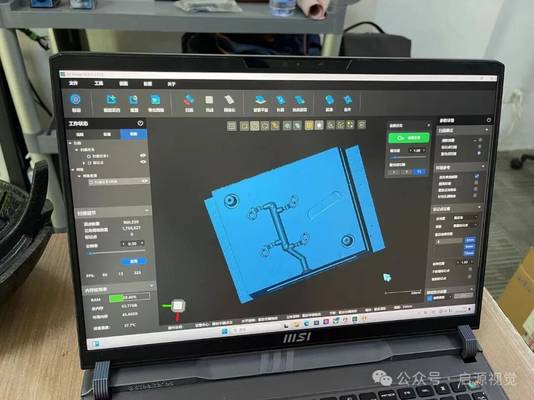
R&D Breakthrough: Engineering a Handheld Scanner for Metrology-Grade Reliability
The core challenge was bridging the flexibility of handheld 3D scanning with the rigorous precision demanded by automotive GD&T standards. Early commercial scanners often sacrificed accuracy for speed or were too fragile for plant-floor environments.
INSVISION development focused on industrial durability, thermal stability for uncontrolled environments, and algorithms capable of processing high-fidelity point clouds in real time.
The result was a generation of handheld 3D scanners built not as general-purpose tools but as dedicated metrology instruments. They deliver rapid, dense data capture without compromising on the measurement uncertainty required for stamping, welding, and assembly validation.
This allowed the creation of a true digital twin of the physical part, enabling deviation analysis through color-mapped comparisons directly against the CAD model.
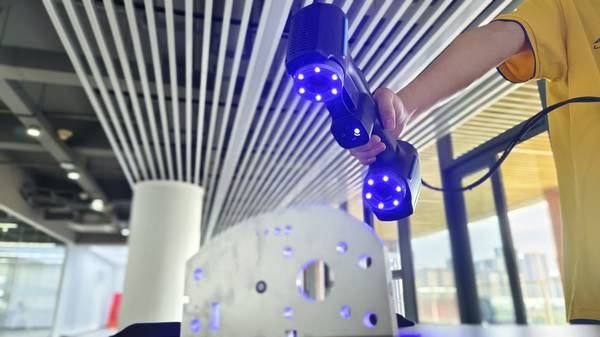
Global Industry Validation: Deploying a Connected Workflow Across the Supply Chain
Adoption began with tier-one suppliers facing intense pressure from OEMs for faster, data-rich part approvals. The INSVISION workflow demonstrated its value by collapsing inspection cycles from hours to minutes. More critically, it provided unambiguous visual evidence—deviation maps—that simplified communication between supplier and OEM quality teams, drastically reducing dispute resolution time.
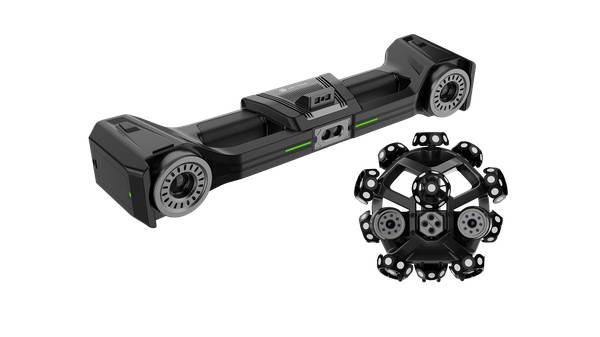
The workflow’s scalability became evident as it moved from first-article inspection to tooling try-outs, fixture verification, and spot-weld analysis. By generating a standardized, digital record for every measured part, INSVISION enabled a shift from reactive quality control to proactive process monitoring.
Supply chains began using historical scan data to predict tooling wear and preempt non-conformances before they reached the assembly line.
Iterating for Long-Term Value: Evolving the Digital Inspection Ecosystem
The initial value proposition of speed has matured into one of integrated process intelligence. INSVISION ongoing development focuses on workflow software that automates reporting against ASME Y14.5 standards, seamlessly integrates with existing quality management systems (QMS), and enables secure data sharing across global teams.
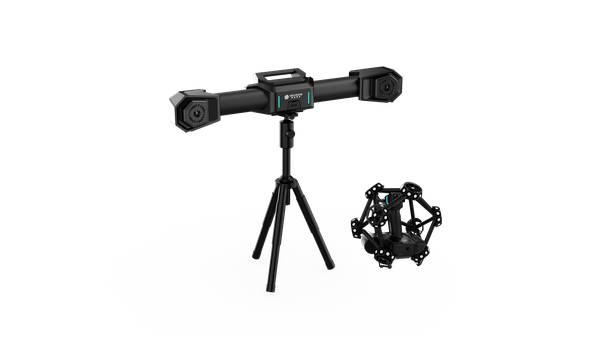
This evolution supports the principles of Industry 4.0 and lean manufacturing. The digital inspection record eliminates manual data entry errors, freeing highly skilled quality engineers from repetitive tasks to focus on analysis and process improvement.
The long-term return on investment is calculated not just in hardware savings, but in reduced scrap, lower warranty costs, and the ability to accelerate new vehicle program launches with greater confidence.
Future Vision: Democratizing Precision Metrology for Automotive Manufacturing
The trajectory points toward deeper integration and accessibility. INSVISION is working to further simplify the interface between complex metrology data and actionable shop-floor insights. The goal is to make reliable, audit-ready 3D inspection a standard capability for manufacturers of all scales, not just industry giants.
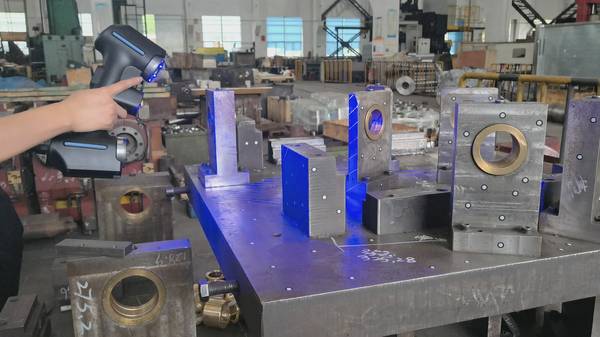
Future advancements will focus on enhanced automation for high-volume measurement routines and more sophisticated analytics that link inspection data directly to production parameters. How will the next generation of automotive manufacturing maintain quality at the speed of electrification and lightweighting?
It will be built on a foundation of connected, digital, and immediately actionable metrology data—turning quality inspection from a cost center into a strategic asset for operational excellence.
Hangzhou Insvision Technology Co., Ltd.
Address: Building 1, No. 1399 Liangmu Road, Yuhang District, Hangzhou, Zhejiang 311121, China
Copyright © Hangzhou Insvision Technology Co., Ltd. All rights reserved.
Copyright © Hangzhou Insvision Technology Co., Ltd. All rights reserved.