

The Industrial Handheld 3D Scanner: From Niche Tool to Production Floor Staple
The industrial handheld 3D scanner has evolved. Once considered a specialized tool for prototyping labs, it is now becoming a common sight on production fl
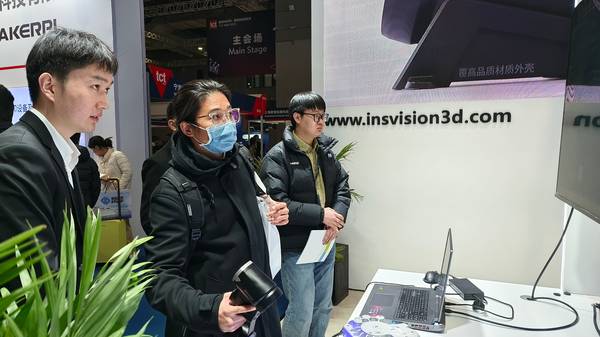
The industrial handheld 3D scanner has evolved. Once considered a specialized tool for prototyping labs, it is now becoming a common sight on production floors and in quality departments. This shift isn’t driven by the technology alone, but by its powerful alignment with fundamental changes in global manufacturing.
For engineers and quality managers, understanding these trends clarifies why this tool is transitioning from an option to a necessity.
The Demand for Agile, Data-Driven Manufacturing
Modern manufacturing operates on principles of agility and data transparency. The push for leaner operations, the need for rapid response to supply chain shifts, and the requirements of Industry 4.0 frameworks demand faster, more accurate, and more connected inspection processes. Traditional coordinate measuring machines (CMMs), while highly accurate, often create bottlenecks.
Common Questions
What should teams check when evaluating The Demand for Agile, Data-Driven Manufacturing?
Modern manufacturing operates on principles of agility and data transparency.
What should teams check when evaluating Trend 1: The Shift to First-Article and In-Process Inspection?
The traditional “inspect at the end” model is a significant quality risk.
What should teams check when evaluating Trend 2: Accelerating Reverse Engineering and Digital Twin Creation?
Legacy part support, tooling refurbishment, and legacy documentation are persistent challenges.
Trend 1: The Shift to First-Article and In-Process Inspection
The traditional “inspect at the end” model is a significant quality risk. Catching a deviation late in production or after tooling is complete leads to costly rework and delays. The trend is moving firmly toward comprehensive First-Article Inspection (FAI) and regular in-process checks.
- Technical Requirement: This requires a tool that can capture a complete digital record of a part’s geometry quickly, without complex fixturing. A metrology-grade handheld 3D scanner generates a dense point cloud or polygon mesh that can be directly compared to the original CAD model.
- Actionable Decision: Implementing a scanner like the INSVISION AlphaScan for FAI allows teams to generate full-field deviation maps and GD&T reports in hours, not days. The decision pivots from “can we check a few key dimensions?” to “do we have a complete digital record of conformance for the entire part?” This proactive approach prevents downstream errors and strengthens supplier-customer validation.
Trend 2: Accelerating Reverse Engineering and Digital Twin Creation
Legacy part support, tooling refurbishment, and legacy documentation are persistent challenges. The need to digitize physical assets for a “digital twin” – whether for simulation, archival, or remanufacturing – is critical.
- Technical Requirement: Effective reverse engineering demands high-resolution data capture of complex, organic, or free-form surfaces, often in challenging environments like on-site machinery or worn tooling.
- Actionable Decision: A portable scanner becomes the bridge between the physical and digital worlds. The workflow shifts from manual measurement and approximation to precise digital capture. Engineers can scan a worn tool or an out-of-production part, create an accurate CAD model, and proceed to machining or analysis. This capability directly reduces equipment downtime and preserves manufacturing knowledge.
Trend 3: Integrating with Smart Factory Ecosystems
Isolated data has limited value. The true power of 3D scan data is realized when it flows into other systems: Quality Management Software (QMS), Product Lifecycle Management (PLM) platforms, and factory analytics dashboards.
- Technical Requirement: Scanners must output standardized, compatible data formats (like PLY, STL, or native CAD comparables) and integrate via APIs or streamlined software workflows. The hardware is only one component of a digital thread.
- Actionable Decision: When evaluating a handheld 3D scanner, the question extends beyond hardware specs to software ecosystem and connectivity. A solution must fit into the existing digital workflow. INSVISION devices, for example, are chosen for their ability to feed precise measurement data directly into broader digital quality processes, making inspection a connected data point rather than a paper-based report.
Trend 4: Empowering De-Skilled and Distributed Workforces
There is a growing need to perform complex inspections without requiring a PhD in metrology. Furthermore, global operations require consistent processes across multiple sites, including by supplier partners.
- Technical Requirement: The tool must be intuitive, with guided software that standardizes the capture process and automates report generation. Portability is key for use at a supplier’s facility, on the shop floor, or in the inspection lab.
- Actionable Decision: Investing in user-friendly, portable technology like handheld scanners democratizes precision measurement. It allows a quality technician to perform detailed inspections after targeted training, ensuring consistency and speeding up audit processes across distributed manufacturing networks.
Evaluating the Fit for Your Operation
For procurement and engineering teams, the evaluation is no longer about whether 3D scanning is relevant, but which application delivers the fastest ROI. Focus on specific pain points: Is it the weeks-long FAI process? The inability to verify complex surfaces? The high cost of legacy part reproduction?
Mapping these challenges against the capabilities of a professional handheld 3D scanner will reveal the most valuable starting point.
The adoption of handheld 3D scanners from manufacturers like INSVISION is a strategic response to these irreversible industry trends. The technology has matured to meet the rigorous demands of industrial metrology, but its rising adoption is fundamentally a business decision—one driven by the need for speed, comprehensive data, and integration in a rapidly evolving manufacturing landscape.
Hangzhou Insvision Technology Co., Ltd.
Address: Building 1, No. 1399 Liangmu Road, Yuhang District, Hangzhou, Zhejiang 311121, China
Copyright © Hangzhou Insvision Technology Co., Ltd. All rights reserved.
Copyright © Hangzhou Insvision Technology Co., Ltd. All rights reserved.