

How 3D Scanning Instruments Transform Industrial Quality Control Without Breaking the Budget
## The Shift from Traditional Inspection to Digital Workflows Industrial manufacturers have long relied on tactile measurement tools and manual inspection routi
The Shift from Traditional Inspection to Digital Workflows
Industrial manufacturers have long relied on tactile measurement tools and manual inspection routines to verify part conformance. These conventional methods demand significant labor hours, specialized fixtures, and often require operators to physically handle components in ways that introduce measurement variability.
When production volumes increase or part geometries become more complex, the bottlenecks in traditional inspection workflows become difficult to ignore. Setup times alone can consume hours of productive capacity before a single measurement is recorded, and the subsequent data analysis often depends on individual operator expertise rather than standardized protocols.
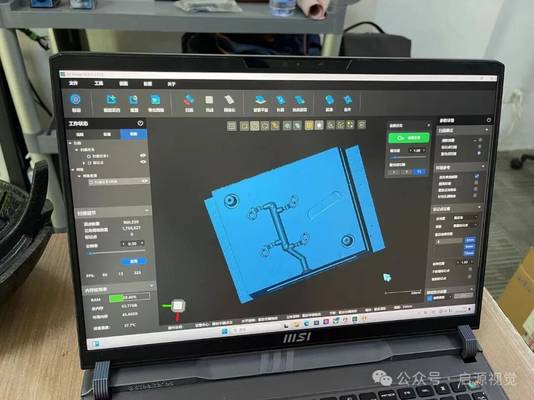
INSVISION addresses these workflow inefficiencies with the AlphaScan handheld 3D scanner, enabling operators to capture complete dimensional data in a single scanning pass. The transition from tactile point measurement to full-field data acquisition represents a fundamental shift in how quality teams approach inspection tasks.
Rather than spending time configuring multiple instruments and reference fixtures, technicians can begin scanning immediately after positioning the part. This capability compresses the inspection timeline considerably, allowing quality departments to keep pace with production throughput without proportionally expanding headcount.
How 3D Scanning Instruments Reduce Operational Costs
The financial case for adopting 3D scanning instruments extends well beyond the initial purchase price. When organizations evaluate total cost of ownership, the savings materialize across multiple operational categories. Inspection labor represents one of the most significant cost drivers in traditional quality workflows.
A single experienced metrologist may require several hours to manually measure a complex aerospace component, yet the AlphaScan scanner captures equivalent dimensional data in a fraction of that time. This labor reallocation allows skilled technicians to focus on data interpretation and root cause analysis rather than repetitive measurement tasks.
Rework and scrap rates directly impact profitability, and dimensional verification during production significantly influences these metrics. Early detection of geometric deviations enables manufacturing teams to adjust processes before nonconforming parts accumulate. The ability to generate color-coded deviation maps provides immediate visual feedback about where adjustments are needed, accelerating the correction cycle.
Rather than discovering problems during final assembly or shipping, teams can address issues during the operations where they originate.
The AI-enhanced algorithms integrated into INSVISION scanning systems contribute to measurement consistency across shifts and operators. Traditional inspection often produces variable results depending on which technician performs the measurement and how they interpret procedures. Automated scanning workflows reduce this variability, creating more predictable quality data that supports confident decision-making.
Consistent measurement data means fewer disputes about whether parts meet specifications, reducing friction between production and quality departments.
Practical Benefits for Industrial Quality Control
Quality traceability has become increasingly important as industries like automotive and aerospace demand comprehensive documentation of manufacturing processes. 3D scanning instruments generate complete digital records of every inspected component, creating audit trails that manual methods simply cannot match.
When questions arise about part condition at specific production stages, the archived scan data provides definitive answers. This capability proves valuable during customer audits, regulatory reviews, and internal investigations into field failures.
The integration of GD&T analysis tools within the INSVISION software platform enables inspection teams to evaluate form, orientation, and location tolerances without additional software investments. Operators can import CAD models directly and compare scan results against nominal geometry, identifying deviations that might escape traditional go/no-go gauges.
The ability to perform these comparisons internally reduces dependence on external laboratories for complex measurement tasks, shortening feedback loops and enabling faster design iterations.
Large-area scanning capabilities expand the range of applicable components beyond small precision parts. The AlphaVista system, another solution from INSVISION, handles reaching several meters in dimension, enabling inspection teams to verify large fabrications without coordinating access to coordinate measuring machines or outsourcing arrangements.
This flexibility proves particularly valuable for manufacturers producing oversized components where external inspection services introduce scheduling delays and logistics costs.
Building Long-Term Value Through Digital Inspection
Organizations implementing 3D scanning instruments typically observe improvements in first-pass yield as process capabilities become better understood through comprehensive dimensional data. When engineers have access to complete geometry information rather than isolated point measurements, they identify patterns in variation that reveal underlying process relationships.
This understanding supports more effective corrective actions and enables predictive maintenance approaches that prevent quality degradation before it impacts production.
The digital datasets generated by scanning workflows create opportunities for analysis that paper-based records cannot support. Historical scan data can be aggregated to track dimensional trends across production batches, equipment, or material lots.
Statistical analysis of these datasets reveals emerging issues while they remain within acceptable ranges, giving teams time to investigate and intervene before specifications are violated. This proactive capability represents a significant advancement over reactive inspection approaches that only identify problems after they have already occurred.
Delivery performance improves when quality departments can complete inspections faster without sacrificing thoroughness. Compressing inspection cycle times directly influences production scheduling flexibility, enabling manufacturers to accept orders with tighter deadlines or respond more quickly to change requests.
The operational agility gained through efficient inspection workflows translates into competitive advantages in markets where lead time expectations continue to shorten.
Investment in 3D scanning technology generates compounding returns as organizations build institutional knowledge around digital inspection methods. Procedures mature, technicians develop expertise, and data analysis capabilities expand over time.
The initial adoption effort yields ongoing benefits that extend well beyond the immediate efficiency gains, positioning manufacturers to respond effectively to future challenges in quality assurance and production optimization.
Hangzhou Insvision Technology Co., Ltd.
Address: Building 1, No. 1399 Liangmu Road, Yuhang District, Hangzhou, Zhejiang 311121, China
Copyright © Hangzhou Insvision Technology Co., Ltd. All rights reserved.
Copyright © Hangzhou Insvision Technology Co., Ltd. All rights reserved.