

Handheld Scanner CAD CAM Integration Drives Measurable Shop Floor Savings
See how scanner CAD CAM integration improves measurement flow, rework control, labor use, delivery cadence, and traceability on industrial shop floors.
Introduction: Cost Pressure Behind CAD CAM Workflows
Western manufacturers are under constant pressure to protect margin while maintaining short lead times, stable quality, and compliance with ISO, ASME, and customer-specific inspection requirements. In many machining, repair, mold, and tooling environments, the hidden cost is not only in cutting metal.
It is also in the time required to capture accurate physical geometry before programming, machining, or inspection can move forward. A practical scanner CAD CAM workflow helps address that gap by turning physical parts into usable digital data faster and with less dependence on slow manual measurement loops.
Capability and Deployment Mapping
| Focus Area | Decision Point | Deployment Note |
|---|---|---|
| Introduction: Cost Pressure Behind CAD CAM Workflows | Western manufacturers are under constant pressure to protect margin while maintaining short lead times, stable quality, and compliance with ISO, ASME… | In many machining, repair, mold, and tooling environments, the hidden cost is not only in cutting metal. |
| Legacy Part Onboarding | Many shops receive worn, repaired, or undocumented parts that still need to be reproduced or modified. | Without reliable drawings or CAD files, engineers often rely on calipers, height gauges, manual templates, or CMM programs built point by point. |
| First-Article Inspection Queues | A CMM remains valuable for high-precision verification, but it can become a capacity bottleneck when several jobs compete for the same inspection res… | A first article may sit idle while a machine tool waits for sign-off. |
| Rework Caused by Incomplete Geometry | When CAD models are built from partial or manually interpreted data, toolpaths may be technically complete but operationally risky. | Missing surface information, uncertain edge conditions, or unverified repair zones can lead to re-machining, scrap, or assembly issues. |
This article looks at scanner CAD CAM integration from an operational value perspective. The focus is not on sensor specifications alone, but on how handheld 3D scanning can improve measurement cycle time, rework control, skilled labor allocation, delivery cadence, quality traceability, and long-term digital manufacturing capability.
Legacy Part Onboarding
Many shops receive worn, repaired, or undocumented parts that still need to be reproduced or modified. Without reliable drawings or CAD files, engineers often rely on calipers, height gauges, manual templates, or CMM programs built point by point. This approach can work, but it often creates long feedback loops between the shop floor, quality room, and CAD station.
The real cost appears when senior machinists or engineers spend hours reconstructing geometry that should already be available as a digital asset. Blend radii, draft angles, freeform surfaces, and worn areas can be difficult to interpret from limited point measurements. When the input data is incomplete, the downstream CAD CAM workflow inherits uncertainty.
First-Article Inspection Queues
A CMM remains valuable for high-precision verification, but it can become a capacity bottleneck when several jobs compete for the same inspection resource. A first article may sit idle while a machine tool waits for sign-off. In a lean manufacturing environment, that waiting time affects spindle utilization, labor planning, and delivery reliability.
The issue is not simply inspection speed. It is the sequential nature of the process. If every job must wait for one shared inspection asset, production planning becomes less flexible, especially for short-run, high-mix manufacturing.
Rework Caused by Incomplete Geometry
When CAD models are built from partial or manually interpreted data, toolpaths may be technically complete but operationally risky. Missing surface information, uncertain edge conditions, or unverified repair zones can lead to re-machining, scrap, or assembly issues.
Rework carries more than material cost. It consumes machine time, pulls skilled employees away from scheduled work, complicates quality documentation, and can affect customer confidence when nonconformance reaches the receiving dock.
Reverse Engineering: From Manual Interpretation to Digital Geometry
Pain point: Legacy components and one-off parts often require time-consuming measurement before a machinable model can be created.
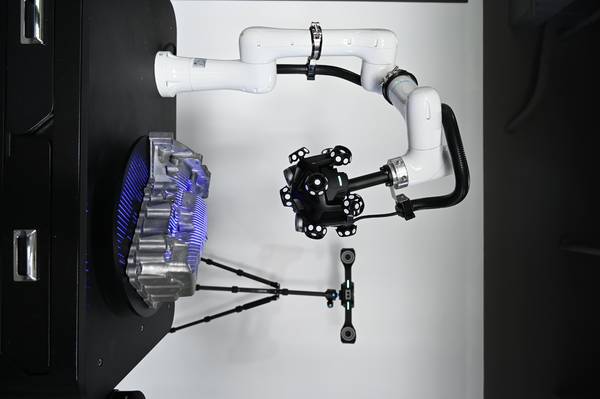
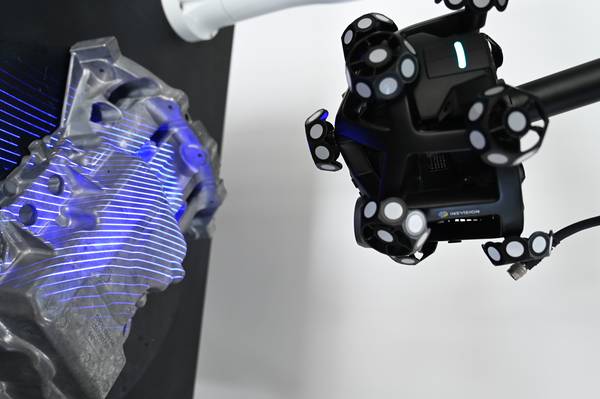
Improvement path: A metrology-grade handheld 3D scanner captures dense surface data across the full part instead of isolated points. The resulting mesh or point cloud can be imported into CAD CAM software for surface reconstruction, feature extraction, and toolpath preparation.
Observable value: Engineering time shifts from manual data collection to model validation and manufacturability decisions. A scanner CAD CAM pipeline also helps reduce uncertainty when working with worn castings, aftermarket components, aerospace MRO parts, tooling inserts, and repair components.
First-Article Inspection: Moving Verification Closer to Production
Pain point: First-article approval can be delayed when inspection capacity is tied to a CMM room or a fixed measuring station.
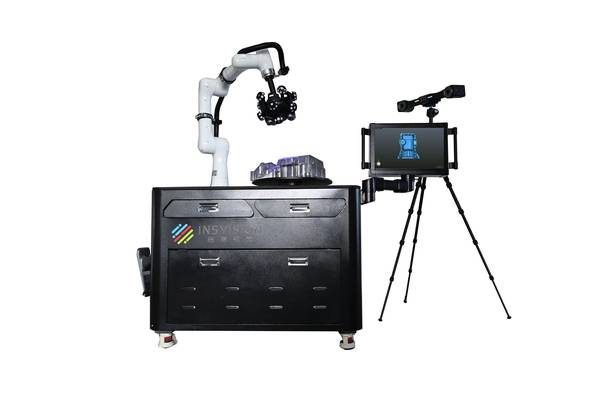
Improvement path: A handheld scanner can be brought to the part, fixture, bench, or machine-side inspection area. Operators can compare the scan against reference CAD geometry and generate visual deviation maps for quick review.
Observable value: Inspection becomes more parallel and less dependent on a single stationary asset. The CMM can remain reserved for features that require its full uncertainty capability, while the scanner CAD CAM process supports faster clearance of suitable parts.
Rework Control: Better Input Data Before Toolpaths Are Generated
Pain point: Rework often begins before machining starts, when the digital model does not fully represent the physical part.
Improvement path: Full-field scan data provides more complete geometry for CAD reconstruction and CAM preparation. Areas such as complex curves, thin edges, pockets, repair zones, and organic surfaces can be captured more consistently than with manual point-by-point methods.
Observable value: Toolpaths are based on more reliable input data. This helps reduce avoidable second passes, manual corrections, and late-stage assembly surprises, especially in mold validation, component repair, and low-volume precision manufacturing.
Labor Allocation: Reducing Dependence on Scarce Measurement Expertise
Pain point: Skilled machinists, CMM programmers, and senior quality personnel are often pulled into routine measurement tasks because the process depends on experience.
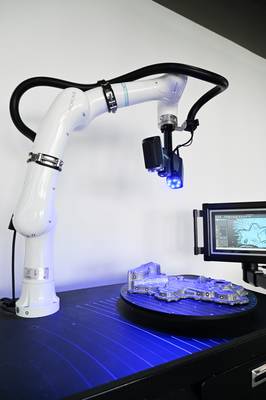
Improvement path: A structured handheld scanning workflow standardizes data capture and makes measurement less dependent on individual interpretation. Clear alignment methods, deviation visualization, and repeatable export formats help reduce the learning curve.
Observable value: Senior staff can spend more time on process improvement, fixture strategy, CAM optimization, root-cause analysis, and customer-facing quality discussions rather than routine geometry capture.
Quality Traceability: Building a Digital Record for Each Job
Pain point: Manual inspection records may confirm selected dimensions, but they do not always provide a complete view of surface condition or deviation across the part.
Improvement path: Scan-based inspection can create full-field deviation reports and digital archives. These records support internal quality reviews, customer documentation, and corrective action workflows.
Observable value: A scanner CAD CAM workflow contributes to Industry 4.0 readiness by turning physical inspection activity into reusable digital manufacturing data. Over time, the shop builds a stronger knowledge base for repeat jobs, supplier validation, tooling wear review, and process improvement.
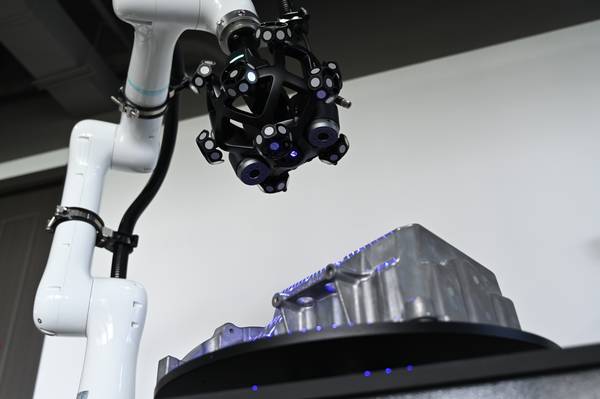
Operational Value Assessment Framework
For a reliable selection, manufacturers should validate the scanner with real parts, existing inspection workflows, and reporting requirements before making a decision. INSVISION can support this process with application demos, sample data verification, and practical recommendations for integrating 3D scanning into quality control and production improvement.
Hangzhou Insvision Technology Co., Ltd.
Address: Building 1, No. 1399 Liangmu Road, Yuhang District, Hangzhou, Zhejiang 311121, China
Copyright © Hangzhou Insvision Technology Co., Ltd. All rights reserved.
Copyright © Hangzhou Insvision Technology Co., Ltd. All rights reserved.