

3D Scanning Reference Points Improve Industrial Metrology Cost Efficiency
Learn how 3d scanning reference points improve inspection throughput, rework control, labor flexibility, traceability, and long-term metrology ROI.
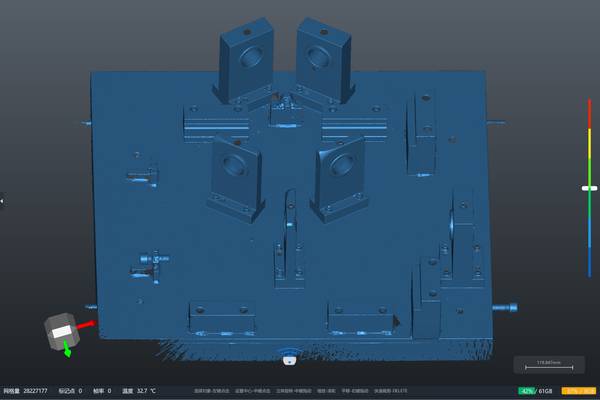
The focus is operational rather than purely technical. For plant managers, quality directors, manufacturing engineers, and procurement teams, the key question is not whether a scanner is advanced. The practical question is whether a reference-point-enabled inspection workflow can reduce avoidable cost, shorten quality holds, improve process feedback, and support long-term digital quality management.
INSVISION’s AlphaScan is used as the reference implementation throughout this article.
Cost Pain Points in Traditional Measurement and Inspection
Before evaluating 3D scanning, manufacturers need to understand where inspection cost accumulates. The visible cost is usually equipment time or operator time. The larger cost often sits in waiting, rework, delayed decisions, and incomplete process feedback.
A fixed CMM, long-gauge setup, or manual height gauge may be accurate, but complex parts can require multiple setups, careful alignment, and repeated operator intervention. Large castings, sheet metal assemblies, molded parts, and machined components with freeform surfaces may wait for CMM availability even when production is ready to move. This creates a hidden queue between manufacturing and shipment.
Rework and scrap add another layer. When inspection data arrives late, a process may continue producing parts with the same dimensional issue for hours. Spot checks can confirm selected dimensions but may miss form deviation, surface warpage, or cumulative assembly risk.
In Western manufacturing environments where lean production and customer audits are standard, late detection directly affects cost, delivery confidence, and customer trust.
Skilled labor dependency is also a major constraint. CMM programming, GD&T interpretation, scan alignment, and report preparation often depend on experienced technicians. When those people are overloaded or unavailable, inspection throughput drops. A metrology workflow that reduces manual registration and repeat setup work can therefore create value beyond the inspection department.
Inspection Efficiency and Measurement Cycle Time
Pain point: Traditional inspection can involve part transfer, CMM queue time, repeated setups, and manual alignment. These steps slow release decisions and limit inspection capacity.
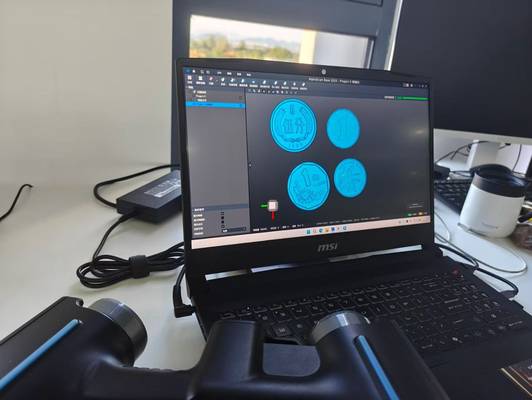
Improvement path: 3d scanning reference points create a stable external coordinate framework around the measurement volume. The scanner tracks its position relative to these coded targets, allowing the operator to move around the part while scan patches are registered into one coherent dataset.
Observable value: Parts that previously required several measurement setups can often be captured in a more continuous workflow. The practical benefit is shorter quality hold time, faster first-article inspection feedback, and better alignment between inspection capacity and production takt.
Rework, Scrap, and Earlier Process Feedback
Pain point: Conventional spot checks may not fully describe complex surfaces, large part deformation, or cumulative form error. A part may pass selected dimensions but create problems during assembly or customer acceptance.
Improvement path: A reference-point-based 3D scanning workflow captures dense surface data and compares the as-built geometry with CAD. Deviation color maps help quality and process teams identify trends such as tool wear, fixture shift, thermal distortion, or molding variation.
Observable value: Earlier visibility supports faster corrective action. Instead of discovering a problem after a batch has moved downstream, the plant can adjust the process while the issue is still limited. This does not require unsupported claims about exact scrap reduction; each manufacturer can measure the effect through non-conformance trends, rework hours, and repeat defect frequency.
Labor Flexibility and Reduced Specialist Bottlenecks
Pain point: Senior metrology staff are often pulled into routine measurement setup, manual data alignment, and report preparation. This limits their availability for root-cause analysis and process improvement.
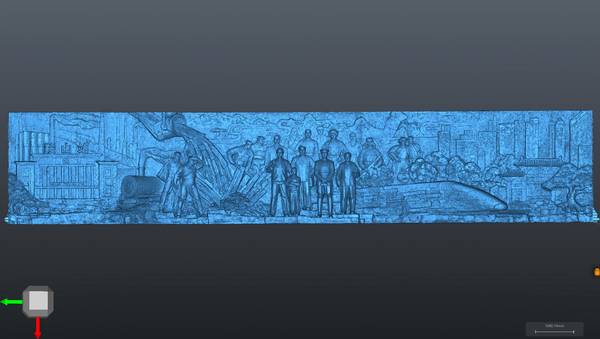
Improvement path: 3d scanning reference points reduce the manual burden of registration. With proper setup and training, operators or quality technicians can collect metrology-grade scan data while senior engineers review exceptions, validate GD&T results, and improve inspection plans.
Observable value: Labor is used more effectively. Skilled specialists spend less time on repetitive data capture and more time on manufacturing decisions that protect margin, delivery, and customer quality.
Delivery Cadence and Order Responsiveness
Pain point: Inspection backlog can delay shipment even when production is complete. For contract manufacturers, aerospace suppliers, automotive tier suppliers, and precision machining shops, this can affect on-time delivery performance and customer confidence.
Improvement path: When 3d scanning reference points support faster and more stable data capture, inspection can become less of a release bottleneck. Digital reports can be prepared from full-surface data, helping teams make shipment decisions with stronger evidence.
Observable value: Faster inspection supports a more predictable delivery cadence. This is especially valuable for high-mix, low-volume manufacturing, where repeated CMM programming and setup changes can slow order flow.
Quality Traceability and Long-Term Data Assets
Pain point: Manual inspection records may document only selected dimensions. They can be difficult to reuse for trend analysis, customer audits, or preventive maintenance planning.
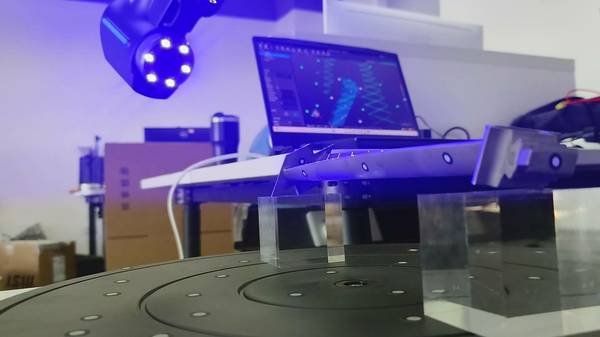
Improvement path: A scan-to-CAD workflow creates a digital record of the as-built part. Deviation maps, inspection reports, and archived scan data become part of the quality history for a batch, component family, or production cell.
Observable value: Over time, inspection data becomes a process control asset. Teams can compare historical scans, identify dimensional drift, support customer audits, and strengthen continuous improvement programs linked to ISO quality systems and Industry 4.0 initiatives.
Business Value Calculation Framework
A practical evaluation should start with the plant’s own numbers rather than generic ROI claims. The following framework helps manufacturers compare the current baseline with a reference-point-enabled scanning workflow.
| Cost Category | Traditional Baseline | With 3D Scanning Reference Points | What to Measure |
|---|---|---|---|
| Inspection cycle time | CMM programming, queue time, manual setup, multiple alignments | Continuous handheld scanning with automatic registration support | Hours per part, parts per shift, inspection queue time |
| Rework and scrap | Late discovery of dimensional issues, limited surface data | Earlier full-surface feedback and stronger deviation visibility | Monthly scrap cost, rework hours, repeated defect frequency |
| Skilled labor use | Senior metrology staff handle setup, alignment, and routine reporting | Operator-led scanning with senior review for exceptions | Labor hours per inspection, specialist availability |
| Delivery cadence | Shipment release delayed by inspection backlog | Faster quality release based on complete digital inspection data | On-time delivery rate, expedited shipment frequency |
| Audit and traceability effort | Manual report assembly and limited measurement history | Digital scan records, deviation reports, and archived inspection data | Audit preparation time, customer documentation workload |
This model does not require perfect data at the start. A plant can begin with a representative part family and track inspection hours, rework costs, and release delays for several production cycles. The aim is to identify where 3d scanning reference points create the largest operational effect: throughput, labor flexibility, defect prevention, or traceability.
Where INSVISION Creates Measurable Operational Improvement
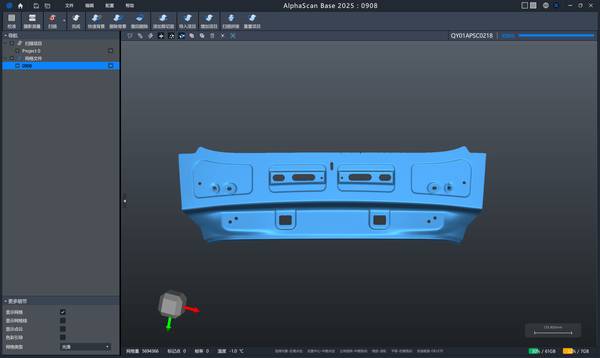
INSVISION’s AlphaScan addresses a core challenge in handheld metrology: maintaining a stable spatial reference during scanning. The AlphaScan uses 3D scanning reference points encoded on photogrammetry scales to construct a high-precision global coordinate frame.
As the operator moves around the part, AlphaScan detects the markers and tracks position in real time, helping each scan segment align into the global system without accumulated drift.
For production environments, the relevant specifications include volume accuracy of 0.015 mm + 0.025 mm/m for large-scale measurement, 30 or 42 blue laser lines with 22 or 34 cross lines for fast area coverage, and dedicated fine-feature laser lines for detailed geometry. These capabilities support inspection of large components, complex surfaces, and precision features where both speed and dimensional confidence matter.
Scan
Hangzhou Insvision Technology Co., Ltd.
Address: Building 1, No. 1399 Liangmu Road, Yuhang District, Hangzhou, Zhejiang 311121, China
Copyright © Hangzhou Insvision Technology Co., Ltd. All rights reserved.
Copyright © Hangzhou Insvision Technology Co., Ltd. All rights reserved.