

Evaluating 3D Scanning Machine Price
Discover how INSVISION's AlphaScan handheld 3D scanner delivers metrology-grade precision on the production floor. A technical price-value analysis for
Optical Architecture: Delivering Lab-Grade Precision in a Handheld Form
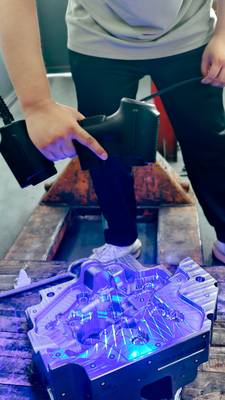
The fundamental challenge for any handheld scanner is maintaining optical calibration and data integrity while the device is in motion. The INSVISION AlphaScan addresses this through a fully in-house dual-axis scanning galvanometer. This core component drives high-density point cloud acquisition, but the system’s reliability for tasks like ASME Y14.5 GD&T analysis comes from its synchronized ecosystem.
Scenario Snapshot
A practical way to read the article is through this scenario:
- Optical Architecture: Delivering Lab-Grade Precisio…: The fundamental challenge for any handheld scanner is maintaining optical calibration and data integrity while the…
- Application Scenario: Inspecting a Complex Machined…: Consider a common bottleneck: first-article inspection of a large aluminum housing with deep internal cavities and…
- Total Cost of Ownership: The Engineering Behind the…: A lower initial 3D scanning machine price can be misleading if it represents only a component.
AI-driven processing algorithms compensate in real-time for data gaps caused by reflective surfaces or challenging shop-floor lighting. Simultaneously, a targeted illumination system and high-speed data interface work to prevent frame drops during rapid movement.
For the buyer, this means the scanner’s certified accuracy is not contingent on a vibration-isolated table—it’s engineered to perform during continuous production-line scanning, making metrology-grade verification a mobile workflow.
Application Scenario: Inspecting a Complex Machined Housing
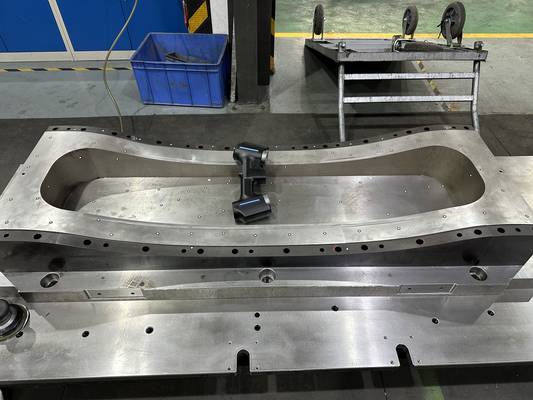
Consider a common bottleneck: first-article inspection of a large aluminum housing with deep internal cavities and a mix of milled and as-cast surfaces. A traditional CMM would require hours of custom fixturing and meticulous manual probing, stalling the production line. With the INSVISION AlphaScan, an operator begins scanning immediately.
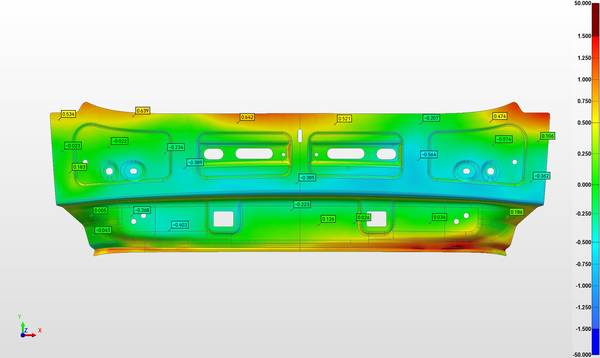
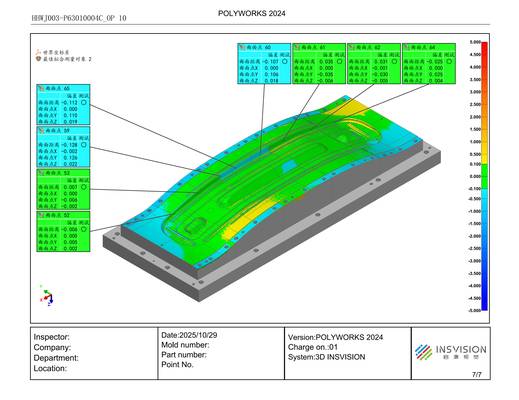
The device’s dual-layer LED design illuminates deep holes, while the operator maneuvers the lightweight unit to capture undercuts. As data is acquired, the integrated software performs real-time alignment against the reference CAD model. The output is not a raw point cloud requiring manual analysis, but an immediate, color-coded deviation map.
This visual report allows for instant go/no-go decisions on tolerance compliance, compressing a multi-hour tactile inspection into a digital workflow that takes minutes.
Total Cost of Ownership: The Engineering Behind the Investment
A lower initial 3D scanning machine price can be misleading if it represents only a component. INSVISION structures its pricing around a fully integrated system—proprietary metrology hardware, bundled inspection software, and embedded AI calibration algorithms.
This approach aims to eliminate hidden costs: there are no recurring third-party software licenses, and the AI algorithms are designed to reduce long-term instrumental drift, minimizing recalibration overhead and production downtime. The investment also includes compliance certifications critical for Western supply chains, such as CE and FCC.
The true ROI emerges in operational stability—consistent repeatability across shifts, the elimination of secondary fixturing costs, and the seamless integration of digital reports into existing PLM or quality management systems.
Defining the Deployment Boundaries for Optimal Performance
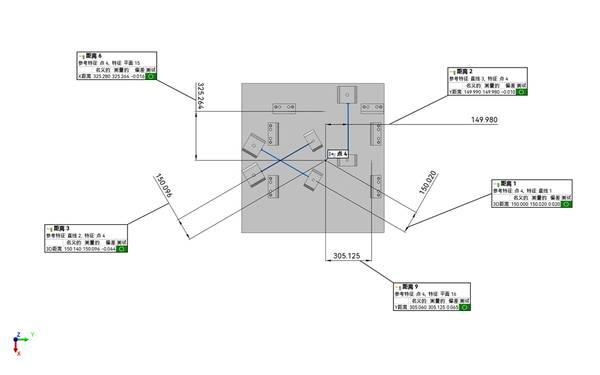
The INSVISION AlphaScan is particularly effective for high-detail acquisition where part mobility is an issue, such as aerospace component verification, automotive subassembly checks, or reverse-engineering large machinery. However, its performance has defined boundaries that engineers must validate. The system operates best under standard indoor lighting.
Highly reflective or glossy surfaces may require a temporary application of anti-glare developer spray to ensure laser adherence. Before committing to a critical batch inspection, a practical on-site validation is essential.
This should involve scanning a sample part with known geometries to verify point cloud density on specific features, confirming the deviation map’s clarity meets your reporting standards, and ensuring the operator’s technique provides stable, repeatable results.
Positioning in the Inspection Workflow
The AlphaScan occupies a specific niche. It is not a replacement for high-volume automated inline systems, nor does it match the ultimate volumetric accuracy of a large, fixed CMM for simple prismatic parts. Its strength is as a primary tool for low-to-mid volume inspection, large-format parts, or complex geometries where traditional methods create bottlenecks.
It eliminates the setup time of CMMs and captures data on hidden points and complex curvatures that challenge laser trackers. For engineering teams, the final step in any evaluation should be a hands-on test: request a sample-part scanning session using one of your own components. Assess the workflow from data capture to the final report, verifying the output integrates smoothly into your quality process.
This practical validation is the most reliable method to contextualize the 3D scanning machine price within your specific operational reality.
Hangzhou Insvision Technology Co., Ltd.
Address: Building 1, No. 1399 Liangmu Road, Yuhang District, Hangzhou, Zhejiang 311121, China
Copyright © Hangzhou Insvision Technology Co., Ltd. All rights reserved.
Copyright © Hangzhou Insvision Technology Co., Ltd. All rights reserved.