

3D Scan Art for Heritage and Industrial Inspection
Article Guide Why Standard 3D Scan Art Fails Heritage Preservation Optical and AI Architecture for Complex Surface Conditions From Raw Scan to Validated, Actionable Outputs Validating the Workflow for Your Specific Appli
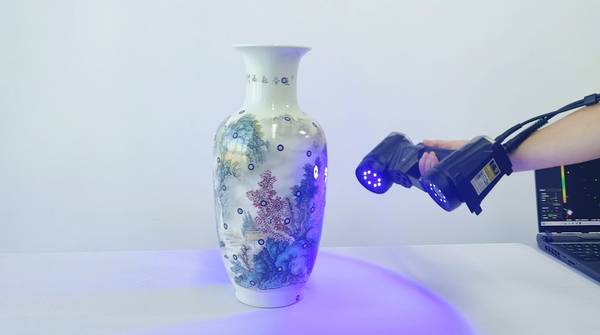
Surfaces like patinated bronze, high-gloss lacquer, or complex ceramic undercuts introduce noise, blind spots, and dimensional inaccuracies. This isn’t merely an aesthetic shortfall—it’s a data integrity issue. True archival and fabrication use cases require metrology-grade fidelity, where scans serve as traceable measurement records compliant with ISO practices and ASME Y14.5 tolerance mapping.
For institutions adopting Industry 4.0 lean digitization, the priority shifts from raw speed to optical stability, micron-level accuracy, and AI-driven data processing. This article outlines the engineering principles and validated workflows necessary to ensure a digital twin retains the dimensional truth of the physical original.
Why Standard 3D Scan Art Fails Heritage Preservation
The misconception that heritage digitization needs only visual fidelity is a significant risk. Capturing a 19th-century bronze with a consumer-grade sensor, for example, will typically miss the subtle surface transitions of its patina and fail in deep geometric undercuts. The resulting data lacks the integrity for structural analysis, condition monitoring, or precision replication.
Practical Workflow
- Why Standard 3D Scan Art Fails Heritage Preservation — The misconception that heritage digitization needs only visual fidelity is a significant risk.
- Optical and AI Architecture for Complex Surface Conditions — How does a handheld scanner maintain metrology-grade accuracy on a reflective sculpture or within a deep cavity?
- From Raw Scan to Validated, Actionable Outputs — The real value of a metrology-grade 3d scan art workflow is realized in post-processing and reporting.
- Validating the Workflow for Your Specific Application — Deploying a precision digitization system requires matching scanner capabilities to artifact complexity.
Metrology-grade capture demands consistent, calibration-free accuracy—often at the sub-millimeter or micron level—to create a dataset usable for deviation mapping against reference CAD or for generating supports for a restoration-grade 3D print. INSVISION addresses this by engineering its 3d scan art technology from the ground up for measurement, not just modeling.
The INSVISION AlphaScan handheld system, for instance, employs a hybrid optical architecture specifically designed to penetrate challenging surfaces and complex geometries, producing dense, reliable point clouds.
Optical and AI Architecture for Complex Surface Conditions
How does a handheld scanner maintain metrology-grade accuracy on a reflective sculpture or within a deep cavity? The INSVISION AlphaScan uses a multi-line blue laser matrix (22 or 34 crossed lines) for rapid coverage, supplemented by a dedicated single blue laser line for deep holes and seven fine-scan lines for micro-details. This hybrid approach is crucial for complex 3d scan art projects.
A dual-layer LED illumination system dynamically adapts to both highly reflective and matte textures, capturing data fidelity without the need for disruptive surface sprays. The subsequent AI-enhanced 3D reconstruction pipeline filters environmental interference and corrects for sensor drift, fusing multi-angle captures into a continuous, watertight mesh without manual patching.
For larger installations, a built-in photogrammetry system enables calibration-free scanning, maintaining a stated 0.010mm accuracy even with minor object movement. Optimal performance, however, requires stable ambient lighting and controlled operator handling to manage extreme gloss-to-matte transitions effectively.
From Raw Scan to Validated, Actionable Outputs
The real value of a metrology-grade 3d scan art workflow is realized in post-processing and reporting. Raw capture data is aligned and processed into an engineering-grade asset. INSVISION software enables users to perform surface deviation analysis, comparing the scan against a reference model to generate tolerance heatmaps and statistical charts.
Consider verifying wall thickness on a historic ceramic vessel or documenting symmetry on an asymmetrical bronze form—these tasks demand precise data continuity across complex curvature. The scanner’s ability to capture hidden structures without losing dimensional accuracy makes this possible.
The final outputs—comprehensive deviation reports, watertight 3D models, and annotated point clouds—serve dual archival and fabrication purposes, providing a single source of truth for conservation records and the basis for precision restoration replicas. *[Anchor video here: real-time generation of a deviation report from a scanned artifact.]*
Validating the Workflow for Your Specific Application
Deploying a precision digitization system requires matching scanner capabilities to artifact complexity. The INSVISION AlphaScan series offers a specific technical profile for this sector, with key strengths in modular blue laser configuration and AI-enhanced noise suppression.
It is particularly suited for high-reflectivity metals, deep-cavity ceramics, and large-scale mixed-media installations where intricate undercuts must be captured without compromising global alignment.
Before full deployment, engineers should execute targeted on-site validation. This is not a generic checklist but a scenario-specific proof of concept. For a 3d scan art project, validation should include: scanning a sample artifact with similar surface conditions (e.g., a gloss-black ceramic shard) to verify detail retention; confirming photogrammetry target placement strategies for large-volume accuracy;
and cross-checking generated deviation maps against physical measurements taken with trusted tools like CMMs or laser trackers.
Hangzhou Insvision Technology Co., Ltd.
Address: Building 1, No. 1399 Liangmu Road, Yuhang District, Hangzhou, Zhejiang 311121, China
Copyright © Hangzhou Insvision Technology Co., Ltd. All rights reserved.
Copyright © Hangzhou Insvision Technology Co., Ltd. All rights reserved.