

3d scanning methods Industrial Inspection Guide
Is your quality inspection process a bottleneck, creating data silos that disrupt lean manufacturing and Industry 4.0 goals?
While adherence to ISO 10360 and ASME GD&T standards remains foundational for sectors like aerospace and automotive, the focus now is on generating traceable, real-time deviation analytics. This article examines how modern 3D scanning methods bridge the gap between physical parts and the digital twin, transforming inspection from a periodic checkpoint into an integrated data node within your manufacturing execution system.
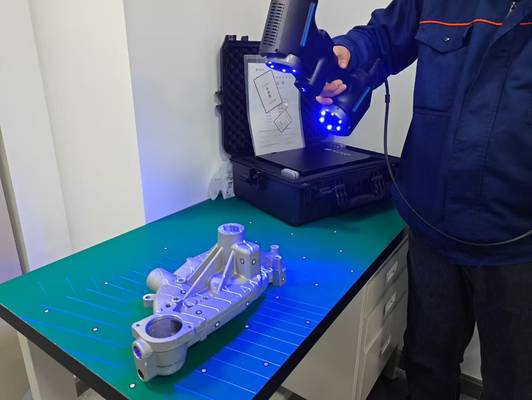
From Lab Bench to Line-Side: The Demand for In-Process Metrology
The defining challenge for contemporary 3D scanning methods is delivering metrology-grade data in active production environments, not controlled labs. This requires technology resilient to ambient light, vibration, and varying surface conditions—from matte composite finishes to reflective machined metals.
Common Questions
What should teams check when evaluating From Lab Bench to Line-Side: The Demand for In-Process Metrology?
The defining challenge for contemporary 3D scanning methods is delivering metrology-grade data in active production environments, not controlled labs.
What should teams check when evaluating Selecting a Scanner: Aligning Technology with Part Profile and Producti…?
Choosing the right 3D scanning method requires matching hardware capabilities to specific part geometries, tolerance bands, and workflow rhythms.
What should teams check when evaluating Case in Point: Streamlining First-Article Inspection on a Congested Sho…?
A practical deployment of INSVISION’s AlphaScan handheld scanner illustrates this integrated workflow.
INSVISION‘s approach utilizes AI-optimized blue laser triangulation and structured light to capture dense, accurate point clouds without extensive part fixturing.
For instance, systems employing multiple crossed laser lines maintain measurement fidelity on deep-pocket geometries and tight access areas common in casting or complex weldments. A critical capability for minimizing downtime is dynamic scanning, which allows for high-precision data capture on slowly moving assemblies or rotary tables. This transition prioritizes data continuity;
high-speed acquisition feeds raw spatial data directly into analysis software, closing the loop before a part even leaves the workstation.
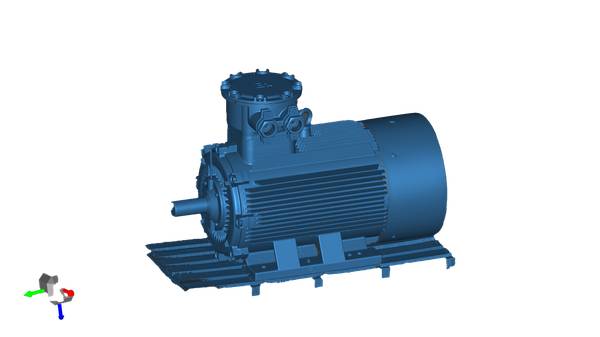
Selecting a Scanner: Aligning Technology with Part Profile and Production Rhythm
Choosing the right 3D scanning method requires matching hardware capabilities to specific part geometries, tolerance bands, and workflow rhythms. A one-size-fits-all approach risks inefficiency or compromised data integrity.
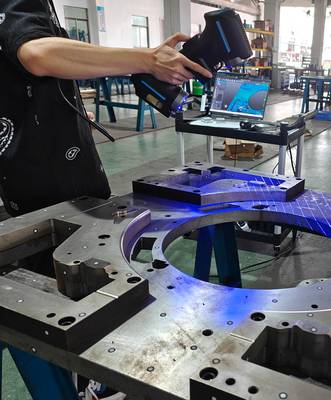
- Stationary Lab Systems offer maximum stability for micron-level precision, remaining the choice for calibrating master artifacts or inspecting small, high-tolerance components like fuel injector nozzles in a climate-controlled room.
- Portable Optical Arms provide large volumetric reach and combine tactile probing with optical scanning, suited for verifying large-scale assemblies like airframe sections where both surface data and hard probe dimensions are required.
- Handheld Structured-Light Scanners, such as the INSVISION AlphaVista, excel in flexibility. They are designed for medium-to-complex parts where access is limited, the component cannot be easily moved, or frequent design iterations demand rapid, multi-angle capture directly at the machine tool.
Beyond the hardware, validation is key. Engineers must verify surface preparation protocols for challenging materials and account for on-site environmental factors like thermal drift across an 8-hour shift. All metrology claims should be backed by valid calibration certificates, such as CNAS accreditation, to ensure data integrity for compliance reporting.
Case in Point: Streamlining First-Article Inspection on a Congested Shop Floor
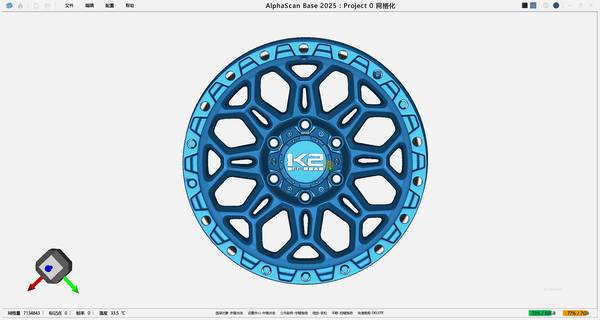
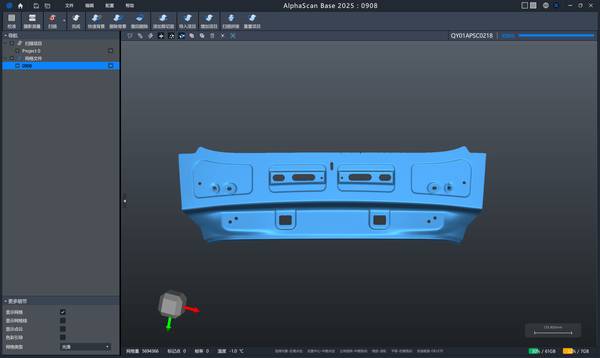
A practical deployment of INSVISION’s AlphaScan handheld scanner illustrates this integrated workflow. Facing premium floor space, a precision manufacturer moved first-article inspection from an offline CMM to the machine cell. Operators used the scanner’s single-hand operation to capture high-density point clouds of small-to-medium turned and milled components immediately after machining.
The integrated software pipeline was critical: scan data was automatically aligned to the CAD nominal using AI-assisted registration, generating an automated color deviation map within minutes. This visual report instantly highlighted out-of-tolerance conditions for the machinist.
By eliminating the need for dedicated CMM fixture design and programming, the workflow accelerated batch release and embedded quality verification directly into the production rhythm, with one-click generation of AS9102-style compliance documentation.
Implementing for the Future: Building a Predictive Quality Ecosystem
The trajectory points toward predictive quality ecosystems, where 3D scanning methods provide the spatial data stream for Manufacturing Execution Systems (MES) and Product Lifecycle Management (PLM) platforms. To prepare, facilities must look beyond hardware specs to workflow integration.
Begin by validating scanning protocols on representative sample parts—a complex injection-molded housing with glossy surfaces, for example—to establish reliable settings. Implement a rigorous calibration schedule aligned with your production volume.
Crucially, train metrology personnel on the complete software workflow, from scan capture through to GD&T validation and report generation, ensuring data is actionable. To operationalize this shift, initiate a controlled pilot on a high-impact component family.
Hangzhou Insvision Technology Co., Ltd.
Address: Building 1, No. 1399 Liangmu Road, Yuhang District, Hangzhou, Zhejiang 311121, China
Copyright © Hangzhou Insvision Technology Co., Ltd. All rights reserved.
Copyright © Hangzhou Insvision Technology Co., Ltd. All rights reserved.