

Beyond the Lab: Modernizing Quality Control with Scanner Measurement
The industrial quality control landscape is being reshaped by two powerful trends: the decentralization of production and the demand for comprehensive digi
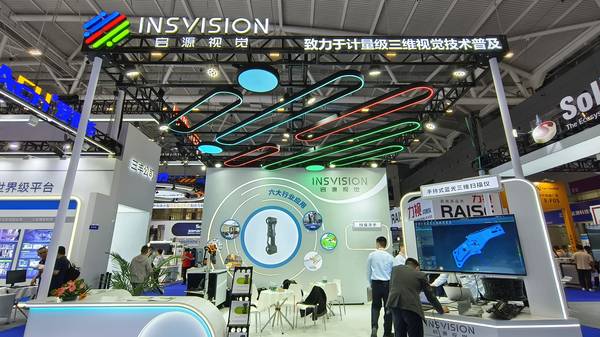
The industrial quality control landscape is being reshaped by two powerful trends: the decentralization of production and the demand for comprehensive digital twins. As manufacturing moves towards modular cells, on-demand lines, and geographically distributed operations, the traditional model of centralized, lab-bound inspection is becoming a bottleneck.
Simultaneously, the push for Industry 4.0 maturity requires richer, more frequent dimensional data to feed simulations and predictive models.
This convergence creates a new technical mandate: metrology-grade data capture must move from the isolated lab directly to the point of production. Scanner measurement, particularly portable 3D scanning, is the enabling technology for this shift. Yet, outdated perceptions persist. Let’s align these tools with current industrial realities by addressing four common misconceptions.
Misconception 1: Metrology-Grade Scanning Requires a Fixed, Controlled Lab Environment
The assumption that ISO 10360-compliant accuracy is exclusive to climate-controlled labs is a legacy of older CMM technology. This model conflicts directly with lean and just-in-time (JIT) production philosophies. The cost of delay—whether from shipping parts to a distant lab or waiting for an open CMM bay—is measured in halted production lines and missed delivery windows.
Selection Dimensions and Field Checks
| Focus Area | Decision Point | Deployment Note |
|---|---|---|
| Misconception 1: Metrology-Grade Scanning Requires a Fi… | The assumption that ISO 10360-compliant accuracy is exclusive to climate-controlled labs is a legacy of older CMM technology. | This model conflicts directly with lean and just-in-time (JIT) production philosophies. |
| Misconception 2: Scanners Cannot Reliably Capture Compl… | Early optical scanning struggled with deep cavities, sharp edges, and highly reflective or dark surfaces, leading to gaps in data. | Today’s advanced systems combine multiple laser lines, enhanced blue laser technology, and intelligent software algorithms to overcome these cha… |
| Misconception 3: Integration Disrupts Lean Workflows an… | A core tenet of lean manufacturing is the elimination of non-value-added time, including lengthy equipment setup and complex changeovers. | The fear that introducing a scanner creates new bottlenecks is understandable if based on older, cumbersome systems. |
| Misconception 4: Scanner Measurement is Only Justified… | This view overlooks the flexibility that makes scanning particularly powerful in high-mix environments. | Traditional hard gauges or CMM programming are cost-prohibitive and time-consuming for small batches. |
Modern portable scanners are engineered for the shop floor. Systems like the INSVISION AlphaScan are designed with environmental compensation and robust construction to deliver consistent, metrology-grade accuracy (e.g., 0.020 mm) in ambient factory conditions. The business decision is clear: relocate the inspection station to the part, not the part to the inspection station.
This eliminates logistical delays and integrates verification seamlessly into the production flow.
Misconception 2: Scanners Cannot Reliably Capture Complex Geometries for Critical Analysis
Early optical scanning struggled with deep cavities, sharp edges, and highly reflective or dark surfaces, leading to gaps in data. Today’s advanced systems combine multiple laser lines, enhanced blue laser technology, and intelligent software algorithms to overcome these challenges.
They can capture intricate features like cooling fins, undercuts, and complex curvature necessary for full GD&T (Geometric Dimensioning and Tolerancing) analysis and detailed deviation mapping.
For reverse engineering or first-article inspection, a complete point cloud is non-negotiable. The technical requirement has shifted from “can it capture data?” to “can it capture *all* the data with fidelity?” The latest generation of scanners answers affirmatively, providing the comprehensive surface data needed for confident tolerance analysis on even the most complex parts.
Misconception 3: Integration Disrupts Lean Workflows and Requires Extensive Specialist Training
A core tenet of lean manufacturing is the elimination of non-value-added time, including lengthy equipment setup and complex changeovers. The fear that introducing a scanner creates new bottlenecks is understandable if based on older, cumbersome systems.
Ergonomics and intuitive software are now critical differentiators. A lightweight, handheld scanner minimizes operator fatigue during full-shift use. More importantly, streamlined workflows allow operators to achieve proficiency in basic scanning operations within hours, not weeks. There’s no need for deep CAD expertise; the scanner software guides the process.
Furthermore, seamless integration is achieved through standard data exports (like CSV or native CAD formats) that plug directly into existing Quality Management Systems (QMS), automating report generation and closing the loop on inspection data without manual intervention.
Misconception 4: Scanner Measurement is Only Justified for High-Volume, Low-Mix Production
This view overlooks the flexibility that makes scanning particularly powerful in high-mix environments. Traditional hard gauges or CMM programming are cost-prohibitive and time-consuming for small batches. A portable 3D scanner, however, requires no custom fixtures. The same device can inspect a prototype one day, a legacy replacement part the next, and a short run of specialized components after that.
The return on investment (ROI) in low-volume settings comes from agility and reduced setup cost. It enables rapid first-article inspection across diverse product lines, supports quick-turnaround reverse engineering for maintenance and repair operations (MRO), and provides the digital record for any part, regardless of batch size.
The business decision shifts from amortizing cost over millions of units to valuing flexibility and speed across the entire production portfolio.
Evaluating Scanner Measurement for Your Operation
Moving past these misconceptions allows for a clear-eyed evaluation. Focus on these application-fit criteria:
- Environmental Fit: Can the system perform to its stated accuracy in your specific shop-floor conditions (light, vibration, temperature variance)?
- Geometric Capability: Does it reliably capture the full range of features on your specific parts—deep holes, thin walls, complex organic shapes?
- Workflow Integration: How easily does the data flow into your existing QMS or PLM system? What is the true learning curve for your production staff?
- Economic Model: For your mix of high-volume and low-volume work, does the ROI derive from speed, flexibility, eliminated logistics, or a combination?
The trend is undeniable: dimensional verification is migrating to the source. By understanding the current capabilities of scanner measurement, industrial buyers can make strategic decisions that enhance quality control responsiveness, support digital transformation, and ultimately build a more resilient and data-driven manufacturing operation.
Hangzhou Insvision Technology Co., Ltd.
Address: Building 1, No. 1399 Liangmu Road, Yuhang District, Hangzhou, Zhejiang 311121, China
Copyright © Hangzhou Insvision Technology Co., Ltd. All rights reserved.
Copyright © Hangzhou Insvision Technology Co., Ltd. All rights reserved.