

3dscan Business Value for Rework Control and Traceable Quality
See how 3dscan supports faster inspection, lower rework risk, lean labor use, delivery cadence, and traceable quality records for factories in Western markets.
Cost Pain Points in Traditional Inspection Workflows
In many factories, dimensional inspection still depends on a mix of hand tools, dedicated fixtures, offline CMM programs, and spreadsheet-based reporting. These methods can be reliable for specific tasks, but they often create delays between production and decision-making.
A complex first-article inspection may wait in a CMM queue, require several setups, or depend on a senior technician who is already handling production issues.
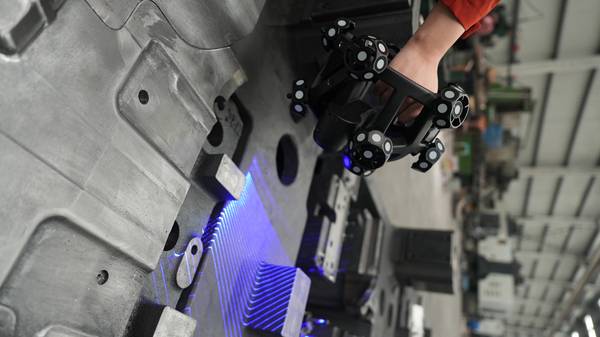
The cost is not limited to inspection labor. Late detection of dimensional drift can create rework after machining, heat treatment, welding, coating, or assembly. At that point, the part has already absorbed material, machine time, operator time, and schedule capacity. A portable 3dscan workflow changes this cost structure by bringing full-field measurement closer to the production process.
The most common margin leaks appear in five areas:
- Inspection cycle time: Long setup, programming, and reporting cycles delay release decisions.
- Rework and scrap: Sparse measurement data can miss form deviations, twist, and warpage.
- Skilled labor dependency: Senior metrology staff spend too much time on routine data capture.
- Delivery cadence: Inspection bottlenecks can delay first-article approval and shipment release.
- Traceability gaps: Paper reports and disconnected spreadsheets slow audit response and increase transcription risk.
Inspection Efficiency and Measurement Cycle Time
Pain point: Traditional inspection can create a queue between production and quality approval. CMM routines are accurate but may require programming, fixturing, and controlled-room access. Manual inspection can be faster to start but usually provides limited data coverage.
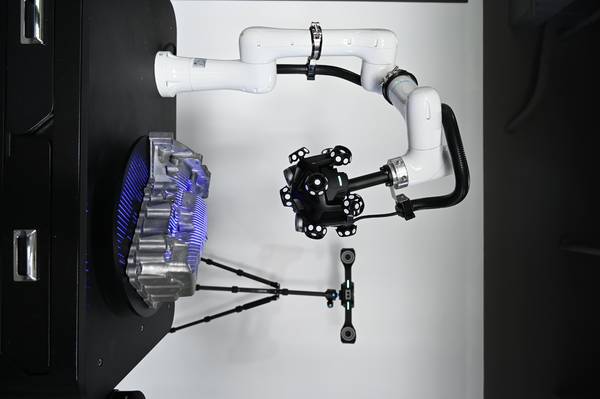
Improvement path: A 3dscan system captures dense 3D data from the part surface and compares the as-built geometry with CAD. For complex castings, fabricated assemblies, molded parts, tooling, and MRO components, this can shorten the path from part arrival to deviation analysis.
Observable value: Quality teams can release production decisions faster, reduce waiting time on first-article inspections, and reserve CMM capacity for features that specifically require contact measurement or controlled-lab verification.
Rework, Scrap, and Process Drift
Pain point: Dimensional problems become more expensive as parts move downstream. A form error missed after machining may only become visible during assembly, creating rework loops, schedule disruption, and customer escalation.
Improvement path: Because 3dscan captures full-field geometry, it can reveal deformation patterns that single-point checks may not show. Heat distortion, welding movement, casting shrinkage, and fixture-related variation become easier to visualize through color maps and deviation reports.
Observable value: Teams can identify process drift earlier, adjust fixtures or machining parameters sooner, and prevent defective parts from consuming additional process steps. The value is especially clear in high-mix, low-volume environments where repeated fixture development is costly.
Labor Allocation and Metrology Capacity
Pain point: Experienced metrology specialists are often pulled into repetitive inspection tasks. This reduces the time available for root-cause analysis, GD&T interpretation, process capability improvement, and quality planning.
Improvement path: A practical 3dscan workflow allows trained shop-floor personnel to handle routine scan capture while senior quality staff review results, validate measurement strategy, and resolve process issues. The goal is not to remove expertise from inspection; it is to apply expertise where it creates more value.
Observable value: Senior metrology resources shift from manual data collection to engineering judgment. This supports lean staffing, reduces dependency on a small number of specialists, and improves response speed when quality issues arise.
Delivery Cadence and Customer Responsiveness
Pain point: Inspection delays can become delivery delays. When first-article approval, MRO release, or batch verification takes too long, the production plan loses flexibility and expediting costs rise.
Improvement path: A portable 3dscan process brings measurement closer to the point of need. Instead of waiting for a dedicated fixture or lab slot, teams can inspect large, complex, or hard-to-move components in the production area when the application allows.
Observable value: Faster dimensional verification supports more reliable shipment release, shorter approval loops, and better responsiveness to customer engineering changes. For Western industrial buyers working under ISO 9001, AS9100, IATF 16949, or customer-specific requirements, faster reporting also supports more predictable supplier performance.
Quality Traceability and Digital Records
Pain point: Many manufacturers still depend on paper inspection sheets, manually exported PDFs, or disconnected spreadsheets. During an audit, customer complaint, or warranty investigation, reconstructing the dimensional history of a part can be slow and error-prone.
Improvement path: 3dscan creates a digital record of the measured part. The scan data, deviation map, inspection report, serial number, operator record, and measurement conditions can be stored as part of a traceable quality file.
Observable value: Audit response becomes faster, customer communication becomes clearer, and quality data becomes useful beyond one-time acceptance. Over time, archived 3dscan records can support trend analysis, supplier development, fixture validation, and continuous improvement.
Operating Value Calculation Framework
A credible business case should start with the plant’s own baseline data rather than generic ROI claims. The table below gives production, quality, and finance teams a practical structure for evaluating 3dscan value.
| Cost Driver | What to Measure Today | What 3dscan Changes | Observable Business Signal |
|---|---|---|---|
| Inspection cycle time | Time from part receipt to approved dimensional report | Faster full-field data capture and automated comparison to CAD | Shorter first-article approval time and fewer production holds |
| Rework and scrap | Rework hours, scrap incidents, and late-stage dimensional failures | Earlier detection of form errors, warpage, and process drift | Fewer downstream rework loops and better process stability |
| Labor utilization | Hours senior metrology staff spend on routine data capture | Routine scanning can be assigned to trained operators | More specialist time available for root-cause analysis and process improvement |
| Delivery reliability | Shipments delayed by inspection queues or rework | Compressed inspection lead time and clearer release decisions | Improved delivery cadence and lower expediting pressure |
Hangzhou Insvision Technology Co., Ltd.
Address: Building 1, No. 1399 Liangmu Road, Yuhang District, Hangzhou, Zhejiang 311121, China
Copyright © Hangzhou Insvision Technology Co., Ltd. All rights reserved.
Copyright © Hangzhou Insvision Technology Co., Ltd. All rights reserved.