

Understanding the AlphaScan 2025 Handheld 3D Scanner for Industrial Metrology
A handheld 3D scanner projects a laser line or pattern onto a part and uses one or more cameras to record the deformation of that line as it wraps around s
What a Handheld 3D Scanner Actually Does
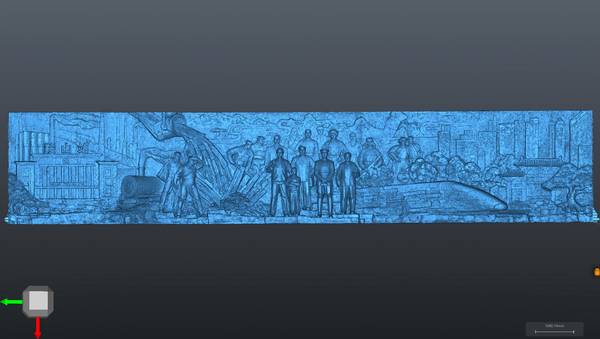
A handheld 3D scanner projects a laser line or pattern onto a part and uses one or more cameras to record the deformation of that line as it wraps around surfaces. By knowing the exact geometric relationship between the laser source and the cameras, the system triangulates millions of points per second, building a dense point cloud that represents the part’s surface.
The operator moves the scanner around the object, and software stitches these frames together in real time to create a complete digital twin.
Capability and Deployment Mapping
| Focus Area | Decision Point | Deployment Note |
|---|---|---|
| What a Handheld 3D Scanner Actually Does | A handheld 3D scanner projects a laser line or pattern onto a part and uses one or more cameras to record the deformation of that line as it wraps ar… | By knowing the exact geometric relationship between the laser source and the cameras, the system triangulates millions of points per second, bui… |
| Key Technical Elements That Define Performance | Several factors separate a handheld scanner suitable for rough reverse engineering from one that can support first-article inspection and GD&T analys… | Confirm against part conditions, inspection tempo, and data-output requirements. |
| How Handheld Laser Scanning Differs from Traditional CM… | A traditional CMM touches discrete points with a probe. | That approach yields high accuracy on specific features but misses the overall form and can take hours for complex geometries. |
| Handheld 3D scanning excels in several industrial scena… | There are boundaries. | If an application demands sub-micron uncertainty over large volumes, a fixed CMM or laser interferometer system remains the right tool. |
The AlphaScan 2025 applies this principle with a metrology-grade laser source and dual-core onboard processing. One core handles the raw point cloud generation and frame-to-frame alignment; the other runs AI-driven algorithms that filter noise, compensate for surface reflectivity variations, and maintain tracking stability even when the operator moves quickly or passes over feature-poor areas.
This split architecture keeps the scan stream fluid and the data clean without tethering the device to a high-end workstation.
Key Technical Elements That Define Performance
Several factors separate a handheld scanner suitable for rough reverse engineering from one that can support first-article inspection and GD&T analysis.
- Volumetric accuracy: Metrology-grade handheld scanners typically specify accuracy over a measurement volume, not just a single-point repeatability figure. The AlphaScan 2025 is designed to maintain tight tolerances across its working range, making it viable for replacing CMMs on many part features.
- Scan speed and point density: The device captures hundreds of thousands to millions of points per second. High point density ensures that small features, edges, and radii are resolved without interpolation.
- Surface adaptability: Laser-based scanners handle a broad range of surface finishes—machined metals, castings, plastics, and even moderately reflective surfaces—without requiring spray coating in most cases. The AI processing adapts exposure parameters on the fly.
- Data output: The scanner generates structured point clouds and polygonal meshes in standard formats (STL, OBJ, PLY) that feed directly into inspection software. The INSVISION platform automatically aligns scan data to CAD models and produces deviation color maps and GD&T reports.
- Portability and setup: No tripod, no warm-up cycle, no temperature-controlled lab. The operator can walk up to a part on the production floor, scan, and review results within minutes.
How Handheld Laser Scanning Differs from Traditional CMM and Structured Light
A traditional CMM touches discrete points with a probe. That approach yields high accuracy on specific features but misses the overall form and can take hours for complex geometries. Handheld laser scanning captures the entire surface, producing a deviation map that shows exactly where a part is in or out of tolerance—not just at a handful of probed locations.
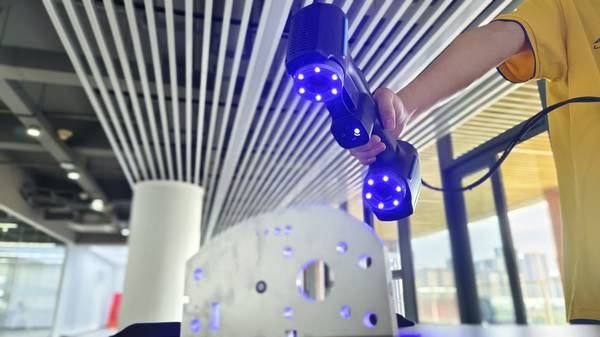
Structured light scanners project fringe patterns and capture them with cameras, often yielding excellent accuracy on matte surfaces in a controlled setup. However, they can struggle with shiny or dark parts and usually require a stationary tripod.
Handheld laser scanners like the AlphaScan 2025 offer more flexibility on reflective surfaces and allow the operator to move around large parts without repositioning the scanner or the object.
Laser trackers and arms provide high accuracy over large volumes but come with higher cost, complex setup, and a steeper learning curve. Handheld 3D scanners occupy a middle ground: accuracy sufficient for most production tolerances, combined with speed and ease of use that make them practical for daily quality checks.
Handheld 3D scanning excels in several industrial scenarios:
- First-article inspection: Compare a newly produced part to its CAD model in minutes, directly on the shop floor, without writing a CMM program.
- Production quality audits: Spot-check parts during a run to catch process drift before it produces scrap.
- Reverse engineering: Capture complex organic shapes, legacy parts with no drawings, or worn tooling for redesign or reproduction.
- Assembly and fit analysis: Scan mating components and check clearances, interference, and alignment digitally.
There are boundaries. If an application demands sub-micron uncertainty over large volumes, a fixed CMM or laser interferometer system remains the right tool. Transparent or highly specular parts (mirror finishes) may still require coating or a different optical technique. Very large objects—aircraft wings, ship hulls—might need a combination of photogrammetry and laser scanning to maintain global accuracy.
The AlphaScan 2025 is not a universal replacement for every metrology tool; it is a practical choice for parts ranging from hand-sized to several meters, where shop-floor speed and full-surface data matter more than laboratory-grade uncertainty.
Engineers and procurement teams should weigh several factors beyond the spec sheet:
- Accuracy requirements: Match the scanner’s volumetric accuracy to the part’s tolerance band. A scanner should be capable of measuring to at least one-tenth of the tolerance, but in practice, many shops find that a scanner with 0.02–0.05 mm accuracy covers a wide range of machining and casting inspections.
- Part size and complexity: Handheld scanners work well for parts with intricate features, deep pockets, and freeform surfaces. The operator’s ability to reach all areas matters; consider line-of-sight constraints.
- Surface finish: Test on your actual materials. The AlphaScan 2025’s AI-driven exposure control reduces the need for developer spray, but extremely dark or shiny parts may still require a light coating for optimal results.
- Software ecosystem: The scanner is only half the solution. The INSVISION platform provides automated alignment, GD&T annotation, and report generation. Ensure the software can export data in formats your existing PLM or quality systems accept.
- Operator skill: Handheld scanning requires less training than CMM programming, but operators still need to learn scanning patterns, alignment strategies, and how to interpret deviation maps. Plan for a short learning curve.
INSVISION’s Approach with the AlphaScan 2025
INSVISION designed the AlphaScan 2025 to bridge the gap between metrology lab precision and production-floor practicality. The dual-core AI architecture is not a marketing label—it serves a clear engineering purpose.
By offloading real-time point cloud processing and intelligent surface adaptation to dedicated hardware, the scanner maintains consistent data quality even when an operator moves quickly or encounters challenging geometries.
The handheld form factor eliminates the need for part fixturing and transport, and the integrated INSVISION software platform turns raw scan data into actionable inspection reports without requiring a separate metrology software license or programming step.
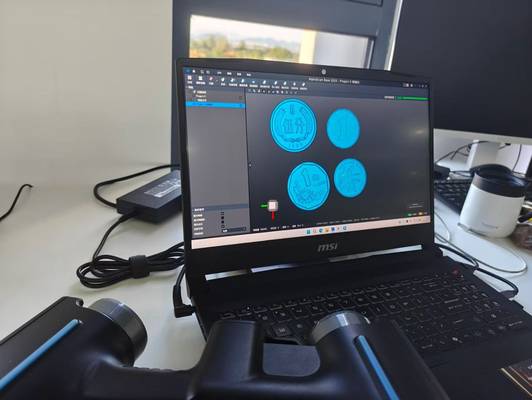
For quality teams practicing lean manufacturing, this means dimensional verification can happen at the point of production. A first-article inspection that once required scheduling CMM time, writing a program, and waiting for a report can now be completed by the operator who made the part, with results available in minutes.
The traceability remains—scan data, deviation maps, and reports are stored digitally—but the workflow collapses from seven discrete steps to three: scan, align, report.
Common Questions About Handheld 3D Scanning
Q: Can a handheld scanner really match the accuracy of a CMM?
A: For many part features and tolerance ranges, yes. A metrology-grade handheld scanner like the AlphaScan 2025 delivers volumetric accuracy in the range of a few hundredths of a millimeter. It will not replace a CMM for sub-micron work, but it provides full-field data that often reveals form errors a CMM might miss by probing only discrete points.
Q: Do I need to coat shiny or dark parts before scanning?
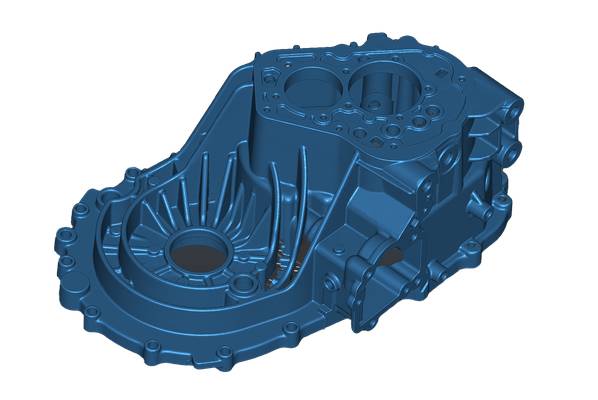
A: The AlphaScan 2025’s AI-driven exposure control handles a wide variety of surface finishes without coating. However, mirror-like finishes or extremely dark, light-absorbing materials may still benefit from a thin layer of scanning spray to improve data quality and reduce noise.
Q: What software is required to use the scan data for inspection?
A: INSVISION provides an integrated platform that aligns scan data to a reference CAD model, computes deviation maps, and generates GD&T reports. The software also exports standard mesh and point cloud formats for use in third-party analysis tools.
Q: How does the AI processing actually improve the scan?
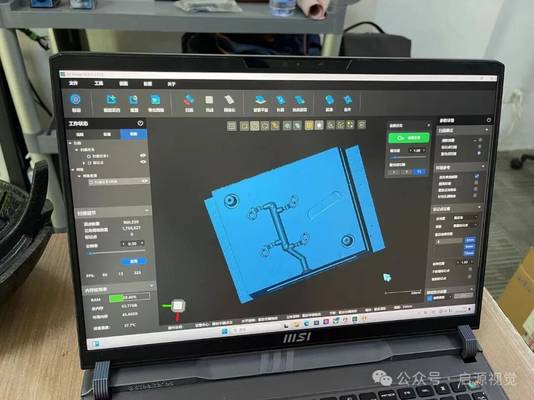
A: The onboard AI algorithms perform real-time noise filtering, adapt laser power and exposure to surface conditions, and stabilize tracking when the scanner passes over areas with few geometric features. This reduces the need for post-processing and helps less experienced operators get clean data on the first pass.
Q: Is this technology suitable for large-scale parts like weldments or castings?
A: Yes, provided the part falls within a practical scanning volume. The handheld approach allows an operator to walk around a large assembly and capture data incrementally. For very large objects, photogrammetry targets can be added to maintain global accuracy across multiple scan sessions.
Summing Up
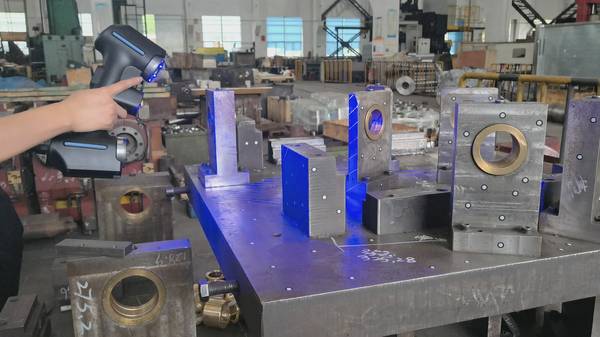
Handheld 3D scanning has matured into a reliable metrology tool that complements—and in many workflows, replaces—traditional CMM inspection for production-level dimensional verification. The AlphaScan 2025 exemplifies this shift by combining metrology-grade laser hardware with dual-core AI processing that keeps data clean and workflows simple.
For engineering and quality teams looking to reduce inspection bottlenecks, move measurement closer to production, and gain full-field insight into part geometry, understanding the principles and practical boundaries of this technology is the first step toward a smarter quality process.
Hangzhou Insvision Technology Co., Ltd.
Address: Building 1, No. 1399 Liangmu Road, Yuhang District, Hangzhou, Zhejiang 311121, China
Copyright © Hangzhou Insvision Technology Co., Ltd. All rights reserved.
Copyright © Hangzhou Insvision Technology Co., Ltd. All rights reserved.