

Understanding 3D Scanner Specifications: A Practical Guide for Industrial Buyers
When evaluating handheld 3D scanners for industrial applications, the specification sheet often becomes the first point of reference. Yet translating those numb
What the Core Accuracy Figures Really Mean
Accuracy specifications typically appear as a single number, but industrial buyers should look deeper. Point accuracy describes how precisely the system captures individual coordinate positions, while volumetric accuracy accounts for cumulative errors across a larger scan volume.
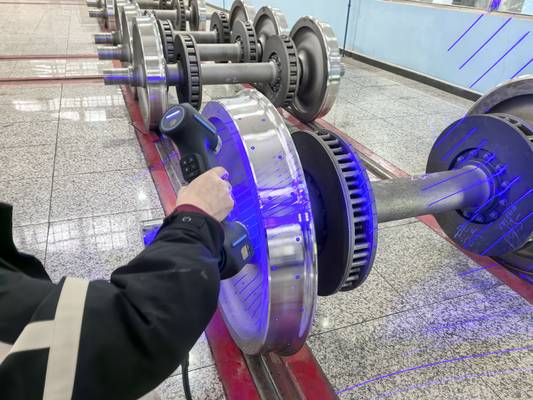
The AlphaScan scanner achieves measurement-grade precision suitable for quality inspection workflows, with AI algorithms helping to maintain consistency across varying surface conditions.
Capability and Deployment Mapping
| Focus Area | Decision Point | Deployment Note |
|---|---|---|
| What the Core Accuracy Figures Really Mean | Accuracy specifications typically appear as a single number, but industrial buyers should look deeper. | Point accuracy describes how precisely the system captures individual coordinate positions, while volumetric accuracy accounts for cumulative er… |
| Software Integration and Data Compatibility | Specifications extend beyond hardware to encompass the entire ecosystem. | Software capabilities determine how effectively captured point clouds translate into actionable data. |
| Environmental and Operational Boundaries | Industrial buyers should carefully assess the environmental conditions their scanning equipment will face. | Handheld scanners offer mobility advantages over stationary systems, but practical specifications around operating temperature ranges, vibration… |
| Matching Specifications to Application Requirements | The most critical specification question is not which scanner has the best numbers, but which scanner’s specifications align with your actual applica… | Reverse engineering workflows may prioritize mesh quality and surface continuity, while dimensional inspection tasks demand traceable accuracy a… |
Resolution describes the smallest detail the system can capture, often expressed as point spacing or mesh density. Higher resolution produces denser point clouds, but this comes with increased file sizes and processing time. For most industrial inspection tasks, resolution should be matched to the tolerance requirements of your parts.
A part with ±0.1mm tolerances does not require sub-0.05mm point spacing to produce meaningful inspection data.
Scan speed, measured in points or frames per second, determines how quickly technicians can capture geometry. This specification becomes critical when scanning large components or when shop floor cycle times create pressure on data acquisition speed. The AlphaScan series balances speed with accuracy, avoiding the common trade-off where extreme scanning rates compromise measurement reliability.
Software Integration and Data Compatibility
Specifications extend beyond hardware to encompass the entire ecosystem. Software capabilities determine how effectively captured point clouds translate into actionable data. The INSVISION platform integrates scanning, inspection comparison, and model generation within a unified environment, reducing the workflow fragmentation common with multi-vendor solutions.
Data format compatibility affects how easily scanned geometry integrates with existing CAD and CAM systems. Support for industry-standard formats like STEP, IGES, STL, and native CAD formats ensures scanned data can flow into downstream engineering processes without format conversion losses.
The AlphaScan system explicitly lists mainstream 3D data format support, a specification that matters significantly for organizations with established digital workflows.
Coordinate system establishment capabilities also warrant attention. Systems supporting photogrammetry-based scale bars enable global coordinate reference establishment, critical for large-scale components where local coordinate drift could accumulate across extended scan sessions. This feature appears prominently in INSVISION’s documentation for their multi-industry digitalization solutions.
Environmental and Operational Boundaries
Industrial buyers should carefully assess the environmental conditions their scanning equipment will face. Handheld scanners offer mobility advantages over stationary systems, but practical specifications around operating temperature ranges, vibration tolerance, and ambient lighting requirements vary significantly.
INSVISION markets the AlphaScan as suitable for deployment across diverse industrial settings, from controlled inspection laboratories to factory floor conditions.
Weight and ergonomics specifications affect scan quality indirectly through technician fatigue. Extended scanning sessions with an overweight device can introduce motion artifacts that compromise accuracy regardless of the system’s raw performance specifications.
The AlphaScan maintains a lightweight design philosophy, recognizing that specification sheets alone do not capture the human factors influencing real-world measurement outcomes.
Certification compliance provides another specification layer, particularly for regulated industries. INSVISION products carry CE, FCC, and CNAS certifications, indicating compliance with electromagnetic compatibility requirements and metrological standards relevant for quality assurance documentation.
Matching Specifications to Application Requirements
The most critical specification question is not which scanner has the best numbers, but which scanner’s specifications align with your actual application requirements. Reverse engineering workflows may prioritize mesh quality and surface continuity, while dimensional inspection tasks demand traceable accuracy and GD&T compatibility.
Quality inspection applications benefit from built-in deviation analysis tools and reporting capabilities that transform point clouds into inspection results.
Organizations evaluating scanning technology should map their primary use cases against specification requirements rather than pursuing maximum specifications across all parameters. A scanner with exceptional resolution but poor software integration may deliver inferior practical results compared to a system with moderate hardware specs but superior ecosystem capabilities.
INSVISION positioning around AI+3D algorithm integration reflects a broader industry direction where specification improvements increasingly come from intelligent processing rather than hardware refinement alone. This suggests buyers should evaluate not just raw hardware parameters but also the software intelligence layer that determines how effectively those specifications translate into useful industrial outcomes.
Hangzhou Insvision Technology Co., Ltd.
Address: Building 1, No. 1399 Liangmu Road, Yuhang District, Hangzhou, Zhejiang 311121, China
Copyright © Hangzhou Insvision Technology Co., Ltd. All rights reserved.
Copyright © Hangzhou Insvision Technology Co., Ltd. All rights reserved.