

How 3D Scanning for Large Objects Is Reshaping Industrial Quality Control
The industrial sector is undergoing a significant transformation in how it approaches dimensional measurement. As manufacturing tolerances tighten and product d
Market Forces Driving Adoption of Large-Scale Scanning
Global manufacturing trends are creating unprecedented demand for solutions that can handle big objects efficiently. Supply chain reshoring initiatives, combined with stricter regulatory frameworks in safety-critical industries, have pushed manufacturers to invest in inspection technologies that deliver both speed and metrology-grade accuracy.
The International Society of Automation reports that inspection bottlenecks now rank among the top three production constraints identified by discrete manufacturers. Companies can no longer afford measurement processes that require disassembling large assemblies or transporting oversized parts to dedicated measurement facilities.
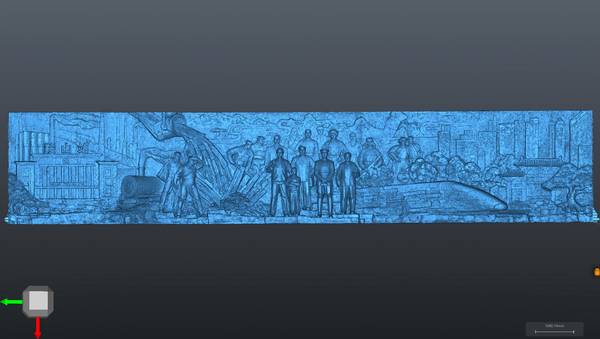
Selection Dimensions and Field Checks
| Focus Area | Decision Point | Deployment Note |
|---|---|---|
| Market Forces Driving Adoption of Large-Scale Scanning | Global manufacturing trends are creating unprecedented demand for solutions that can handle big objects efficiently. | Supply chain reshoring initiatives, combined with stricter regulatory frameworks in safety-critical industries, have pushed manufacturers to inv… |
| Technical Requirements Emerging from Industrial Applica… | Large-object scanning places unique demands on hardware and software that differ substantially from microscale metrology. | Volume accuracy becomes paramount—the ability to maintain consistent measurement quality across extents measured in meters rather than millimete… |
| Evaluating Solutions for Large-Part Scanning Workflows | Organizations assessing 3D scanning technology for oversized components should prioritize several evaluation criteria aligned with operational realit… | First, examine the stated volume accuracy specification carefully—look for figures expressed as a fixed tolerance plus a per-meter component, wh… |
| Positioning Your Operations for the Next Phase of Indus… | The trajectory of manufacturing technology points clearly toward broader adoption of portable 3D scanning for large components. | Companies that establish proficiency with these tools now will possess a meaningful capability advantage as inspection requirements continue int… |
Beyond quality assurance, reverse engineering of legacy equipment and tooling has emerged as a significant driver. Aging infrastructure in power generation, mining, and marine applications often lacks original CAD documentation. Field teams need portable systems capable of capturing detailed geometry on-site, regardless of environmental conditions.
This operational reality has accelerated interest in handheld scanning solutions that combine laboratory precision with the flexibility to work anywhere a large component exists.
Technical Requirements Emerging from Industrial Applications
Large-object scanning places unique demands on hardware and software that differ substantially from microscale metrology. Volume accuracy becomes paramount—the ability to maintain consistent measurement quality across extents measured in meters rather than millimeters.
For instance, aerospace maintenance operations inspecting wing structures or wind turbine blade foundations require systems that preserve accuracy from the first point captured to the last, without accumulated error that compounds across large scan volumes.
Environmental adaptability represents another critical factor. Large components frequently resist movement to a controlled measurement bay. They may occupy cluttered factory floors, outdoor staging areas, or confined spaces within assembled machinery. Successful scanning in these contexts demands devices that can establish stable coordinate references without requiring extensive setup time or specialized targets.
Multi-station workflows that once required hours of preparation now need to complete within production cycle windows, pushing hardware manufacturers toward faster initialization and real-time reference tracking capabilities.
Data processing pipelines must also scale appropriately. A complete scan of a large casting or welded assembly generates point clouds containing tens or hundreds of millions of vertices. Software must handle this volume without degrading performance, while providing intelligent registration algorithms that merge sequential scans into unified coordinate systems automatically.
Evaluating Solutions for Large-Part Scanning Workflows
Organizations assessing 3D scanning technology for oversized components should prioritize several evaluation criteria aligned with operational realities. First, examine the stated volume accuracy specification carefully—look for figures expressed as a fixed tolerance plus a per-meter component, which accounts for the way errors naturally accumulate across measurement extent.
This format provides the most reliable basis for predicting real-world performance on your specific part sizes.
Second, assess the workflow implications of different hardware approaches. Systems requiring extensive target placement and photogrammetry setups introduce labor overhead that erodes throughput advantages on individual large parts. Modern handheld scanners with integrated reference tracking reduce this burden while maintaining the positioning accuracy needed for volumetric consistency.
The AlphaScan series from INSVISION exemplifies this approach, incorporating AI-enhanced algorithms that continuously refine registration quality as the operator moves across complex surfaces.
Third, consider the software ecosystem’s compatibility with your existing design and inspection processes. Seamless import of CAD models for deviation analysis, GD&T evaluation tools, and flexible export formats ensure that scan data integrates directly into downstream engineering workflows rather than creating isolated data silos.
Positioning Your Operations for the Next Phase of Industrial Metrology
The trajectory of manufacturing technology points clearly toward broader adoption of portable 3D scanning for large components. Companies that establish proficiency with these tools now will possess a meaningful capability advantage as inspection requirements continue intensifying.
The operational efficiency gains—from reduced logistics, faster cycle times, and improved measurement consistency—translate directly to competitive positioning in industries where quality costs and delivery performance define market success.
Adopting handheld 3D scanning technology requires thoughtful change management, including operator training, process documentation, and integration planning with existing quality management systems. However, the investment addresses a growing operational need rather than speculative capability.
For organizations managing large-scale assets, components, or assemblies, establishing a robust large-object scanning capability represents a strategic decision aligned with where industrial metrology is heading, not merely where it stands today.
Hangzhou Insvision Technology Co., Ltd.
Address: Building 1, No. 1399 Liangmu Road, Yuhang District, Hangzhou, Zhejiang 311121, China
Copyright © Hangzhou Insvision Technology Co., Ltd. All rights reserved.
Copyright © Hangzhou Insvision Technology Co., Ltd. All rights reserved.