

Transforming Industrial Quality Control with the INSVISION AlphaScan Handheld 3D Scanner
The demand for precise dimensional verification in manufacturing environments has never been higher. As tolerances shrink and quality expectations grow, traditi
Streamlining Quality Inspection in Precision Manufacturing
In precision manufacturing facilities, dimensional verification consumes significant engineering time when conducted through conventional methods. Coordinate measuring machines, while accurate, require parts to be transported to dedicated measurement rooms and often demand extensive setup time.
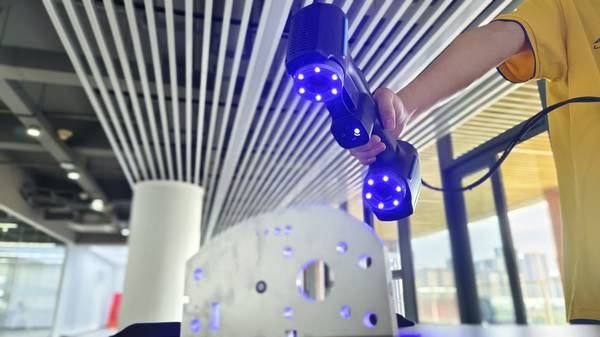
The AlphaScan handheld 3D scanner eliminates these bottlenecks by bringing the measurement system directly to the workpiece, whether it sits on an assembly station or remains mounted in a fixture during machining.
Selection Dimensions and Field Checks
| Focus Area | Decision Point | Deployment Note |
|---|---|---|
| Streamlining Quality Inspection in Precision Manufactur… | In precision manufacturing facilities, dimensional verification consumes significant engineering time when conducted through conventional methods. | Coordinate measuring machines, while accurate, require parts to be transported to dedicated measurement rooms and often demand extensive setup t… |
| Accelerating Reverse Engineering for Industrial Compone… | Beyond inspection applications, the AlphaScan scanner serves as a powerful tool for reverse engineering workflows in industrial settings. | When original CAD data is unavailable or when analyzing competitor components, capturing physical geometry becomes essential for design iteratio… |
| Enhancing Quality Workflows Through Digital Integration | The value of 3D scanning data extends beyond individual inspection tasks when properly integrated into quality management systems. | The AlphaScan ecosystem includes inspection software that performs intelligent comparison analysis between captured geometry and reference CAD m… |
| Future Directions for Portable Metrology Systems | The trajectory of handheld 3D scanning technology points toward increasingly capable systems that extend the boundaries of portable metrology. | Continued advancement in AI-driven algorithms enhances automatic feature recognition and reduces the specialized knowledge required for effectiv… |
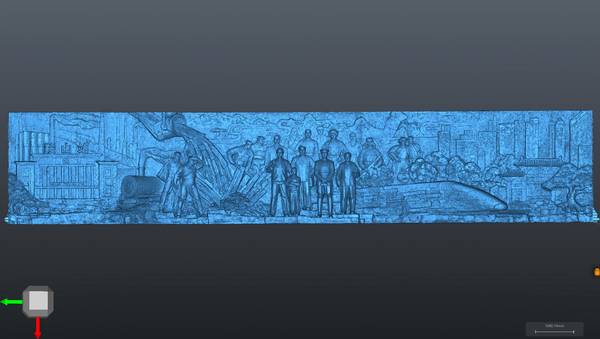
The scanner employs 50 blue laser lines that capture detailed surface geometry at rates reaching 7,100,000 measurements per second. With volumetric accuracy of 0.1mm plus 0.015mm per meter, the system delivers the precision necessary for aerospace and automotive quality standards.
Engineers can capture full-part geometry in minutes rather than hours, then import the resulting point clouds directly into inspection software for comparison against CAD nominals. The process generates color-coded deviation maps that immediately identify regions requiring correction, allowing rapid feedback to production teams.
Quality teams at facilities implementing this approach report substantial reductions in inspection cycle times. Rather than programming CMMs or constructing dedicated gauging fixtures for each part variant, inspectors can deploy the handheld scanner across multiple product families without reconfiguration.
The ability to perform first-article inspections, in-process checks, and final verification with a single instrument creates workflow flexibility that static measurement systems cannot match.
Accelerating Reverse Engineering for Industrial Components
Beyond inspection applications, the AlphaScan scanner serves as a powerful tool for reverse engineering workflows in industrial settings. When original CAD data is unavailable or when analyzing competitor components, capturing physical geometry becomes essential for design iteration and manufacturing continuity.
The handheld form factor proves particularly valuable when scanning large workpieces that cannot be moved to a fixed-base scanner system.
The scanning process captures fine surface details that inform subsequent modeling efforts. Engineers can generate polygonal meshes and export solid models suitable for CAD manipulation, mold design, or additive manufacturing preparation.
The INSVISION ecosystem supports integration with standard file formats used across industrial design platforms, facilitating incorporation of scanned geometry into existing engineering workflows. Combined with intelligent reporting functions, the system documents the reverse engineering process and preserves dimensional evidence for compliance purposes.
Industrial reverse engineering projects frequently involve components with complex contours or access constraints that challenge traditional measurement techniques. The portable scanner adapts to these environments, capturing geometry in confined spaces or around obstructions without requiring disassembly.
This capability expands the scope of components amenable to reverse engineering, enabling organizations to digitize legacy parts and maintain manufacturing capability for products where original documentation has been lost.
Enhancing Quality Workflows Through Digital Integration
The value of 3D scanning data extends beyond individual inspection tasks when properly integrated into quality management systems. The AlphaScan ecosystem includes inspection software that performs intelligent comparison analysis between captured geometry and reference CAD models, generating quantitative assessments of dimensional compliance.
Multi-dimensional quality verification ensures that critical features receive appropriate scrutiny while standard geometries are processed efficiently.
Report generation capabilities produce documentation that supports quality system requirements and regulatory compliance. Visual deviation maps, dimensional summaries, and GD&T analysis combine to provide engineering teams with comprehensive information for decision-making.
The ability to archive scan data creates an auditable record of measurement activities, supporting continuous improvement initiatives and traceability programs.
Organizations adopting digital inspection workflows discover opportunities for data utilization that paper-based processes cannot provide. Historical scan data enables trend analysis, identifying gradual shifts in manufacturing processes before they produce out-of-tolerance conditions.
Statistical process control becomes more effective when based on full-surface geometry rather than discrete point measurements, revealing patterns invisible to traditional gauging approaches.
Future Directions for Portable Metrology Systems
The trajectory of handheld 3D scanning technology points toward increasingly capable systems that extend the boundaries of portable metrology. Continued advancement in AI-driven algorithms enhances automatic feature recognition and reduces the specialized knowledge required for effective deployment.
The integration of real-time tracking and dynamic projection capabilities enables more sophisticated measurement scenarios, including complex assembly verification and in-situ inspection of installed components.
INSVISION maintains active development programs focused on expanding the application envelope of its scanning technology. These efforts address emerging requirements in sectors such as renewable energy infrastructure, electric vehicle manufacturing, and advanced aerospace assembly.
The portable form factor ensures that cutting-edge measurement capabilities remain accessible to engineers working across diverse industrial environments.
For organizations evaluating quality inspection technology investments, the AlphaScan handheld 3D scanner demonstrates how portable systems can deliver metrology-grade performance without the constraints of traditional benchtop equipment.
The combination of high-speed data capture, precise dimensional accuracy, and flexible deployment options positions this technology as a practical solution for industrial quality challenges across multiple sectors.
Meta description: Discover how the INSVISION AlphaScan handheld 3D scanner transforms industrial quality control with metrology-grade accuracy, rapid scanning speeds, and portable deployment for manufacturing inspection and reverse engineering applications.
Hangzhou Insvision Technology Co., Ltd.
Address: Building 1, No. 1399 Liangmu Road, Yuhang District, Hangzhou, Zhejiang 311121, China
Copyright © Hangzhou Insvision Technology Co., Ltd. All rights reserved.
Copyright © Hangzhou Insvision Technology Co., Ltd. All rights reserved.