

Transforming Industrial Quality Control: How Advanced 3D Scanning Methods Drive Cost Efficiency
## The Shift from Traditional Inspection to Integrated 3D Scanning Conventional quality inspection often relies on a mix of hand‑tools, coordinate measuring mac
The Shift from Traditional Inspection to Integrated 3D Scanning
Conventional quality inspection often relies on a mix of hand‑tools, coordinate measuring machines, and manual recording. This approach demands skilled operators, repeated setups, and substantial time spent aligning parts with reference drawings. The result is a bottleneck in production flow, where each hour of inspection translates into delayed shipments and higher labor costs.
By adopting modern 3D scanning methods, manufacturers replace fragmented steps with a single digital workflow that captures geometry, compares it to CAD models, and generates reports automatically.
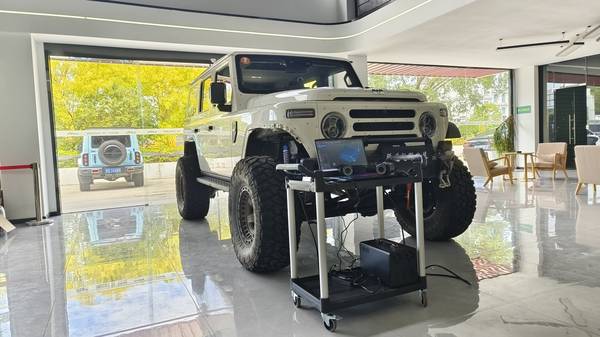
Selection Dimensions and Field Checks
| Focus Area | Decision Point | Deployment Note |
|---|---|---|
| The Shift from Traditional Inspection to Integrated 3D… | Conventional quality inspection often relies on a mix of hand‑tools, coordinate measuring machines, and manual recording. | This approach demands skilled operators, repeated setups, and substantial time spent aligning parts with reference drawings. |
| Core 3D Scanning Technologies and Their Operational Adv… | Industrial 3D scanning methods can be grouped by the way they project and capture light. | Laser triangulation projects a line or a pattern onto a surface and records the deformation with cameras positioned at known angles. |
| Integrating Scanning, Analysis, and Reporting into a Si… | A key factor in achieving cost efficiency is the consolidation of tasks that previously required separate tools. | INSVISION’s software platform combines scanning, data registration, deviation mapping, and report generation within one environment. |
| Quantifying the Return: Faster Delivery, Reduced Rework… | Operational value from modern 3D scanning methods manifests in three primary areas: throughput, quality consistency, and labor optimization. | Faster scanning and automated analysis enable manufacturers to inspect more parts per shift, directly supporting higher delivery cadence without… |
The AlphaScan handheld 3D scanner from INSVISION exemplifies this transformation. It brings metrology‑grade accuracy directly to the shop floor, allowing operators to capture dense point clouds in seconds rather than minutes. When the scan data is fed into INSVISION’s inspection software, the system performs coordinate alignment, deviation analysis, and GD&T evaluation without switching platforms.
This integration cuts the number of process steps, reduces the chance of transcription errors, and shortens the feedback loop between measurement and corrective action.
Core 3D Scanning Technologies and Their Operational Advantages
Industrial 3D scanning methods can be grouped by the way they project and capture light. Laser triangulation projects a line or a pattern onto a surface and records the deformation with cameras positioned at known angles. Structured‑light systems project a sequence of fringe patterns, and algorithms reconstruct surface geometry from the captured images.
Both techniques are capable of delivering sub‑millimeter precision, but the real impact on cost efficiency comes from speed and ease of use.
The AlphaScan scanner uses a high‑speed laser line combined with real‑time image processing, achieving measurement rates that keep pace with production cycles. For larger components, the AlphaVista system—also part of INSVISION’s portfolio—reaches scanning speeds of 7,100,000 measurements per second, covering areas up to 2200 × 2200 mm with an accuracy of 0.073 mm and a volumetric repeatability of 0.1 mm ± 0.015 mm/m.
Such performance means that a single scan can replace multiple manual measurements, allowing a single operator to inspect several parts in the time previously required for one.
Another driver of efficiency is the AI‑enhanced algorithm embedded in INSVISION’s software. By fusing 3D data with machine‑learning models, the system can automatically detect feature edges, compensate for ambient lighting variations, and filter noise without operator intervention. The result is cleaner point clouds that reduce post‑processing time and lower the risk of misinterpretation.
Integrating Scanning, Analysis, and Reporting into a Single Workflow
A key factor in achieving cost efficiency is the consolidation of tasks that previously required separate tools. INSVISION’s software platform combines scanning, data registration, deviation mapping, and report generation within one environment.
After a part is scanned, the operator imports the CAD reference and initiates an automated alignment routine that handles multi‑source data, including point clouds from different devices or multiple scans of a single component.
The software then produces a color‑coded deviation map that visualizes differences between the scanned geometry and the nominal model. Because the platform includes built‑in GD&T tools, engineers can evaluate positional, form, and size tolerances directly in the same view, eliminating the need to switch to a secondary inspection package.
Once the analysis is complete, a single click generates a structured report that includes measurement summaries, tolerance verdicts, and graphics for documentation.
This seamless workflow shortens the inspection cycle from days to hours, particularly for complex parts that require many measurements. The reduction in manual data transfer also improves traceability, as every measurement is linked to the original scan file and the version of the CAD model used for comparison.
When deviations are discovered early, corrective actions can be implemented before the part moves to the next stage, preventing costly rework and scrap.
Quantifying the Return: Faster Delivery, Reduced Rework, and Long‑Term Savings
Operational value from modern 3D scanning methods manifests in three primary areas: throughput, quality consistency, and labor optimization. Faster scanning and automated analysis enable manufacturers to inspect more parts per shift, directly supporting higher delivery cadence without adding headcount.
When inspection results are available within minutes, production teams can make immediate adjustments, limiting the propagation of errors downstream and reducing the volume of parts that require re‑work.
Quality traceability improves as well. Each scan is stored with its associated measurement metadata, creating a digital record that can be reviewed for root‑cause analysis or regulatory compliance. Over time, the accumulation of accurate inspection data supports predictive maintenance and design iteration, contributing to continuous improvement initiatives.
While specific savings vary by industry and production volume, the reduction in labor hours, the decrease in scrap rates, and the acceleration of time‑to‑market collectively deliver a favorable return on investment.
Companies that integrate handheld 3D scanners such as the AlphaScan into their quality processes gain the flexibility to respond quickly to design changes, meet tighter tolerances, and maintain a competitive edge in markets where precision and speed are decisive factors.
In summary, adopting advanced 3D scanning methods through solutions like INSVISION’s AlphaScan and its supporting software platform transforms inspection from a time‑consuming bottleneck into a strategic asset. The combination of rapid data capture, intelligent analysis, and seamless reporting creates measurable improvements in operational efficiency, product quality, and overall cost structure.
Hangzhou Insvision Technology Co., Ltd.
Address: Building 1, No. 1399 Liangmu Road, Yuhang District, Hangzhou, Zhejiang 311121, China
Copyright © Hangzhou Insvision Technology Co., Ltd. All rights reserved.
Copyright © Hangzhou Insvision Technology Co., Ltd. All rights reserved.