

The Scanned Object Framework for Rework Reduction and Manufacturing Margin Improvement
Discover how integrating scanned object data reduces rework, compresses measurement cycles, and improves manufacturing margins with the INSVISION framework.
Introduction: The Pressure to Perform in Modern Manufacturing
For plant managers and operations directors, the lean manufacturing equation is constant: how to deliver higher quality, at faster speeds, with tighter margins. Traditional measurement and inspection processes—relying on manual gauges, CMMs, and visual checks—often become bottlenecks. They are time-intensive, subject to human variability, and can create a costly lag between production and quality feedback.
This article examines how integrating scanned object data into core manufacturing workflows provides a tangible path to address these pressures. We will focus not on the technology for its own sake, but on its impact on four critical business metrics: measurement cycle time, rework rates, skilled labor allocation, and overall equipment effectiveness (OEE).
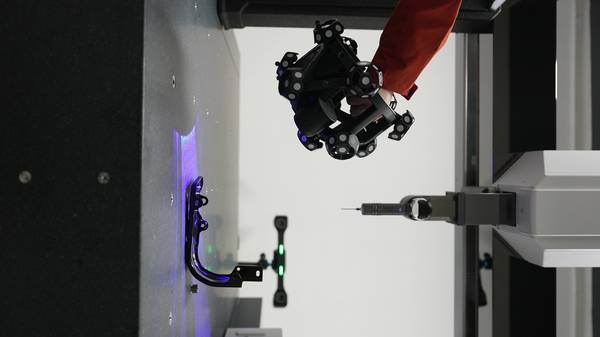
Identifying the Cost: Where Traditional Measurement Fails
The financial drain of conventional quality control is often hidden across multiple departments. Key pain points include:
- Extended Measurement Cycles: First-article inspection or complex part validation can halt production for hours or days, delaying downstream assembly and final delivery.
- The Rework Spiral: Without a comprehensive digital record, identifying the root cause of a dimensional deviation is guesswork. This leads to repeated, costly rework cycles and potential scrap.
- Skilled Labor Bottleneck: Specialized metrology tasks depend on highly trained personnel. Their time becomes a scarce resource, limiting throughput and creating single points of failure.
- Data Silos: 2D drawings and spreadsheets lack the rich, actionable 3D context needed for proactive process improvement, supplier quality management, and Industry 4.0 digital twin creation.
The Scanned Object as a Pathway to Operational Efficiency
Adopting 3D scanning transforms these pain points by providing a complete, metrology-grade digital record—the scanned object. This shift enables concrete improvements at each stage.
- Incoming & First-Article Inspection
- Pain Point: Slow, sample-based checks risk letting non-conforming parts enter production.
- Improvement: Rapid full-field scanning captures millions of data points in minutes, creating a deviation map against the CAD nominal. The scanned object verifies the entire part against ISO or ASME standards, not just sampled points.
- Observable Value: Drastically shorter inspection time, comprehensive defect detection, and objective data for supplier conversations.
- In-Process Control & Tooling Validation
- Pain Point: Waiting for CMM results or manual checks halts a machining center or assembly line.
- Improvement: Portable scanning allows for on-the-floor verification of fixtures, molds, and weldments. Trends in tool wear or thermal drift can be monitored using historical scanned object data.
- Observable Value: Reduced machine downtime, proactive maintenance of tooling, and prevention of batch-level errors.
- Root Cause Analysis & Rework Guidance
- Pain Point: A failed final inspection triggers a time-consuming hunt for the cause, often involving disassembly and remeasurement.
- Improvement: The as-built scanned object provides an immutable record. Engineers can compare it to previous good parts or stage scans to isolate exactly when and where a deviation occurred.
- Observable Value: Faster diagnosis, targeted rework (instead of wholesale reprocessing), and a documented history for continuous improvement initiatives.
A Framework for Quantifying the Value of Scanned Object Data
To evaluate the potential impact for your operation, consider this structured assessment:
| Evaluation Area | Key Questions to Ask | Potential Metrics to Track |
|---|---|---|
| Time Compression | How long do key inspections currently take? How long from defect discovery to root cause identification? | Measurement cycle time; Time-to-decision for NCRs (Non-Conformance Reports). |
| Rework & Scrap Cost | What is the average cost (material + labor) of a rework order? What is your current scrap rate for quality issues? | Rework hours per month; Cost of scrap attributed to dimensional errors. |
| Labor Utilization | What percentage of your skilled metrology/quality team’s time is spent on routine data capture versus analysis? | Ratio of data capture time to analysis time; Overtime in quality department. |
| Delivery Assurance | Have late deliveries been linked to quality hold-ups? How much buffer time is built into schedules for inspection? | On-time delivery rate; Schedule variance due to quality delays. |
Where INSVISION Delivers Tangible Operational Gains
INSVISION’s approach centers on integrating high-fidelity scanned object data directly into production environments. The value lies in the system’s ability to deliver reliable, actionable data where it’s needed. For instance, INSVISION solutions are engineered for use on the shop floor, not just the climate-controlled lab, minimizing the need to move parts and interrupt flow.
The software is built to generate clear, color-mapped deviation reports from the scanned object and GD&T analyses that production and quality teams can act on immediately, reducing interpretation time. This focus on seamless integration and clear output translates into faster closure of quality loops and more efficient use of technical staff.
Implementation Roadmap: Starting with High-Impact Scenarios
A phased rollout mitigates risk and demonstrates quick wins. Two practical starting points are:
- First-Article Inspection for New or Critical Parts: Select a high-value, complex component. Replace the manual inspection report with a comprehensive scanned object report. This builds a perfect digital master for future production runs and quantifies the time saved.
- Tooling and Fixture Qualification: Apply scanning to validate new or repaired molds, dies, and assembly jigs. This ensures production tools are correct before they hit the line, preventing hours of machine downtime and material waste.
Conclusion
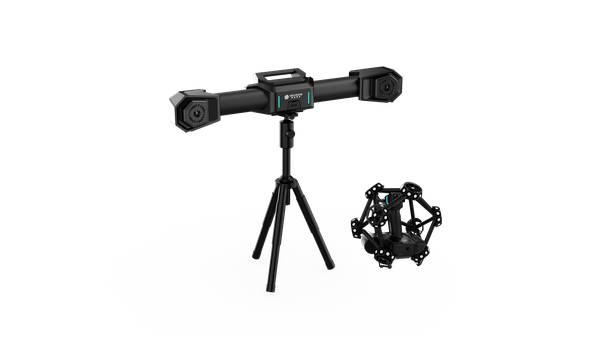
In modern precision manufacturing, competitive advantage is built on precision, speed, and predictability. The scanned object is more than a 3D model; it is a critical data asset that directly informs these goals.
By providing an unambiguous digital record of physical parts, it transforms quality from a cost center and a bottleneck into a streamlined, data-driven process that protects margins, accelerates throughput, and builds a foundation for advanced lean and digital manufacturing. The investment is not merely in a scanner, but in a system for compressing time, reducing waste, and making more informed decisions every day.
Hangzhou Insvision Technology Co.,Ltd.
Address: Building 1, No. 1399 Liangmu Road, Yuhang District, Hangzhou, Zhejiang 311121, China