

2026 Outlook for 3D Scanner Automotive Manufacturing Integration
Discover how 3D scanner automotive integration is shifting from spot-checking to in-line process control and digital twin feedback for 2026 manufacturing.
Macro and Industry Drivers
A combination of market and technological pressures is reshaping the application landscape. The pressure for faster time-to-market demands rapid prototyping and tooling verification. The rise of electric vehicle architectures and lightweight composite materials introduces new, complex geometries that challenge traditional measurement.
Scenario Snapshot
A practical way to read the article is through this scenario:
- Macro and Industry Drivers: A combination of market and technological pressures is reshaping the application landscape.
- Key Trend 1: From Spot-Checking to In-Line Process…: The most significant shift is the movement of 3D scanning from the quality lab directly onto the production line.
- Key Trend 2: Data Fusion and the Digital Twin Feedb…: 3D scanners are no longer just generating isolated reports.
Furthermore, the industrial mandate for Industry 4.0 compliance requires seamless data flow from the physical shop floor to digital twins and PLM systems, making high-fidelity as-built data a strategic asset for any 3D scanner automotive deployment.
Key Trend 1: From Spot-Checking to In-Line Process Integration
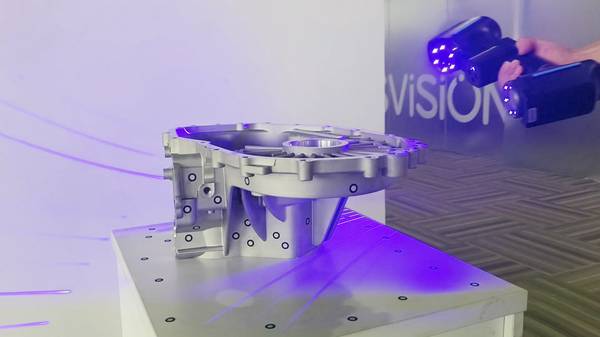
The most significant shift is the movement of 3D scanning from the quality lab directly onto the production line. Handheld and automated scanning systems are being tasked with providing real-time, in-process feedback, not just final inspection.
- Technical Requirements: This requires durable equipment, built for the shop floor, that captures and processes data at high speeds. Maintaining metrology-grade accuracy is essential despite vibration, inconsistent lighting, and temperature swings. Integration with robotic arms and programmable logic controllers (PLC) is becoming standard for the 3D scanner automotive environment.
- Business Impact: This enables true statistical process control (SPC) for complex assemblies, allowing for immediate corrective action. It reduces scrap, minimizes rework, and virtually eliminates the costly delays associated with offline inspection cycles. The result is a more responsive and predictable lean manufacturing flow.
Key Trend 2: Data Fusion and the Digital Twin Feedback Loop
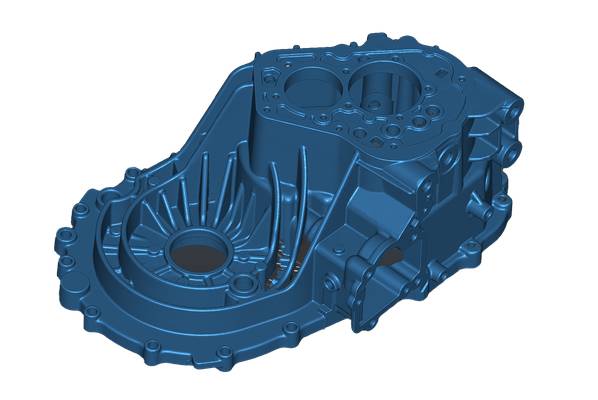
3D scanners are no longer just generating isolated reports. The value lies in transforming dense point clouds and polygon meshes into actionable intelligence that feeds and validates the digital twin.
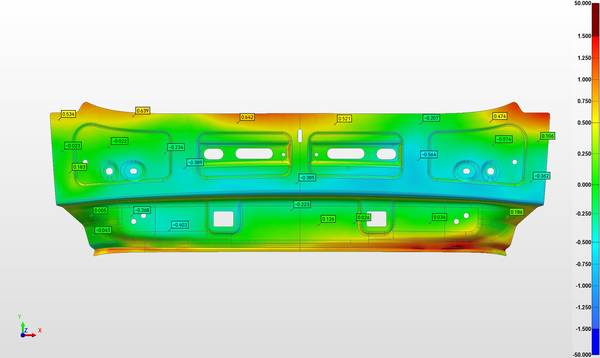
- Technical Requirements: Software must work together seamlessly. For deviation analysis, nominal-to-actual comparisons, and GD&T verification per ISO/ASME standards, scan data has to integrate smoothly with CAD, CAE, and PLM platforms. Advanced software capable of intelligently comparing scans to CAD models and auto-generating deviation color maps is now a baseline expectation.
- Business Impact: This creates a living digital twin that accurately reflects the as-built state of tools, fixtures, and products. It enables virtual assembly simulations with real-world tolerances, predictive maintenance for tooling, and provides a forensic data trail for root cause analysis of any quality escape.
Key Trend 3: Enabling Agile and Distributed Manufacturing
The need for flexible production lines and geographically distributed supply chains is elevating the role of 3D scanning for supplier quality management and rapid re-tooling.
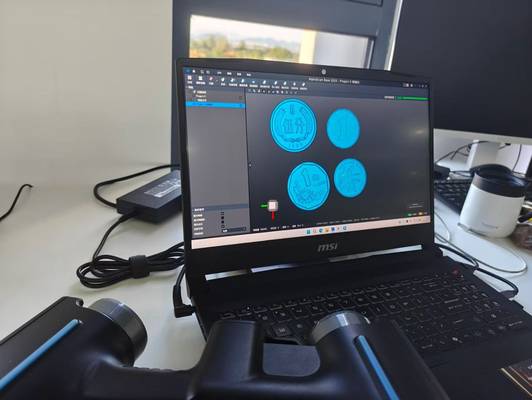
- Technical Requirements: Portability and ease of use are critical. Suppliers and satellite plants need reliable, handheld devices that can perform first-article inspection (FAI) and generate standardized reports acceptable to OEMs. The ability to quickly digitize legacy parts or tooling for reproduction or modification supports agility across the 3D scanner automotive supply chain.
- Business Impact: It de-risks the supply chain by ensuring component conformity before shipment, reducing costly delays. It also accelerates the launch of new models or mid-cycle updates by speeding up the tooling adaptation and verification process across multiple facilities.
To capitalize on these trends, automotive manufacturers and their suppliers should:
- Audit Data Gaps: Identify critical process points where a lack of real-time dimensional data causes bottlenecks or quality uncertainty.
- Prioritize Integration: Evaluate 3D scanning solutions not just on hardware specs, but on their software’s ability to export data in formats compatible with your existing CAD and MES systems.
- Develop In-House Expertise: Train cross-functional teams—including quality, manufacturing, and design engineers—on the capabilities and workflow of 3D metrology to maximize its application.
- Pilot In-Line Applications: Start with a controlled pilot project, such as in-line inspection of a high-value sub-assembly, to quantify ROI in terms of reduced cycle time and improved first-time yield.
INSVISION’s Role in This Evolving Landscape
INSVISION develops technology to support this shift towards integrated, data-centric manufacturing. INSVISION handheld 3D scanners, like the AlphaScan series, are engineered for the demands of the automotive floor, balancing metrology-grade accuracy with the robustness needed for daily use.
The focus on streamlined software workflows ensures that scan data is not an end product, but a direct input for analysis and decision-making within the digital thread, aligning with the need for closed-loop process control.
Immediate Focus Areas for 2026
Decision-makers should closely monitor advancements in three areas: the further automation of scan-to-CAD workflows, the development of AI-powered software that can automatically flag anomalies in scan data, and the hardening of wireless, truly cordless scanners for maximum mobility in large assembly halls.
Conclusion
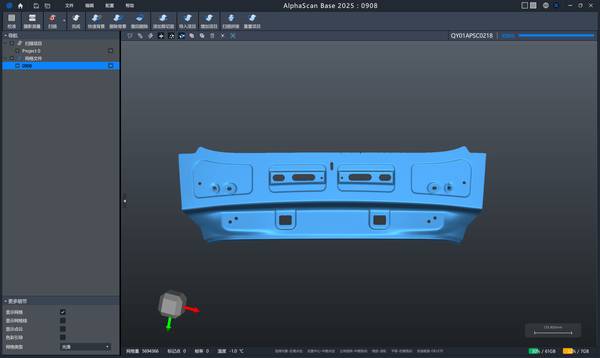
The question is no longer whether a 3D scanner is useful, but how strategically it is deployed. In 2026, the competitive differentiator in automotive manufacturing will be derived from the speed and intelligence with which physical world data is captured, analyzed, and acted upon.
Investing in a 3D scanner automotive ecosystem that prioritizes integration, robustness, and data utility is now a direct investment in operational resilience and future-ready production agility.
Hangzhou Insvision Technology Co., Ltd.
Address: Building 1, No. 1399 Liangmu Road, Yuhang District, Hangzhou, Zhejiang 311121, China
Copyright © Hangzhou Insvision Technology Co., Ltd. All rights reserved.
Copyright © Hangzhou Insvision Technology Co., Ltd. All rights reserved.