

The Operational Blueprint: AI-3D Scanning for Measurable Manufacturing Efficiency
For manufacturing engineers and operations leaders, the mandate is clear: elevate quality while relentlessly driving down unit costs.
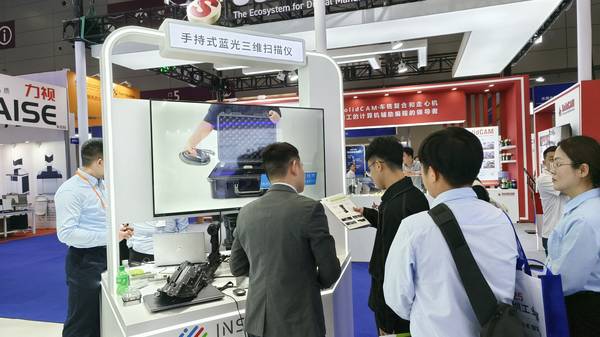
For manufacturing engineers and operations leaders, the mandate is clear: elevate quality while relentlessly driving down unit costs. Traditional manual inspection and coordinate measuring machine (CMM) workflows, however, often work against this goal. They create bottlenecks, consume skilled labor, and allow dimensional errors to slip through, triggering costly rework cycles and delivery delays.
INSVISION’s AI-powered 3D scanning presents a paradigm shift, moving quality assurance from a discrete, slow checkpoint to a rapid, integrated data stream that directly enhances operational efficiency and the bottom line.
From Skilled Labor Hours to Automated Data Seconds
The most immediate financial impact is on direct labor. Conventional touch-probe methods require meticulous point-by-point planning and execution. In contrast, a system like the INSVISION AlphaScan handheld scanner, using structured blue laser and AI algorithms, captures millions of measurement points per second.
Scenario Snapshot
A practical way to read the article is through this scenario:
- From Skilled Labor Hours to Automated Data Seconds: The most immediate financial impact is on direct labor.
- Containing the High Cost of Late-Stage Defects: Labor savings are just one layer.
- Eliminating Process Friction: Surface Agnosticism a…: Manufacturing environments are not clean labs.
This transforms a task that might take a quality technician days—meticulously measuring a complex turbine blade or large casting—into a process completed in hours. Personnel are liberated from repetitive measurement duties and redeployed to higher-value analysis, problem-solving, or process engineering roles, directly reducing the labor cost per inspection.
Containing the High Cost of Late-Stage Defects
Labor savings are just one layer. The greater financial risk lies in defects that escape detection until final assembly or, worse, the customer. Every error that propagates downstream multiplies in cost through scrap, tear-down, rework, and warranty claims. AI 3D scanning acts as a far more sensitive and early warning system.
By providing a complete deviation map of a part against its CAD model, it identifies out-of-tolerance conditions during First-Article Inspection or in-process checks. Catching a warpage or incorrect bore location before a component enters a $50,000 assembly fixture isn’t just a quality win—it’s a direct cost avoidance that protects margins and delivery schedules.
Eliminating Process Friction: Surface Agnosticism and Traceability
Manufacturing environments are not clean labs. They are filled with challenging materials: shiny machined metal, dark anodized surfaces, and carbon fiber composites. Traditional optical scanners often fail or require tedious surface preparation, adding time and variability. INSVISION’s AI algorithms are trained to adapt to these real-world conditions automatically.
The system intelligently adjusts to maintain data integrity whether scanning a reflective hydraulic manifold or a matte plastic housing. This eliminates a significant source of process friction, compressing cycle times and ensuring reliable results shift after shift.
Furthermore, every scan creates a permanent, auditable digital record—a comprehensive point cloud with full GD&T analysis. This built-in quality traceability simplifies compliance for industries like aerospace (AS9100) or medical devices (ISO 13485), turning a documentation burden into an automated byproduct. It also provides an indisputable data foundation for root-cause analysis and continuous improvement initiatives.
Accelerating Velocity: From Inspection Bottleneck to Flow Enabler
In a lean manufacturing context, any wait time is waste. When dimensional validation takes days, it creates a bottleneck that stalls production flow, delays shipping, and frustrates customers. AI 3D scanning collapses this wait time. Parts can move from machining or fabrication to verified release in a fraction of the time. This acceleration improves Overall Equipment Effectiveness (OEE) by reducing non-value-added queue time.
Digital scan data can be instantly shared with engineering teams or suppliers globally, slashing communication delays and accelerating collaborative decision-making on tooling adjustments or design concessions.
Building a Perpetual Digital Asset for Long-Term ROI
The return on an INSVISION system investment extends far beyond the quality lab. The high-fidelity 3D models generated are not single-use reports; they are perpetual digital assets. This same dataset can be leveraged for multiple downstream value streams without additional cost:
- Reverse Engineering: Digitizing legacy parts for which CAD models no longer exist.
- Tooling & Fixture Validation: Verifying that molds, dies, and assembly jigs are within tolerance before production runs.
- Digital Archiving: Creating a golden record archive for future reference or insurance purposes.
- Supplier Quality: Providing objective, data-rich feedback to vendors.
This data reuse amortizes the initial technology investment across the enterprise. As a manufacturer builds a library of scanned components, new production runs can be rapidly compared against historical golden samples, introducing a powerful new dimension of statistical process control.
Implementing a Metrology-Grade Solution
For engineering and procurement professionals evaluating this technology, the criteria must focus on industrial robustness and metrological rigor. INSVISION deploys AI not as a marketing feature but as a core technology to ensure reliability and accuracy in demanding environments.
With certifications including CE and FCC, and a global deployment footprint, systems like the AlphaScan portfolio are engineered for daily use on the shop floor. The evaluation shifts from simply purchasing a scanner to implementing a strategic capability that turns quality control into a consistent source of operational efficiency, cost containment, and competitive agility.
Hangzhou Insvision Technology Co., Ltd.
Address: Building 1, No. 1399 Liangmu Road, Yuhang District, Hangzhou, Zhejiang 311121, China
Copyright © Hangzhou Insvision Technology Co., Ltd. All rights reserved.
Copyright © Hangzhou Insvision Technology Co., Ltd. All rights reserved.