

The AI Mesh-to-CAD Shift: A Strategic Imperative for Modern Manufacturing
The pressure on industrial manufacturers is unambiguous: deliver complex, high-quality products faster while managing legacy systems and tightening toleran
The pressure on industrial manufacturers is unambiguous: deliver complex, high-quality products faster while managing legacy systems and tightening tolerances. This demand is driven by the convergence of shorter product lifecycles, the need for digital twins, and stringent Industry 4.0 standards.
In this environment, the traditional reverse engineering workflow—a manual, time-intensive process of converting 3D scan data into editable CAD models—has become a critical bottleneck. The market is now pivoting towards intelligent automation to close the gap between physical objects and digital design, making AI-powered mesh-to-CAD conversion a strategic operational upgrade.
The Industrial Trends Forcing a Workflow Rethink
Three dominant trends are reshaping requirements for design and quality teams. First, the mandate for digital thread continuity requires a seamless, accurate data flow from physical asset to CAD model to production. Manual mesh processing creates data hand-off points where errors can propagate.
Second, legacy part sustainment challenges sectors like aerospace and energy, where original CAD data may be lost, but components must be repaired, replicated, or certified. Third, first-article inspection (FAI) and production validation now demand faster, more comprehensive comparison against CAD master models.
Each trend points to a single technical requirement: the need for a rapid, reliable, and automated path from a 3D scan to intelligent, parametric CAD geometry.
How AI Transforms Scan Data into Actionable CAD Intelligence
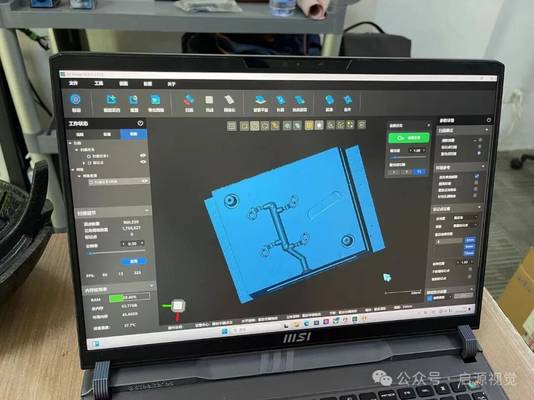
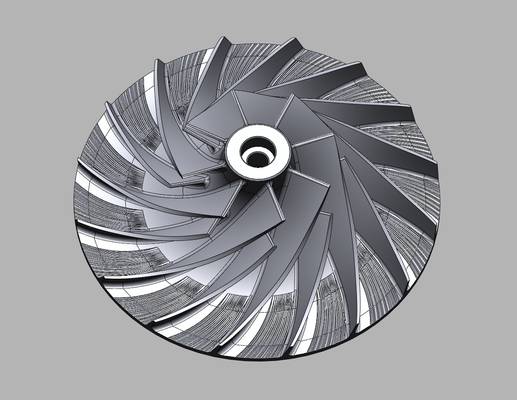
INSVISION’s approach embeds artificial intelligence directly into the conversion pipeline. The system’s algorithms do not simply smooth a mesh; they intelligently interpret the point cloud data, recognizing geometric primitives, inferring design intent, and constructing feature-based, parametric surfaces. This process converts a passive mesh into an editable CAD model in native formats like STEP or IGES.
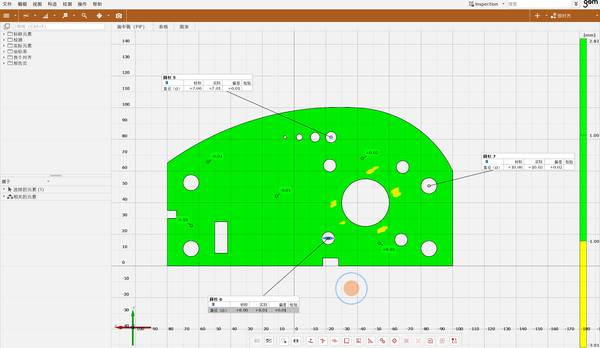
A critical output is the automated generation of a color-coded deviation map, created by aligning the AI-generated CAD to the original scan. This provides immediate, metrology-grade visual feedback on GD&T conformance. Engineers can instantly identify out-of-tolerance areas, such as warpage on a composite panel or wear on a turbine blade, and prioritize corrections without weeks of manual analysis.
The technology is designed to handle real-world scan data—complete with noise and occlusions—dramatically reducing the manual cleanup that typically consumes most of a reverse engineering project’s timeline.
Integrating Intelligent Conversion into the Production Workflow
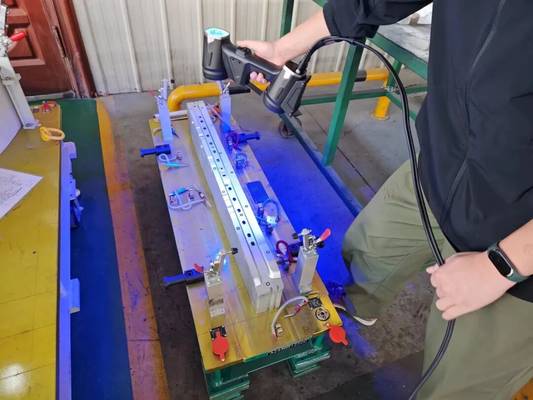
The practical workflow begins with INSVISION’s metrology-grade AlphaScan series for data capture. Following the scan, the AI mesh-to-CAD module takes over, segmenting the data, recognizing features like holes, fillets, and planes, and rebuilding them as associative CAD features. This creates a model that is not just a visual replica but a functional digital twin ready for CAD-driven tasks.
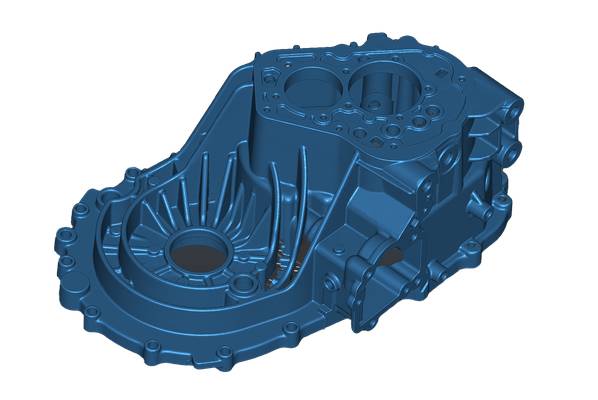
This model becomes the single source of truth. Downstream, teams can generate CNC toolpaths, design mating components, or create inspection plans directly from this AI-generated CAD file.
By eliminating the manual reinterpretation of mesh data, INSVISION’s solution ensures that the digital definition used for simulation, tooling, and quality control is perfectly synchronized with the physical part, maintaining integrity throughout the product lifecycle.
The Business Case for AI-Driven Reverse Engineering
For procurement professionals and engineering managers, the value proposition is measured in risk reduction and velocity. The primary return is time compression: converting a complex casting or molding into a certified CAD model shifts from a multi-week project to a matter of hours. This directly accelerates design iterations, legacy part requalification, and time-to-market for product updates.
Secondly, it elevates dimensional confidence. Automated alignment and deviation analysis provide auditable evidence for quality control, essential for sectors governed by ASME, ISO, and other stringent standards. This reduces the risk of costly errors propagating to production or, worse, field failure.
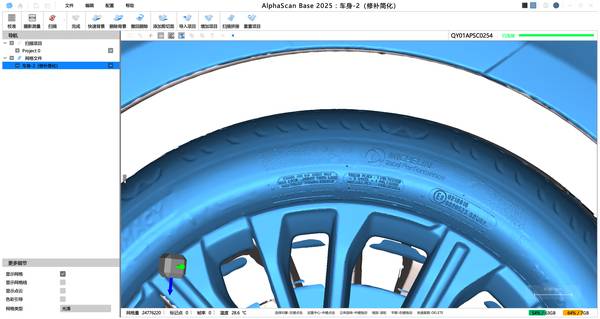
Finally, workflow integration is key. INSVISION’s technology supports a broad ecosystem of CAD formats and scales from prototype validation to full production runs. Its global deployment, backed by CE and FCC certifications, offers manufacturers a scalable solution that fits within existing digital infrastructure, making it a tangible step toward a more agile and intelligent manufacturing operation.
Hangzhou Insvision Technology Co., Ltd.
Address: Building 1, No. 1399 Liangmu Road, Yuhang District, Hangzhou, Zhejiang 311121, China
Copyright © Hangzhou Insvision Technology Co., Ltd. All rights reserved.
Copyright © Hangzhou Insvision Technology Co., Ltd. All rights reserved.