

Structured Light Pattern 3D Scanning Drives Rework Reduction and Margin Improvement
Reduce rework and improve margins with structured light pattern 3D scanning. INSVISION technology transforms inspection into a lean, data-driven process.
Introduction
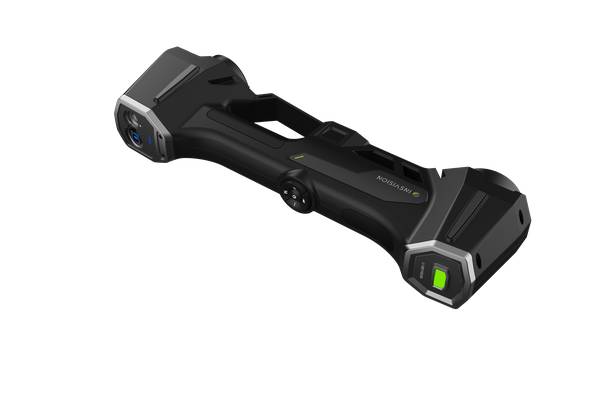
For manufacturing leaders, the pressure to improve margins while maintaining quality is constant. The challenge often lies in the measurement and inspection process—a critical but traditionally slow and costly stage. Manual methods and legacy tools create bottlenecks, delay feedback loops, and allow defects to propagate, directly impacting rework costs, on-time delivery, and labor efficiency.
This article examines how modern structured light pattern 3D scanning, specifically INSVISION technology, addresses these operational pain points. We will translate technical capability into clear business logic, focusing on measurable improvements in efficiency, cost control, and production agility.
Identifying the Cost Drivers in Traditional Measurement
The financial impact of conventional inspection is often underestimated. The primary costs are not just the tools themselves, but the operational drag they create.
- Time-to-Data Lag: Manual measurement with calipers and CMMs creates a significant delay between production and quality feedback. This lag means more parts are produced before a deviation is caught, multiplying rework or scrap.
- High-Skill Labor Dependency: Accurate manual inspection requires experienced technicians. This creates a resource bottleneck, increases training overhead, and makes processes difficult to scale or standardize across shifts.
- Incomplete Data for Root Cause Analysis: Point-based measurements provide limited data, making it difficult to visualize the full form of a complex component. This can lead to misdiagnosis of issues, resulting in repeated, costly trial-and-error corrections on the shop floor.
- Documentation and Traceability Gaps: Paper-based records or disparate digital files make it difficult to create a definitive, auditable history of part conformity, which is increasingly required by customers and standards like ISO 9001.
The Operational Impact of Structured Light Pattern 3D Scanning
Structured light pattern scanning transforms inspection from a sampling activity into a comprehensive digital capture process. Here is how it translates to operational gains:
- First-Article & In-Process Inspection
- Pain Point: Protracted first-article validation holds up production runs. Spot-checking during machining risks missing out-of-tolerance areas.
- Improvement: A full-field 3D scan captures millions of data points in minutes, generating a complete deviation map against the CAD model. This provides immediate, visual confirmation of GD&T compliance across the entire surface.
- Business Value: Faster release of batches, reduced risk of late-stage defect discovery, and objective, data-rich reports for customer sign-off.
- Tooling & Mold Maintenance
- Pain Point: Wear on molds and dies is inevitable but difficult to quantify precisely, leading to unplanned downtime, part quality drift, and reactive maintenance.
- Improvement: Regular scanning creates a digital wear history of tooling. Engineers can measure erosion quantitatively and plan for refurbishment before it affects production.
- Business Value: Predictive maintenance scheduling, extended tooling life, and consistent part quality over longer production cycles.
- Reverse Engineering & Digital Workholding
- Pain Point: Creating fixtures for legacy parts or complex geometries without CAD data is a time-consuming, artisan process prone to error.
- Improvement: Scanning the part or assembly generates an accurate 3D model for designing custom jigs, fixtures, or soft jaws in CAM software.
- Business Value: Dramatically reduced fixture design time, improved setup accuracy, and the creation of a reusable digital asset for future orders.
A Framework for Quantifying the Value
To evaluate the investment, consider these tangible metrics. The table below provides a structure for your own internal assessment.
| Operational Area | Key Metric to Track | Potential Source of Improvement |
|---|---|---|
| Inspection Efficiency | Time per part/feature measured | Full-field data capture vs. point-by-point measurement. |
| Rework & Scrap Costs | Cost of non-conforming parts (labor + material) | Earlier defect detection, preventing batch-level rework. |
| Labor Utilization | Technician hours spent on measurement | Reduced manual effort; data collection is automated. |
| Throughput & Delivery | Dock-to-dock time for inspection stages | Faster feedback loops enabling quicker batch release. |
| Knowledge & Quality | Time to root cause analysis | Comprehensive deviation maps pinpointing failure origins. |
Where INSVISION Delivers Tangible Operational Gains
The INSVISION approach to structured light pattern scanning is engineered for shop-floor reliability and integration into a lean workflow. The INSVISION AlphaVista scanner utilizes a proprietary structured light pattern designed for high-accuracy capture of challenging surfaces—from dark finishes to complex edges—minimizing the need for surface preparation.
This translates directly to less pre-scan labor and more consistent, repeatable results across operators.
For the business, this means the technology’s value is realized in predictable, daily use. It reduces the dependency on a single expert technician, as the process is largely automated and guided. The output is not just a report, but a rich digital twin of the part that serves as a permanent quality record, useful for future comparisons and process optimization.
Getting Started: A Phased Implementation Plan
A full-scale rollout is not required to see benefits. A pragmatic approach focuses on high-impact, contained applications.
- Target a High-Cost Rework Loop: Identify one recurring quality issue that typically leads to expensive, multi-step rework or customer returns. Use the scanner to perform a definitive root cause analysis on the next occurrence. The visual deviation data will either confirm the suspected cause or reveal an unexpected one, enabling a permanent corrective action.
- Digitize Critical Tooling: Select a high-value mold or die that is crucial to production. Create a “golden” digital baseline scan when it is newly refurbished. Implement periodic scans to monitor wear objectively. This data-driven approach shifts tooling maintenance from a reactive to a predictive cost center.
- Automate a Repeatable First-Article Process: Choose a complex component where first-article inspection is currently a multi-hour ordeal. Develop a standardized scanning and reporting protocol for it. The goal is to cut the inspection time substantially and produce an unambiguous digital report for the quality record.
Conclusion
Within modern Industry 4.0 frameworks, competitive advantage is built on control—control over quality, costs, and timelines. Structured light pattern 3D scanning is a pragmatic tool that extends this control into the measurement domain, turning subjective checks into objective data.
For operations and financial managers, the value proposition is clear: it is an investment not merely in a new device, but in reducing operational friction, containing quality costs, and building a foundation of digital data for continuous improvement. The path forward starts with applying this capability to a single, costly problem and measuring the results in time and money saved.
Hangzhou Insvision Technology Co.,Ltd.
Address: Building 1, No. 1399 Liangmu Road, Yuhang District, Hangzhou, Zhejiang 311121, China