

Practical Guide to 3D Scanner High Accuracy in Industrial Metrology
Discover how to select a 3D scanner high accuracy system for industrial metrology. Learn about volumetric accuracy, structured light, and workflow integration.
Introduction
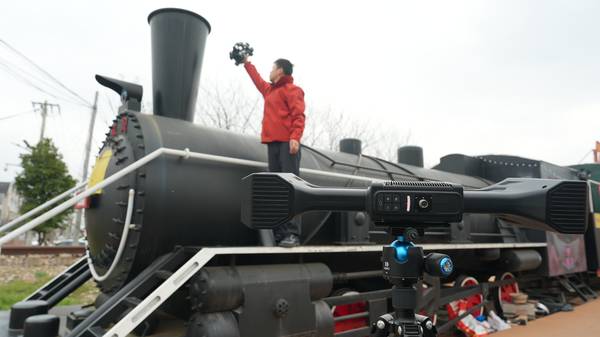
In modern smart manufacturing, the speed and precision of quality control often dictate production throughput and profitability. The traditional workflow—sending a part to a remote metrology lab, waiting hours for a CMM report, and halting production to correct tooling—creates significant bottlenecks. This delay directly conflicts with lean manufacturing and Industry 4.0 principles of real-time data and closed-loop correction.
For engineers and quality managers, the promise of 3D scanning is clear, but the leap from general-purpose scanning to a 3D scanner high accuracy solution involves critical technical distinctions. This guide explains the core principles, capabilities, and selection criteria for high-accuracy 3D scanners, clarifying how they integrate into digital manufacturing ecosystems.
What Defines a 3D Scanner High Accuracy System?
Fundamentally, a 3D scanner high accuracy device is a non-contact measurement tool that captures the physical geometry of an object as a dense “point cloud” with metrology-grade precision. Unlike scanners optimized for speed or visual appeal, these systems are engineered for traceable dimensional analysis.
They project a pattern of light (typically structured blue or white light) onto an object, use multiple cameras to record the deformation of that pattern, and then triangulate the 3D coordinates of hundreds of thousands of surface points per second. The defining outcome is a digital twin accurate enough to replace or supplement tactile coordinate measuring machines (CMMs) for many inspection and reverse engineering tasks.
Key Technical Elements: Beyond the Spec Sheet
Understanding a scanner’s suitability requires looking beyond a single accuracy claim. Performance is determined by the interplay of several factors:
Common Questions
What should teams check when evaluating Key Technical Elements: Beyond the Spec Sheet?
Understanding a scanner’s suitability requires looking beyond a single accuracy claim.
What should teams check when evaluating Selection Considerations for a 3D Scanner High Accuracy Investment?
When evaluating a high-accuracy 3D scanner, move beyond the marketing and ask these operational questions:
What should teams check when evaluating INSVISION’s Approach to High-Accuracy Scanning?
INSVISION designs its metrology-grade 3D scanners, such as the AlphaScan and X-Track series, to address the integration gap between the metrology lab and the production floor.
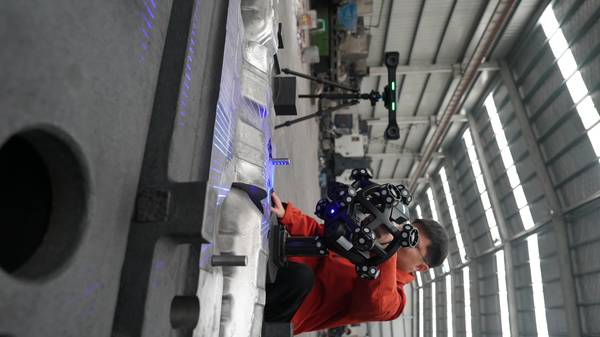
- Volumetric Accuracy: This is the most critical metric, expressing the scanner’s uncertainty over its entire working volume. It is typically given as a formula (e.g., 0.015 mm + 0.035 mm/m), where the first term is a base uncertainty and the second scales with distance. This specification is essential for measuring large parts where error accumulation can occur.
- Resolution & Point Spacing: High resolution allows the scanner to capture fine details, edges, and surface textures. This is vital for detecting small defects or for precise reverse engineering of complex geometries.
- Data Processing & Alignment: Capturing data is only the first step. Advanced software uses best-fit algorithms and AI-driven processing to align scan data to the CAD nominal model, automatically segment point clouds, and generate clear, color-coded deviation maps for Geometric Dimensioning and Tolerancing (GD&T) analysis.
- Integration & Automation: Production-ready scanners offer features like automated turntables, robotic arm integration, and programmable measurement routines. This enables unattended operation and seamless data flow into Manufacturing Execution Systems (MES) or Product Lifecycle Management (PLM) software.
How It Differs from Other 3D Measurement Technologies
| Technology | Best For | Typical Accuracy | Key Limitation for High-Accuracy Metrology |
|---|---|---|---|
| Handheld Laser Scanners | Speed, portability, large object digitization | 0.025 – 0.1 mm | Accuracy can be operator-dependent; less ideal for static, repeatable fixture-based inspection. |
| Contact CMM (Coordinate Measuring Machine) | Certified, traceable measurement of hard-to-reach internal features. | 0.001 – 0.01 mm+ | Very slow; only captures discrete points, not a full surface map. Creates data bottlenecks. |
| Photogrammetry Systems | Measuring very large-scale objects (e.g., aircraft wings, ship hulls). | Varies with scale | Requires extensive target placement; not a standalone solution for detailed part inspection. |
| High-Accuracy Structured Light 3D Scanner | Full-field inspection, first-article validation, reverse engineering of complex surfaces. | 0.015 – 0.05 mm | Provides the optimal balance of speed, full-surface data, and metrology-grade precision. |
Applicable and Non-Applicable Scenarios
- Well-Suited For:
- First-Article Inspection (FAI): Comprehensive comparison of a first-produced part against its CAD model.
- Tool & Die Validation: Verifying mold and stamping tool accuracy before production runs.
- Reverse Engineering: Creating accurate CAD models from physical parts, especially those with complex organic surfaces.
- Wear & Deformation Analysis: Comparing used parts to their original spec to quantify wear or thermal deformation.
- Less Suitable For:
- Measuring highly reflective, transparent, or jet-black surfaces without application-specific spray or treatment.
- Inspecting deep, narrow internal bores or hidden features obstructed from the scanner’s line of sight.
- Applications requiring certified traceability to national standards where a specific CMM is mandated by contract.
Selection Considerations for a 3D Scanner High Accuracy Investment
When evaluating a high-accuracy 3D scanner, move beyond the marketing and ask these operational questions:
- What is my true tolerance requirement? Match the scanner’s volumetric accuracy to your part’s tightest GD&T callouts with an appropriate margin.
- What is the part size and material? Ensure the scanner’s field of view and lighting technology (e.g., blue light for better performance on shiny surfaces) are compatible.
- How will it fit into my workflow? Consider software compatibility (e.g., exports to PolyWorks, GOM Inspect, or CAD packages), training requirements, and potential for automation.
- What is the total cost of ownership? Factor in not just the hardware price, but also software licensing, maintenance, and the operational ROI from faster inspection cycles and reduced scrap.
INSVISION’s Approach to High-Accuracy Scanning
INSVISION designs its metrology-grade 3D scanners, such as the AlphaScan and X-Track series, to address the integration gap between the metrology lab and the production floor. The focus is on delivering reliable volumetric accuracy—verified through standardized testing procedures—coupled with streamlined software that simplifies the path from scan to actionable report.
For instance, in an automotive stamping application, an INSVISION scanner mounted directly at the line can provide a full-field deviation map in minutes, allowing for immediate tooling adjustments. The value proposition is the reduction in decision latency, enabling a true digital thread from design to quality verification.
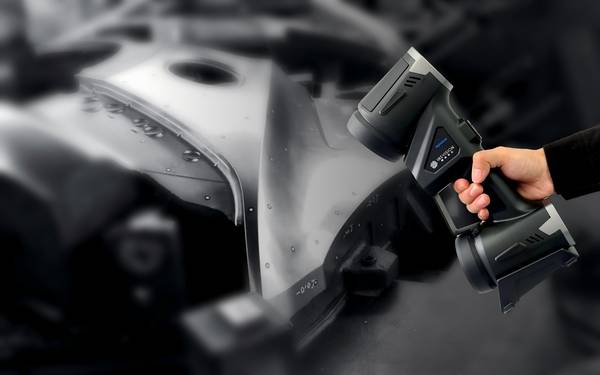
Common Misconceptions and Technical Q&A
- Q: Is a 3D scanner high accuracy system a direct replacement for our CMM?
- A: Not always a full replacement, but often a powerful complement or alternative for specific tasks. It replaces the CMM for any inspection requiring a complete surface map rather than discrete points. It is faster for complex surfaces but may not reach the ultimate micron-level accuracy of a high-end CMM for simple prismatic features.
- Q: Does “high accuracy” mean the scanner is difficult or slow to use?
- A: Not necessarily. While the measurement principles are sophisticated, modern systems are designed for usability. Automated sequences, intuitive software, and stable mechanical platforms make repeatable, high-accuracy scanning accessible to production technicians, not just metrology specialists.
- Q: Can I use this for inline, 100% inspection?
- A: This depends on cycle time. High-accuracy scanners are significantly faster than CMMs but may not yet match the speed of dedicated 2D vision systems for very high-volume, simple checks. They are ideal for inline audit stations, first-article, and sample-based inspection, or for 100% inspection of high-value, complex components.
Advancing Digital Transformation with High-Accuracy Scanning
Investing in a 3D scanner high accuracy system represents a strategic upgrade for manufacturers committed to digital transformation. It shifts quality control from a lagging, offline indicator to a real-time, integrated process driver.
By understanding the technology’s principles, boundaries, and integration requirements, engineering and quality teams can make informed decisions that eliminate measurement bottlenecks, reduce scrap, and accelerate time-to-market. The goal is a seamless flow of dimensional truth, closing the loop between the digital design and the physical product.
Hangzhou Insvision Technology Co., Ltd.
Address: Building 1, No. 1399 Liangmu Road, Yuhang District, Hangzhou, Zhejiang 311121, China
Copyright © Hangzhou Insvision Technology Co., Ltd. All rights reserved.
Copyright © Hangzhou Insvision Technology Co., Ltd. All rights reserved.