

Selecting the Best 3D Scanner for Reverse Engineering in 2026
Looking for the best 3D scanner for reverse engineering? Discover key technical criteria, from accuracy to workflow, and how portable metrology drives Industry 4.0.
Introduction
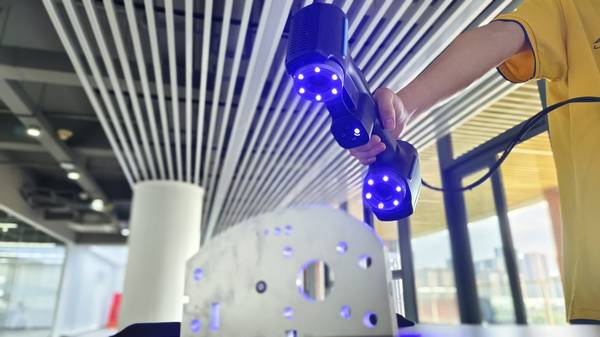
In the push for leaner, more agile manufacturing, reverse engineering has evolved from a niche tool into a core industrial digitization process. It is the bridge between the physical and digital, enabling legacy part reproduction, design validation, and condition-based maintenance. However, identifying the best 3D scanner for reverse engineering remains a common point of confusion for engineers and quality managers.
The optimal tool is not defined by a single spec sheet, but by how its technical capabilities align with specific operational constraints and end-use requirements. This guide breaks down the core principles of 3D scanning for reverse engineering, outlining key selection criteria, application boundaries, and how modern platforms like INSVISION are engineered to meet complex industrial demands.
What is a 3D Scanner for Reverse Engineering?
At its core, a reverse engineering scanner is a metrology instrument that captures the precise geometry of a physical object to create a digital 3D model. This process generates a dense “point cloud”—millions of individual data points representing the object’s surface. Unlike creative 3D scanning, industrial reverse engineering demands metrology-grade accuracy and traceability.
The final output is not just a visual mesh, but a dimensionally accurate CAD model suitable for analysis, redesign, or manufacturing.
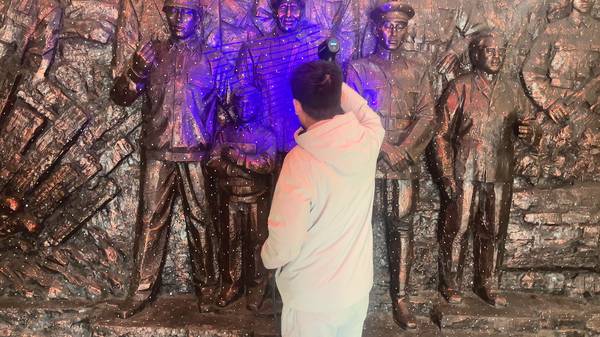
Key Technical Elements: Precision, Speed, and Data Fidelity
Selecting the best 3D scanner for reverse engineering requires evaluating a triad of interdependent factors:
- Accuracy & Resolution: Accuracy is the scanner’s ability to match the true dimensions of the part, often measured in microns or thousandths of an inch. Resolution defines the smallest detail the scanner can detect. For reverse engineering, sub-0.1mm accuracy is typically the entry point for functional part reproduction.
- Capture Speed & Efficiency: Measured in points or measurements per second, speed directly impacts project timelines. High-speed capture minimizes time on the shop floor and reduces errors from environmental vibration or part temperature drift.
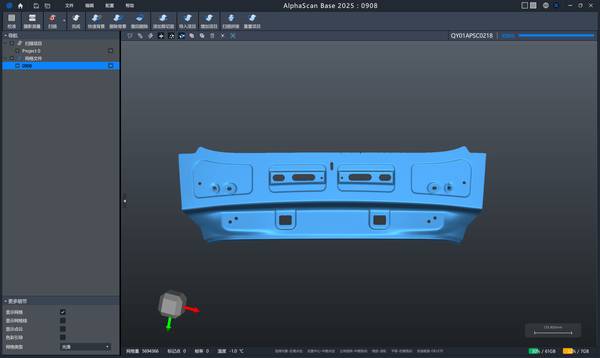
- Data Workflow & Software: The scanner is only one component. The software must efficiently align scan data, clean noise, and provide robust tools for converting point clouds into editable CAD surfaces (like NURBS) and performing deviation analysis against nominal models.
Portable Handheld vs. Fixed Systems: Understanding the Shift
The fundamental shift in modern reverse engineering is from fixed Coordinate Measuring Machines (CMMs) to portable 3D scanners.
- Fixed CMMs require the part to be brought to the machine, often necessitating disassembly and controlled environment logistics. This creates bottlenecks for large, delicate, or in-situ components.
- Portable Handheld Scanners bring the measurement to the part. This eliminates logistical downtime, enabling digitization directly on the production floor, inside an assembly, or in a maintenance bay. The trade-off historically involved perceived compromises in accuracy, a gap now closed by advanced laser and structured light technologies.
Applicable and Inapplicable Scenarios
| Well-Suited Applications | Less Suitable or Challenging Applications |
|---|---|
| Legacy part reproduction (no CAD exists) | Scanning highly reflective, transparent, or jet-black surfaces without preparation |
| Tooling and fixture digitization for wear analysis | Capturing fine, internal undercuts or deep bores without specialized optics |
| First-article inspection and deviation mapping | Environments with excessive ambient vibration or large temperature fluctuations |
| Aerospace & Automotive MRO (Maintenance, Repair, Overhaul) | Parts where surface contact for tactile probing is legally or technically mandated |
| Condition assessment and damage documentation |
Key Selection Considerations for Your Operation
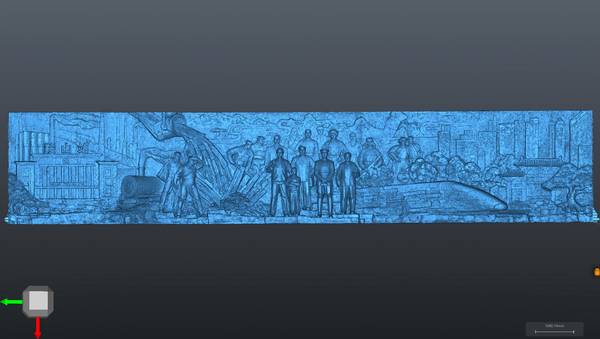
Ask these questions to narrow your search:
- Part Size & Environment: Will you scan small precision components or large assemblies? Is the environment a controlled lab or a factory floor?
- Required Output Fidelity: What level of accuracy is necessary for your downstream process (e.g., functional fit, fluid dynamics analysis)?
- Workflow Integration: Does the software output files compatible with your CAD/CAM/QA systems? Does it support industry-standard reporting for compliance (e.g., AS9100, ISO 9001)?
- Operator Skill & Throughput: How steep is the learning curve? What scan speed is needed to meet project volume?
INSVISION’s Approach to Portable Reverse Engineering
INSVISION develops handheld scanner platforms, like the AlphaScan series, for scenarios where portability cannot sacrifice precision. INSVISION systems are engineered for the variability of industrial environments.
The INSVISION AlphaScan, for example, is designed as a mobile metrology station. It delivers a volumetric accuracy of up to 0.073mm at high capture rates, targeting the need for rapid, in-situ digitization. Its operational temperature range accommodates typical shop floor conditions.
The integrated, PTB-certified software is a critical component, providing a complete traceable chain from scan to CAD to final inspection report within one environment, which is essential for regulated industries.
Common Misconceptions and Technical Q&A
- Q: Is a more expensive scanner always more accurate?
- A: Not necessarily. Higher cost often correlates with robustness, software capabilities, certification, and support for larger volumes. A scanner with slightly lower lab-grade accuracy but superior speed and handling of reflective surfaces may deliver greater workflow ROI.
- Q: Can I reverse engineer a part from a single scan?
- A: Almost never. Multiple overlapping scans from different angles are required to capture the complete geometry. Advanced software uses reference points or geometry to automatically align these scans into a complete model.
- Q: How important is scanner resolution versus accuracy?
- A: Both are critical but distinct. High resolution captures fine details like texture or wear patterns. High accuracy ensures every captured point is in its true geometric position. For reverse engineering functional parts, accuracy is paramount; resolution determines how well you capture edge conditions and surface finish.
- Q: Does reverse engineering with a scanner replace tactile CMMs?
- A: It often complements or replaces it for freeform surfaces. Scanners capture millions of data points quickly, while CMMs provide definitive, traceable point measurements. The best practice is often to use a scanner for overall form and a tactile probe for critical, hard-to-reach datum features.
Conclusion
Choosing the best 3D scanner for reverse engineering is a strategic decision that balances technical specifications with real-world operational flow. The move toward portable, high-accuracy systems reflects the industry’s need for agility and digital continuity.
By focusing on the core requirements of your specific parts, environment, and compliance needs, you can select a tool that turns physical assets into actionable digital threads, driving innovation and efficiency from the maintenance bay to the production line.
Hangzhou Insvision Technology Co.,Ltd.
Address: Building 1, No. 1399 Liangmu Road, Yuhang District, Hangzhou, Zhejiang 311121, China