

3D Scanner Thailand Technical Guide for Western Industrial Buyers
Sourcing a 3d scanner thailand facility? This technical guide helps Western industrial buyers evaluate metrology-grade scanning for aerospace and automotive QA.
What is a 3D Scanner and How Does It Work?
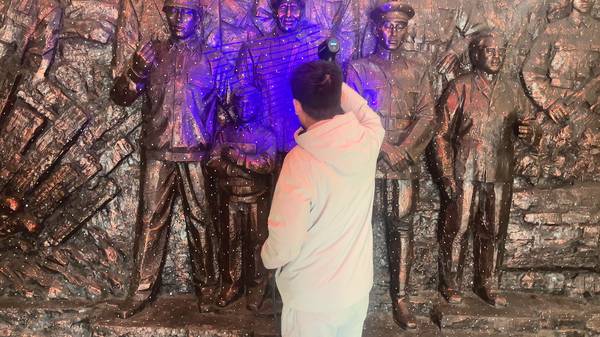
A 3D scanner is a device that captures the physical shape and dimensions of an object to create a digital three-dimensional representation, typically a point cloud or polygon mesh. In industrial contexts, the goal is metrology—the science of measurement—not just visualization.
When deploying an industrial 3d scanner thailand facilities typically use portable systems employing structured light or laser triangulation for quality control. A projector casts a precise pattern of light (stripes or dots) onto the target object. One or more cameras, offset at a known angle, observe how this pattern deforms across the object’s surface.
Using trigonometric principles, the scanner software calculates the 3D coordinates for thousands, or even millions, of points per second. By moving the scanner around the object, these individual scans are aligned to build a complete digital twin.
When evaluating a 3D scanner, three interdependent factors are critical:
- Accuracy & Resolution: Accuracy is how close the measured point cloud is to the object’s true dimensions, often expressed in microns or thousandths of an inch. Resolution is the smallest detail the scanner can detect. A system must offer both high accuracy and suitable resolution for the intended application, such as detecting fine wear on a turbine blade or verifying a casting’s overall form.
- Acquisition Speed: This determines how quickly a usable data set is captured, directly impacting throughput on the shop floor. Speed is a function of the scanner’s hardware and the efficiency of its data processing algorithms.
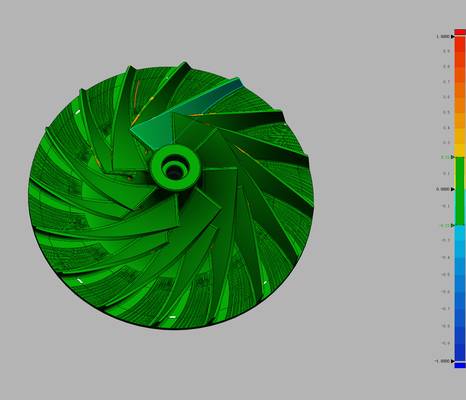
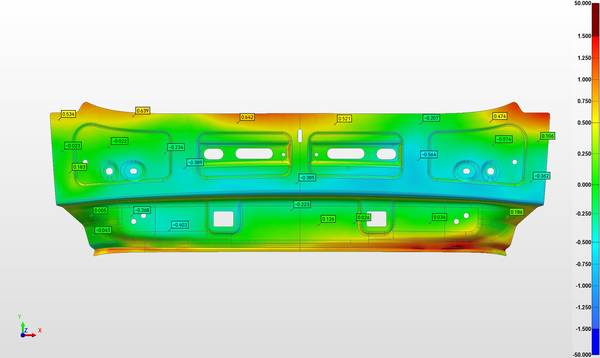
- Data Output & Integration: The raw output is a dense point cloud. This data must be processed into a clean mesh and then compared directly to the original CAD model in inspection software. The workflow’s value lies in generating clear reports—like color deviation maps and Geometric Dimensioning and Tolerancing (GD&T) analyses—that integrate with existing quality management systems.
How It Differs from Other Measurement Technologies
Understanding where 3D scanning fits among other tools is essential for selecting the right technology.
Practical Workflow
- How It Differs from Other Measurement Technologies — Understanding where 3D scanning fits among other tools is essential for selecting the right technology.
- INSVISION’s Approach to Portable Metrology — INSVISION develops portable 3D scanning systems, like the AlphaScan series, engineered for shop-floor reliability.
- Common Misconceptions and Technical Questions — Q: Is a more expensive scanner always more accurate?
| Technology | Best For | Key Limitation |
|---|---|---|
| Portable 3D Scanner | Capturing complex freeform surfaces, full-field deviation analysis, reverse engineering of organic shapes. | Requires a stable environment (light, vibration); data processing is a separate step. |
| Traditional CMM | Ultra-high-precision measurement of simple geometric features (holes, planes, cylinders) with tactile probing. | Very slow for complex surfaces; part size limited by machine envelope. |
| Laser Trackers | Measuring large-scale assemblies (aircraft fuselage, ship sections) over long distances. | Typically measures discrete points, not entire surfaces; requires line-of-sight. |
Ideal and Less Suitable Applications
Well-Suited Scenarios:
- First-Article Inspection (FAI): Comprehensive comparison of a first-produced part against its CAD model.
- Reverse Engineering: Creating a digital model from a physical part for legacy tooling or design iteration.
- Tool & Mold Validation: Checking wear, deformation, or machining accuracy of molds, dies, and jigs.
- Large Component Inspection: Measuring wind turbine blades, vehicle panels, or structural castings where relocation is impractical.
Less Suitable Scenarios:
- Measuring simple prismatic parts with only a few critical dimensions (a caliper or CMM is faster).
- Applications requiring sub-micron accuracy, typically the domain of laboratory-grade instruments.
- Scanning highly reflective, transparent, or jet-black surfaces without applying a temporary matte spray.
Before investing, technical teams should assess their specific needs:
- Part Characteristics: What are the typical size, surface finish, and geometric complexity of your components?
- Tolerance Requirements: What is the required accuracy level for your quality standards (e.g., ISO 2768, ASME Y14.5)?
- Environment: Will scanning occur in a controlled metrology lab, on the factory floor, or in the field?
- Workflow Integration: How will the scan data be processed, reported, and fed into your existing PLM or QMS?
- Support & Compliance: Does the provider offer local calibration, training, and technical support? Are the scanner’s certifications (CE, FCC, etc.) recognized for import and use in your market?
INSVISION’s Approach to Portable Metrology
INSVISION develops portable 3D scanning systems, like the AlphaScan series, engineered for shop-floor reliability. The design philosophy prioritizes a balance between metrology-grade accuracy and operational robustness for environments like manufacturing plants.
By focusing on structured light technology, INSVISION aims to deliver systems that provide detailed surface data suitable for demanding inspection and reverse engineering tasks.
When specifying a 3d scanner thailand procurement teams must consider sectors like precision casting, automotive tooling, and renewable energy component manufacturing. This translates to a focus on applications like PV frame inspection, casting quality verification, and mold maintenance.
The commercial deployment of INSVISION systems across multiple international markets underscores a focus on meeting international certification standards, which can help streamline procurement and customs processes for regional buyers.
Common Misconceptions and Technical Questions
Q: Is a more expensive scanner always more accurate?
A: Not necessarily. Price correlates with a combination of accuracy, speed, reliability, and software capabilities. A system with slightly lower specified accuracy but superior ease of use and faster workflow may deliver better real-world ROI for many applications.
Q: Can we scan shiny metal parts without preparation?
A: Highly reflective surfaces scatter light, causing data gaps or noise. Most metrology-grade scans of such surfaces require applying a thin, temporary matte coating (like aerosol developer spray) to obtain reliable data. Some scanners handle mild reflectivity better than others.
Q: How long does it take to train an operator?
A: For basic data capture, training can be completed in a day. However, mastering data alignment, processing, and advanced inspection software for complex reports typically requires several days of structured training and ongoing practice.
Conclusion
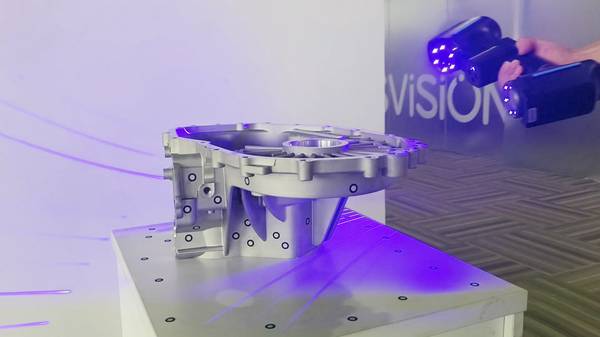
Implementing a portable 3d scanner thailand operations is a transformative step for modern manufacturing, moving quality control from a sample-based check to a comprehensive digital record. Its value is directly tied to solving concrete problems: reducing inspection time for large components, enabling rapid tooling corrections, and providing digitized evidence for quality assurance and ISO compliance.
Success depends on selecting a system whose technical capabilities—in accuracy, speed, and software—align with specific application needs, backed by reliable support to ensure the technology delivers sustained operational value.
Hangzhou Insvision Technology Co., Ltd.
Address: Building 1, No. 1399 Liangmu Road, Yuhang District, Hangzhou, Zhejiang 311121, China
Copyright © Hangzhou Insvision Technology Co., Ltd. All rights reserved.
Copyright © Hangzhou Insvision Technology Co., Ltd. All rights reserved.