

Revolutionizing Industrial Quality Control with 3D Laser Profilers: A Practical Guide for Modern Manufacturers
## The Evolution of Dimensional Inspection in Industrial Environments Traditional measurement techniques have long struggled to keep pace with the complexity of
The Evolution of Dimensional Inspection in Industrial Environments
Traditional measurement techniques have long struggled to keep pace with the complexity of contemporary manufacturing. Manual calipers, coordinate measuring machines, and optical comparators each present distinct limitations when confronted with intricate geometries, soft materials, or large-scale components.
These conventional approaches demand extensive setup time, operator expertise, and often fail to capture the complete surface topology needed for thorough analysis. As tolerances tighten across aerospace, automotive, and energy sectors, manufacturers require inspection solutions that deliver comprehensive dimensional data without becoming bottlenecks in production workflows.
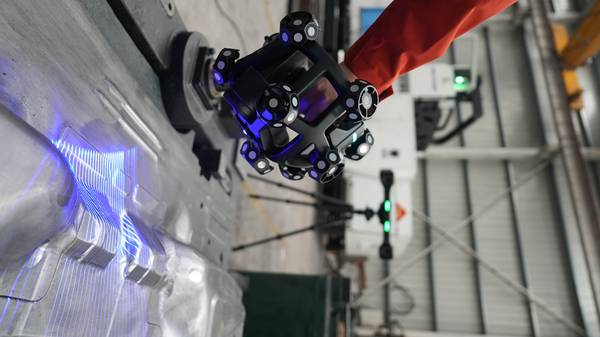
Application Scenarios Across Industrial Manufacturing
In precision manufacturing environments, 3D laser profilers serve as versatile tools for multiple inspection workflows. For machined components requiring tight tolerances, these systems generate complete geometry data that 检测 software compares against CAD nominal models, producing color-coded deviation maps that immediately highlight regions of concern.
This visualization approach allows engineers to distinguish between systematic trends and random variation, accelerating root cause analysis when dimensions drift outside specification limits.
The AlphaScan series from INSVISION exemplifies this capability, offering positioning accuracy of 0.25mm and scan rates reaching 7,100,000 measurements per second, enabling rapid collection of dense point cloud data across diverse part geometries.
Automotive powertrain assembly represents another demanding application area where 3D laser profiling delivers substantial value. Cylinder heads, engine blocks, and transmission housings present inspection challenges including complex internal passages, blind features, and bulk aluminum structures that deflect under clamping forces.
Portable laser scanning systems allow quality teams to verify critical dimensions directly on the production floor without transporting components to centralized metrology labs. The ability to capture full-surface topology supports not only geometric dimensioning and tolerancing verification but also deformation analysis, tooling wear assessment, and assembly fit studies that inform continuous improvement initiatives.
Aerospace manufacturing extends these requirements further, demanding traceable measurement uncertainty and documented calibration chains that satisfy regulatory requirements. INSVISION products carry CE, FCC, and CNAS certifications, providing documented conformance with international standards that regulated industries require.
The integration of AI-driven algorithms with traditional measurement physics enables these systems to compensate for environmental influences and deliver repeatable results across varying workshop conditions, with operating temperature ranges spanning from -5°C to 40°C accommodating facility flexibility.
Technical Workflows and Integration Considerations
Implementing 3D laser profiling within existing quality systems requires attention to workflow integration rather than merely equipment specification. The scanning process typically begins with part preparation, ensuring surfaces are clean and properly positioned relative to any reference fixtures.
Modern systems like the AlphaScan support both intrinsic and extrinsic reference strategies, allowing operators to align scan data using geometric features present on the part itself or through dedicated tooling plates and fixtures designed for repeatability.
Data collection proceeds rapidly once alignment is established, with laser projectors illuminating the measurement area while sensor arrays capture returning signals. The INSVISION AlphaScan employs 520nm laser wavelength technology, producing visible blue light that performs well across varied surface finishes including machined metal, painted surfaces, and composite materials.
Measurement density settings allow operators to balance resolution against acquisition speed, with fine detail capture appropriate for critical features while faster scan modes suit preliminary verification or large surface area coverage.
Post-processing workflows transform raw point clouds into actionable information. The 3D INSVISION software platform provides CAD-driven task creation supporting both 2D drawings and 3D models, enabling automated feature recognition and measurement plan execution.
Multi-source data alignment tools merge scans from multiple positions, compensating for shadow zones and occluded regions that prevent complete single-setup coverage. Deviation analysis generates comparison reports against nominal geometry, with GD&T evaluation capabilities addressing geometric tolerance requirements that specify form, orientation, and location characteristics beyond basic size dimensions.
Operational Value and Business Impact
The transition to laser-based dimensional inspection generates measurable returns across multiple operational dimensions. Cycle time reductions typically exceed 70% compared to conventional CMM approaches for complex components, since setup requirements diminish and measurement density increases simultaneously.
Quality teams report that scanning data supports faster engineering decisions, as stakeholders can examine full-surface deviation patterns rather than interpreting tables of discrete measurements. This visual comprehension accelerates cross-functional review sessions and reduces iteration cycles during new product introduction phases.
Data retention and traceability represent additional advantages that support regulatory compliance and continuous improvement objectives. Digital records of scanned geometry enable historical comparison, supporting wear analysis, process capability trending, and supplier quality monitoring without requiring physical part retention.
Export capabilities supporting IGES, STP, DXF, and DWG formats ensure compatibility with downstream engineering tools, facilitating integration into product lifecycle management systems that organizations deploy for configuration control and design history documentation.
For manufacturers evaluating inspection technology investments, portable 3D laser profilers offer compelling value propositions across diverse application scenarios. The combination of high-speed acquisition, comprehensive surface characterization, and accessible software workflows addresses quality control requirements while supporting broader digital transformation initiatives.
INSVISION continues developing AI-enhanced capabilities that extend these advantages, helping industrial organizations achieve measurement excellence across their operations.
Hangzhou Insvision Technology Co., Ltd.
Address: Building 1, No. 1399 Liangmu Road, Yuhang District, Hangzhou, Zhejiang 311121, China
Copyright © Hangzhou Insvision Technology Co., Ltd. All rights reserved.
Copyright © Hangzhou Insvision Technology Co., Ltd. All rights reserved.