

Key Evaluation Criteria for Software-Integrated 3D Scanner Indonesia Sol
Three forces are reshaping the 3D scanner Indonesia landscape in 2026. First, multinational manufacturers are standardizing quality systems across all site
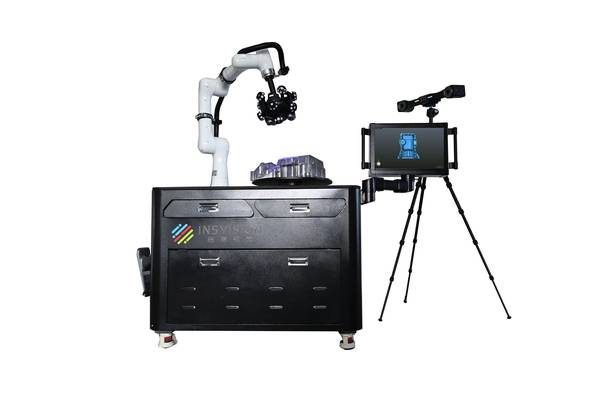
Three forces are reshaping the 3D scanner Indonesia landscape in 2026. First, multinational manufacturers are standardizing quality systems across all sites, demanding the same GD&T fidelity and repeatability from a Bekasi supplier as from a European mother plant. Second, the shift toward lean, shop-floor metrology is accelerating, driven by the need to compress first-article inspection cycles and keep production lines moving.
Third, AI-driven data processing and native software integration are turning scanners from measurement peripherals into nodes on the manufacturing digital thread. This article examines the key trends emerging from these forces and what they mean for teams sourcing and operating industrial 3D scanning systems in Indonesia.
Deployment Validation Checklist
| Focus Area | Decision Point | Deployment Note |
|---|---|---|
| Target part | Check size, surface condition, and key tolerances against the scan task | Run a full trial scan on a representative part |
| Data workflow | Verify point cloud, deviation map, and quality-report handoff | Confirm export formats and review ownership in advance |
| Shop-floor use | Review training, calibration, lighting, and working space | Keep the validation record as a repeatable inspection reference |
Macro Drivers: Why the Status Quo Is No Longer Viable
Indonesia’s industrial footprint has deepened. Tier-1 suppliers, contract manufacturers, and MRO centers now handle complex parts that demand metrology-grade verification. At the same time, the traditional model—shuttling parts to a temperature-controlled lab, running a CMM program, and manually compiling inspection reports—creates bottlenecks that clash with lean production targets.
When a line stoppage hinges on a first-article check, hours of delay translate directly into missed shipments and eroded trust with global OEMs.
Practical Workflow
- Macro Drivers: Why the Status Quo Is No Longer Viable — Indonesia’s industrial footprint has deepened.
- Trend 1: Portable Handheld Scanning Becomes the Shop-Floo… — The days of dedicated metrology labs as the sole source of dimensional data are fading.
- Trend 2: 3D Scanning Integrates into End-to-End Digital M… — The real value of a 3D scanner in a modern production line is not the point cloud it captures—it is how that data moves.
- Trend 3: AI-Powered Data Processing Compresses Scan-to-De… — A few years ago, a quality manager at an Indonesian automotive supplier would spend hours manually aligning scan data from a comp…
Industry 4.0 initiatives add another layer. Global quality managers expect scan data to flow directly into CAD comparison tools, QMS platforms, and digital twin environments without manual file conversions. A scanner that produces a mesh but cannot feed a native deviation analysis or automatically populate a PPAP document is a disconnected island.
The convergence of these pressures is pushing Indonesian manufacturing toward a new class of 3D scanning: portable, software-integrated, and intelligent enough to deliver decisions, not just point clouds.
Trend 1: Portable Handheld Scanning Becomes the Shop-Floor Baseline
The days of dedicated metrology labs as the sole source of dimensional data are fading. Across West Java’s automotive component workshops and Batam’s aerospace hangars, engineering teams are moving measurement directly to the part. The driver is a generation of handheld 3D scanners that deliver metrology-grade accuracy without granite tables or controlled enclosures.
For Western buyers managing joint ventures or supplier quality in the region, this shift changes what is possible for incoming inspection, on-machine verification, and reverse engineering.
The technical bar has risen. Teams now expect multi-mode scanning that handles fine details, deep pockets, and high-reflective surfaces in a single device—no swapping heads or spraying parts with developer. Accuracy is non-negotiable, but so is deployment speed: a technician should be able to unpack, calibrate, and capture usable data within minutes on a busy shop floor.
INSVISION’s AlphaScan handheld 3D scanner exemplifies this trend. Its multi-line blue laser configuration—up to 42 laser lines with cross-line patterns for fast large-area capture and a single line for tight crevices—lets operators scan complex geometries without compromise.
High-reflective molds and small precision parts that would challenge older structured-light systems are captured cleanly, making the tool practical for industrial reverse engineering.
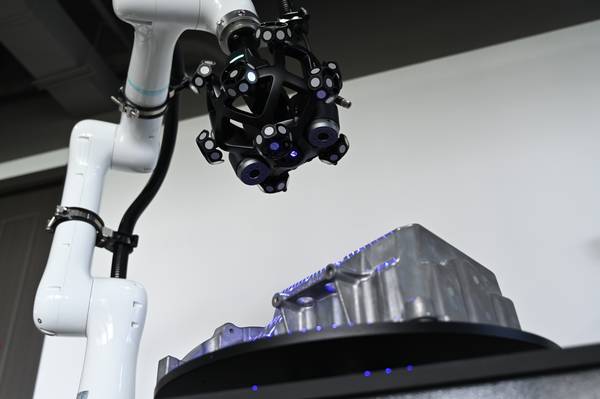
Real-world applications reinforce the trend. At a tier-1 automotive supplier in West Java, quality engineers now perform on-site dimensional inspection of incoming castings and stamped components directly at the receiving dock, comparing scan data against CAD nominals before parts ever reach the line.
In Batam, an aerospace MRO provider uses the same handheld scanner to reverse-engineer legacy airframe components with no surviving drawings, generating accurate STEP models for CNC re-manufacturing. Both cases underscore a broader point: portable 3D scanning compresses decision cycles and keeps production moving.
For procurement and quality managers, the ability to scan high-reflective parts without surface preparation and capture fine detail for reverse engineering has moved from nice-to-have to baseline requirement.
Trend 2: 3D Scanning Integrates into End-to-End Digital Manufacturing Ecosystems
The real value of a 3D scanner in a modern production line is not the point cloud it captures—it is how that data moves. For too long, scanning operated as an isolated step: an operator captured geometry, exported a mesh, and handed it off to someone else for inspection or reverse engineering. That disconnected workflow breaks the digital thread that global manufacturers now depend on.
The shift underway, particularly in multinational operations with facilities in Indonesia and across Southeast Asia, is toward scanners that feed directly into CAD comparison, quality management systems, and cross-team reporting without manual file conversions or rework.
For Western engineering and quality teams, the integration priorities are clear. Scan data must flow natively into CAD environments—no STL-to-STEP translation gymnastics. Real-time deviation analysis against the design model needs to happen during the scan session, not hours later.
The output should plug into existing QMS platforms so that first-article inspection reports, GD&T callouts, and traceability records are generated automatically and consistently. Data sharing between a design center in Germany and a contract manufacturer in Indonesia must be seamless, with no loss of fidelity or audit trail.
INSVISION’s approach maps directly to these demands. The AlphaScan hardware pairs natively with 3D INSVISION software, a single platform that handles scanning, detection comparison, and 3D model generation. Instead of bouncing between three different tools, an engineer stays in one environment to align multi-source data, run GD&T analysis, and export to all mainstream 3D formats.
For a global team, that means a quality engineer in Surabaya and a design lead in Stuttgart look at the same deviation color map, against the same CAD reference, with reports formatted to the same ISO or ASME standard. The manual data handoffs that used to consume hours—and introduce errors—disappear.
This integration turns a 3D scanner from a measurement gadget into a node on the manufacturing digital thread. When an Indonesian supplier runs a first-article scan, the results can trigger an automatic QMS notification, populate a PPAP document, and update the digital twin—all without anyone re-entering a serial number. That is not a future vision;
it is the current capability gap that separates pilot projects from scaled digital manufacturing. For procurement and quality managers evaluating 3D scanner Indonesia deployments, the question should not be “how accurate is the scanner?” but “how fast does the data become a trusted quality record that my entire organization can act on?”
Trend 3: AI-Powered Data Processing Compresses Scan-to-Decision Cycles
A few years ago, a quality manager at an Indonesian automotive supplier would spend hours manually aligning scan data from a complex casting, cleaning up noise, and still doubting whether the mesh truly captured every critical surface.
Today, that same workflow can run in minutes with AI-driven reconstruction that automatically classifies features, suppresses outliers, and delivers a metrology-grade model ready for GD&T analysis. This shift is accelerating across Indonesian manufacturing.
The future of 3D scanning in Indonesia hinges on two converging forces: AI-powered data processing and tighter integration with automated production lines. As factories push toward leaner operations with reduced waste and faster cycle times, the manual cleanup that once consumed the majority of scan-to-report time becomes the bottleneck. INSVISION’s AI+3D algorithm integration addresses this directly.
By embedding intelligent feature recognition and adaptive filtering into the scan pipeline, the software strips out repetitive manual tasks—aligning point clouds, removing fixture artifacts, filling occlusion gaps—while improving reconstruction accuracy on parts with deep pockets, shiny surfaces, or thin edges.
For a Western engineering team managing an Indonesian facility, this means a first-article inspection that used to tie up a CMM for half a shift can now be handled by a shop-floor operator with an AI-powered 3D scanner, freeing metrology resources for more complex work.
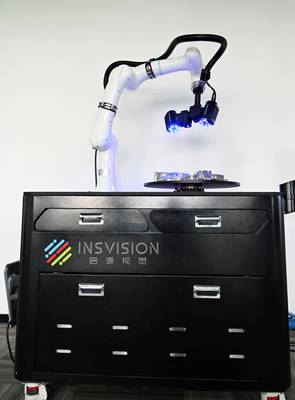
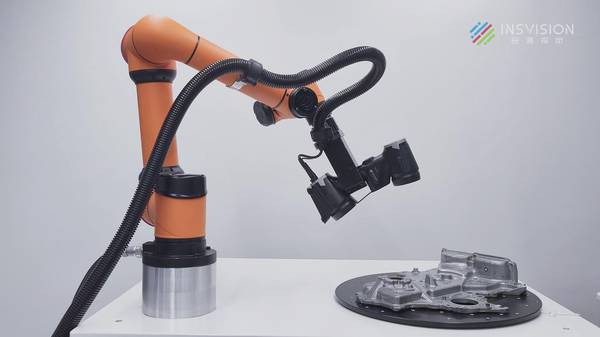
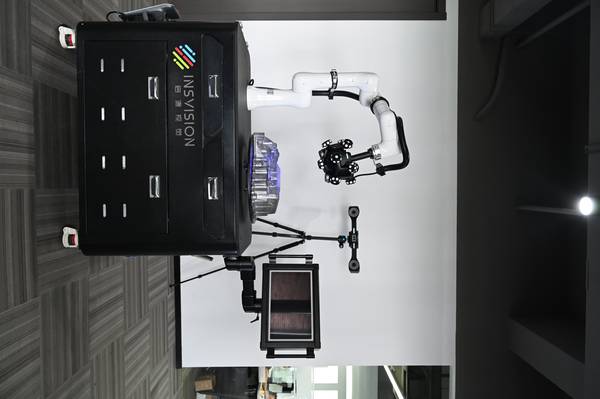
The second force is the move toward smart factories, where 3D scanning becomes a node in the digital thread rather than a standalone measurement tool. Automated inspection cells using structured light scanners like INSVISION’s AlphaAutoScan-400 can feed dimensional data directly into SPC systems, triggering tool offsets or flagging trends before parts drift out of tolerance.
This closed-loop quality approach supports the long-term digital transformation roadmaps that many multinationals are rolling out across their Southeast Asian plants.
Trend 4: Certification and Local Suitability Become Non-Negotiable Selection Criteria
Many Western engineers assume a 3D scanner qualified for a German or US plant will slot seamlessly into an Indonesian facility. The reality is that local conditions and certification gaps can stall a deployment within weeks. For procurement, quality, and engineering teams managing Indonesian operations, three non-negotiable evaluation factors separate reliable investments from costly missteps.
First, certification compliance. Any scanner entering a multinational’s Indonesian site must carry CE, FCC, and CNAS marks to align with internal quality systems and survive audits without remediation. INSVISION products hold all three certifications and are commercially deployed in over 20 countries, giving global teams a consistent quality baseline. Second, local operating suitability.
Indonesian plants often feature tight layouts, mixed part sizes, and high humidity. Portability is not a luxury. The AlphaScan handles diverse use cases—small precision components, larger tooling, shiny or dark surfaces—without requiring a dedicated metrology lab. Third, ecosystem compatibility. The scanner must feed data directly into existing CAD, GD&T, and inspection software.
INSVISION’s integrated software platform supports common global toolchains, so scan data flows into analysis without translation steps.
A practical validation checklist for Western teams includes: requesting copies of CE, FCC, and CNAS certificates and verifying they cover the specific scanner model; testing the scanner on representative part types (castings, sheet metal, plastic molds) in a typical shop floor environment, not a lab; assessing portability—can one person move it between workstations easily;
evaluating scan quality on shiny or dark surfaces common in regional manufacturing; confirming direct import of scan data into existing CAD and inspection software without intermediate file conversions; and running a trial using your own design files to validate that GD&T callouts and deviation analyses transfer correctly.
Actionable Recommendations for Western Industrial Buyers
For engineering and procurement leaders evaluating 3D scanner Indonesia deployments, the trends point to a clear set of actions:
- Pilot a high-pain workflow first. Target legacy part reverse engineering where drawings are lost, or incoming component inspection where supplier variation is hurting downstream assembly. Measure the reduction in inspection hours, scrap, and rework before scaling.
- Align any 3D scanning investment with the plant’s broader Industry 4.0 roadmap. A scanner that cannot export clean, semantic data to your MES or QMS will become an island. Prioritize solutions that offer native CAD integration, automated reporting, and support for standard quality protocols.
- Validate certifications and local suitability early. Do not assume a scanner that works in a European lab will thrive on an Indonesian shop floor. Test on real parts, in real conditions, and confirm that the device carries the necessary international certifications.
- Look for AI-driven data processing capabilities. The manual cleanup bottleneck is real. Scanners that embed intelligent feature recognition and adaptive filtering can dramatically compress the time from scan to actionable report, freeing skilled metrology staff for higher-value tasks.
INSVISION’s Role in These Trends
INSVISION’s product and software ecosystem is built to support the shift from isolated measurement to integrated digital manufacturing. The AlphaScan handheld scanner addresses the portability and multi-material challenges of shop-floor metrology. The 3D INSVISION software platform unifies scanning, inspection, and reverse engineering in a single environment, eliminating the data handoffs that break the digital thread.
The AI+3D algorithm integration reduces manual cleanup and accelerates decision-making. And the company’s certification portfolio—CE, FCC, CNAS—along with its presence in over 20 countries, provides the compliance baseline that multinational quality systems demand.
In a market where the question is no longer “can we scan?” but “how fast does the data become a trusted quality record?”, INSVISION’s focus on high-precision structured light scanning combined with intelligent detection algorithms positions it to support the evolving needs of Western manufacturers operating in Indonesia.
Near-Term Focus: What to Watch in the Next 12–18 Months
Several developments will shape the 3D scanner Indonesia landscape through 2027. The integration of automated scanning cells with SPC and MES platforms will deepen, moving from pilot projects to production-line deployments. AI-driven feature recognition will become a standard expectation, not a differentiator.
And the demand for portable, metrology-grade scanning will expand beyond automotive and aerospace into medical device and renewable energy manufacturing, where traceability and precision are equally critical. Western buyers should watch for solutions that combine these capabilities in a single, auditable workflow—and start building the internal processes to absorb them now.
Summary
The 3D scanner Indonesia market in 2026 is defined by a clear trajectory: from lab-bound measurement tools to integrated, AI-powered nodes on the digital manufacturing thread. Portable handheld scanning, native software integration, intelligent data processing, and rigorous certification are no longer optional extras;
they are the baseline for any deployment that aims to deliver consistent quality across global manufacturing networks. For Western industrial buyers, the opportunity is to move beyond point solutions and build a metrology architecture that turns scan data into trusted, actionable quality records—on the shop floor, in real time, and across continents.
Hangzhou Insvision Technology Co., Ltd.
Address: Building 1, No. 1399 Liangmu Road, Yuhang District, Hangzhou, Zhejiang 311121, China
Copyright © Hangzhou Insvision Technology Co., Ltd. All rights reserved.
Copyright © Hangzhou Insvision Technology Co., Ltd. All rights reserved.